DAMP & MOULD SPECIALIST
Damp and Mould Specialist Wimbledon
Opening a roof-window blind can reveal marks around the recess that were out of sight. Check the affected surfaces and the usual blind arrangement before replacing the blind or repainting the reveal.
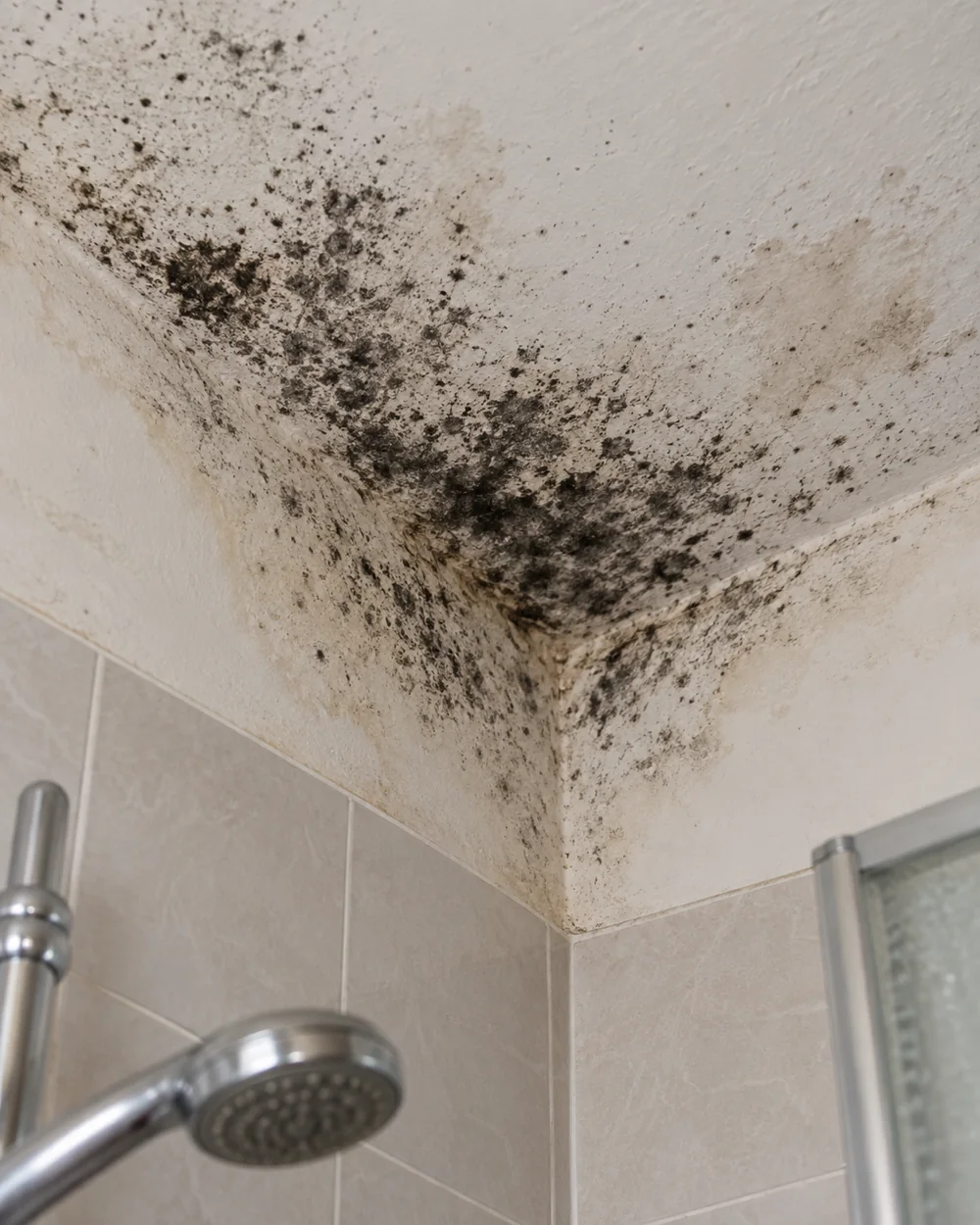
Locate the growth inside the roof-window recess
If this is the concern in your Wimbledon room, photograph the opening from a safe accessible position. Show the blind, glazing and surrounding reveal together, then any marked corner you can see. Note whether growth is on the painted recess, a lining or the blind itself. Those materials can need different decisions, so include their position in the enquiry.
A roof-window reveal and cold-surface assessment can consider the local pattern. Tell us when the recess was last visible and when the blind was fitted. Finding a patch when the blind opens gives a discovery date, not necessarily the date moisture first affected it.
Describe when the blind is normally closed
Record the normal daytime and night-time arrangement, including any part that remains screened. A blind can create an enclosed space around cooler glazing and reveals. The room’s air may reach that area differently from the open wall. Those conditions deserve consideration alongside other sources, without assuming the blind itself accounts for every damp mark.
Photographs taken before clearing access preserve that arrangement. A review of moisture and airflow near the roof opening can relate it to heating, ventilation and the room’s ordinary use. Explain any privacy needs or access limitation so recommendations fit the actual room.
Keep glass droplets and a stained reveal separate
Note when water is visible on the glass and whether the recess becomes wet at the same time. Record a distinct stain or peeling paint independently. A clear pane after wiping says little about an unseen corner behind the blind. The inspection can compare the accessible surfaces and their materials, with your observations providing context for intermittent wetting.
If a mark changes after rain or spreads beyond the opening, investigation of the affected reveal and adjacent lining may raise a separate source question. Keep the position and timing clear. There is no need to deliberately wet the room or operate the opening in an unusual way to create a test.
Agree access to the margin hidden by the blind fitting
A bracket, rail or fixed trim may cover the precise edge that needs examining. Describe which parts can be opened normally and which would require a fitter. Do not remove unfamiliar fittings in advance. The first assessment can identify whether an existing view is enough or what a targeted removal would help show.
Any further work should have a defined position, purpose and reinstatement arrangement. If another contractor exposes the margin later, retain photographs before treatment or repair. One view provides evidence at that location; other concealed corners may still need their limits recorded. Explain the height and safe room-side access before booking.
Direct a roof-related question to the right detail
Where the evidence suggests outside water, checks of the relevant opening details may be appropriate. An indoor reveal can provide clues without showing every roof-side component. The recommendation should state which detail needs a closer examination and how it relates to the observed damage.
Share any roof-window or blind installation record and photographs taken during work. A recent fitting date is relevant history, while the present condition needs its own evidence. The enquiry should distinguish a source check at the opening from a general survey of the roof or all hidden layers of the sloping ceiling.
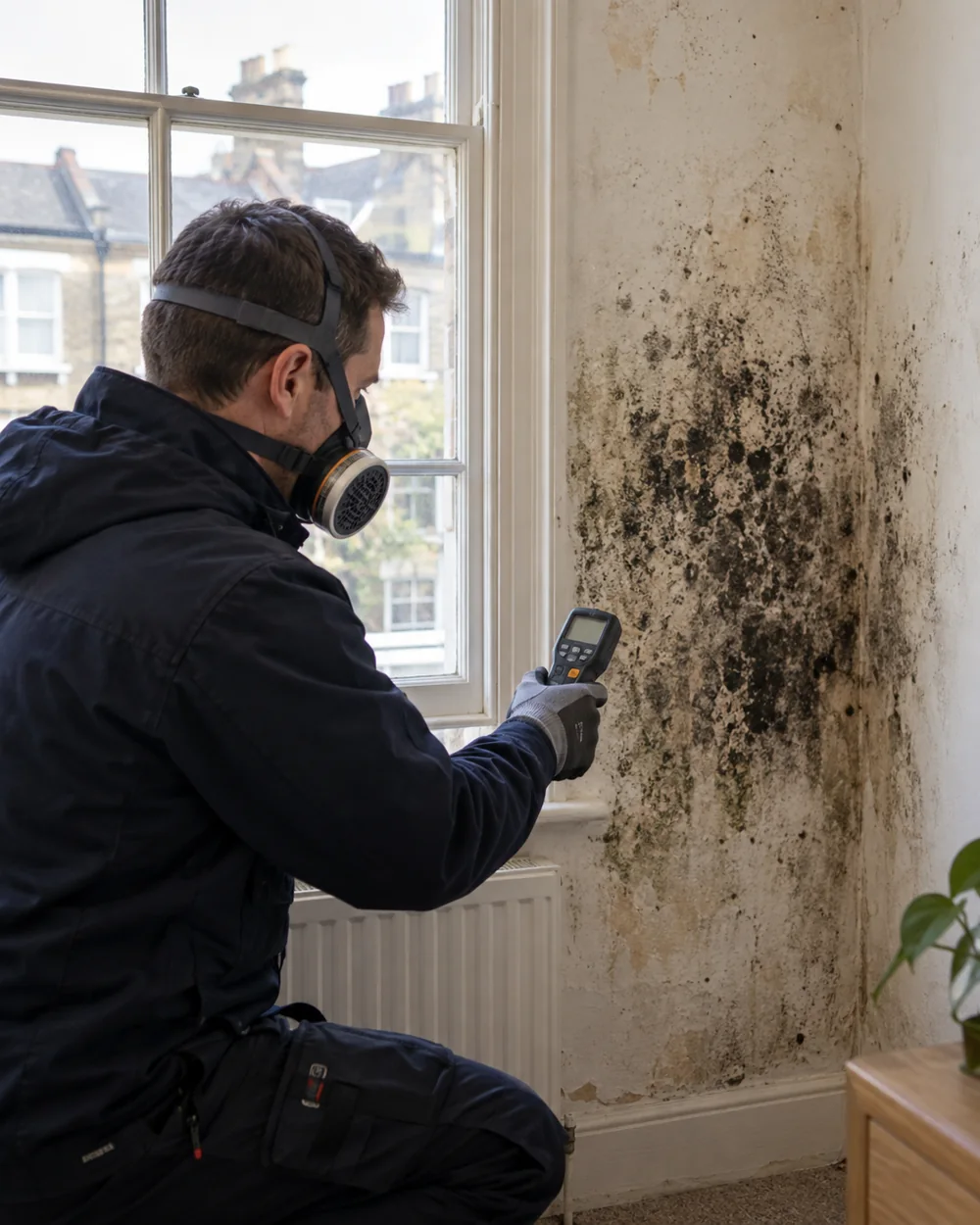
Confirm which materials the treatment will include
Treatment around the roof-window recess should identify the accessible extent and affected finishes. Do not assume that work on a painted reveal includes a blind, its fabric or every fitting. Confirm whether any damaged lining or furnishing needs a separate assessment or replacement decision.
Coordinate source work and relevant moisture measures before the recess is repainted or concealed again. Keep the original photos and fitting records. After agreed work, review the same corners with the blind in its intended arrangement. The result should be assessed under ordinary use, with any continuing stain or new wetting reported by its exact position.
PROPERTY & MOISTURE CHECKS
QUESTIONS BEFORE A VISIT
Useful questions
Does mould seen when a roof blind opens prove the blind caused it?
No. It reveals a surface worth checking. The usual enclosure, room moisture and other possible sources need assessing alongside the affected material.
Will treatment of the reveal include the blind fabric?
Confirm the scope. Building finishes and furnishings need their own material consideration, and a wall-surface treatment should not be assumed to include every nearby item.
Should I remove the roof blind rail before inspection?
Describe the fitting and available view first. Targeted removal may be useful, with a suitable fitter and a clear purpose agreed before disturbance.
Can droplets on the glazing explain a separate roof-side stain?
They provide one moisture observation. A defined stain changing with rain or spreading beyond the recess may need a separate source investigation.
What information helps with a high roof-window recess?
Its position, height, safe room-side access and photographs from reachable places help define the scope. Do not improvise high-level access to obtain closer images.
Nearby areas
Inspect the recess before changing its blind or finish
Call about your Wimbledon roof window with the marked surfaces and normal blind use. We can discuss suitable access and treatment questions.