DAMP & MOULD SPECIALIST
Damp and Mould Specialist Morden
Stopping the visible water is one step. The affected floor edge and wall still need attention if staining, smell or mould remains after an appliance leak.

The leak stopped, but the corner still looks damp
If a washing machine or another appliance leaked in your Morden home, note which fitting or hose was confirmed as the source and what was repaired. Water may have reached a floor edge, cabinet base or wall before it was noticed. A remaining stain can reflect earlier damage, retained moisture or continuing wetting. Those explanations lead to different next steps, so do not assume the visible repair settles every affected material.
Keep photographs from the day the leak was discovered and the repair description. Describe where water was seen and whether it travelled beneath units or floor coverings. If the smell or mould appeared later, record that timing. The boundary of the visible damage may not show the full area reached, especially where a finish conceals the original route.
Assess the materials that can be reached
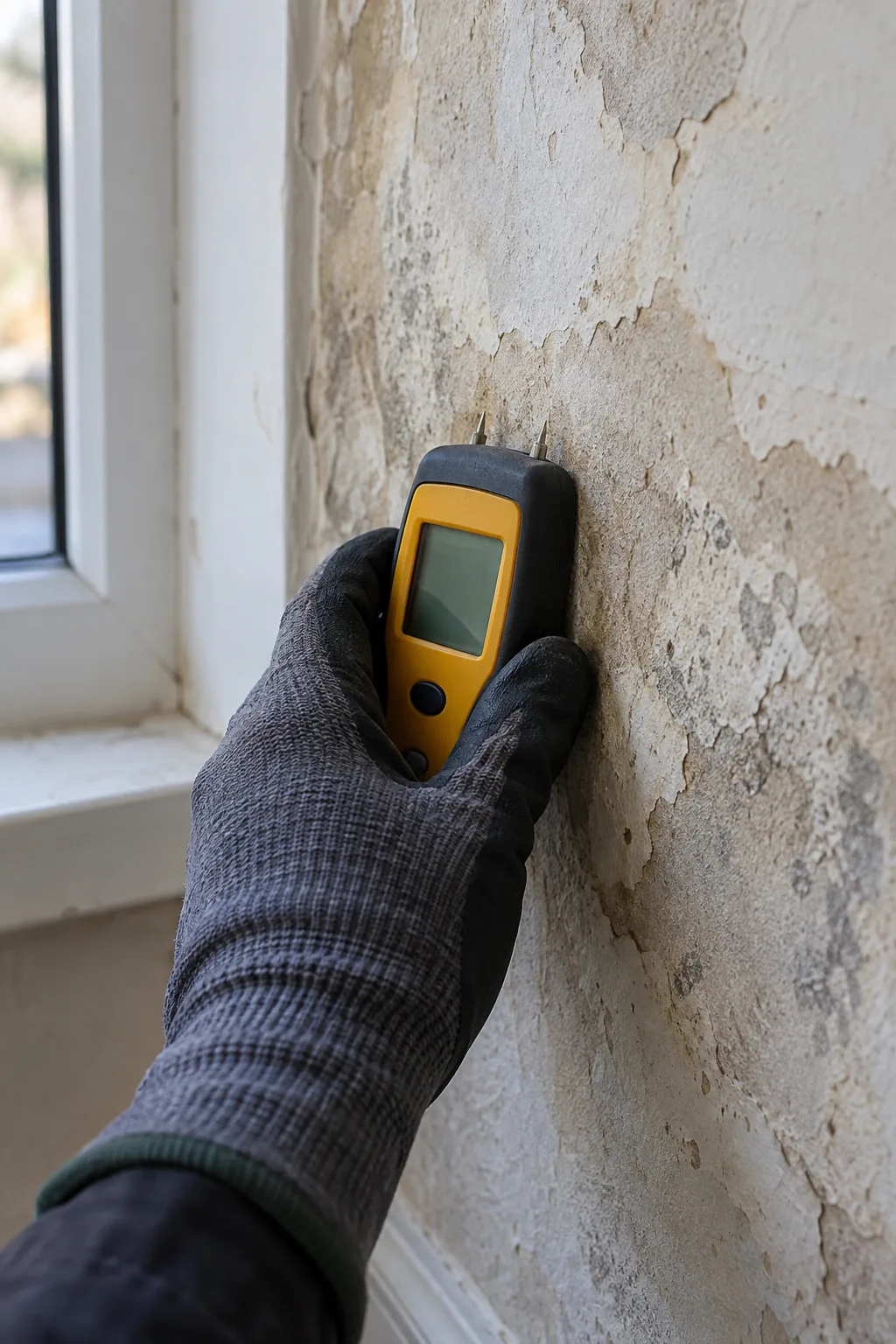
A post-leak moisture assessment follows the water spread shown in your photographs and checks the exposed floor-edge, wall and unit surfaces it reached. Readings need interpretation against the material and condition, and a surface check cannot automatically establish the state below a sealed floor or behind a unit. The findings identify the surfaces assessed and any concealed floor or unit area that needs checking before the next finish is chosen.
If wetting continues during appliance use, checks for another water source may be useful. An original hose repair does not rule out a separate connection or concealed route. Observations and measurements guide the investigation, but confirming hidden sources can require access. Do not open up an entire installation before discussing which area is relevant.
The room may have ordinary moisture issues too
Where the appliance is in a kitchen or utility area, checks of the room’s moisture conditions include exposed fitting areas and the clearance of cooking or laundry moisture. Condensation may contribute to mould elsewhere even after the leak is repaired. Treating all visible growth as damage from one incident can miss that distinction, particularly if wet glass or scattered ceiling marks were present beforehand.
A ventilation review can assess the relevant airflow and household moisture where those signs exist. Tell us about laundry drying or changes to room use, but also about damage continuing during periods when the room is unused. Provide that timing alongside the laundry routine and building history so the inspection can assess both room conditions and possible continuing water sources.
Plan treatment without hiding damp materials
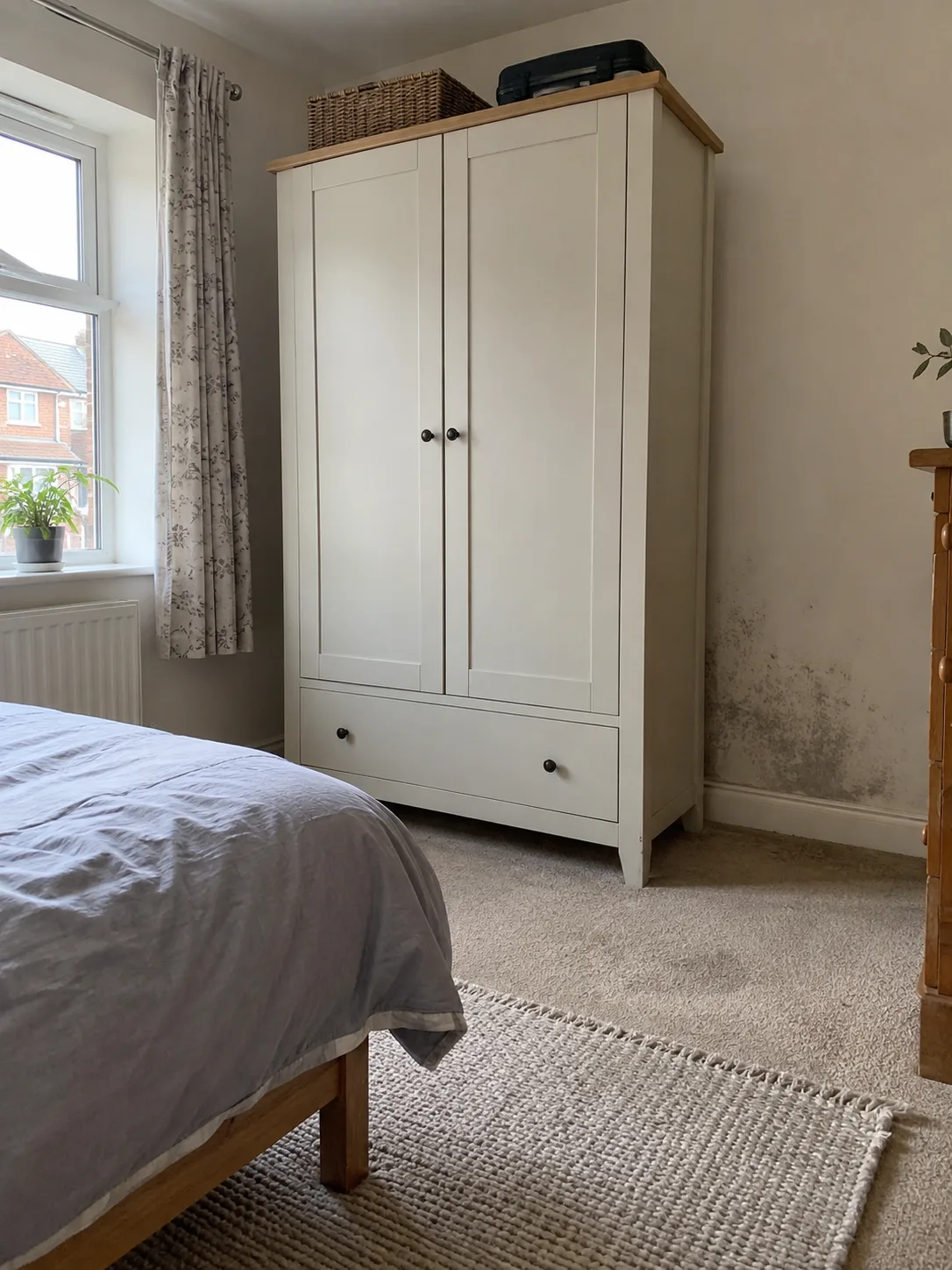
If mould has developed after the incident, discuss treatment of the affected surfaces alongside the material condition and any remaining source. A cabinet base, plaster finish and flooring need not respond to water in the same way. Replacing the visible face alone may leave the concealed question unanswered. Ask which work can proceed and which depends on further assessment.
Explain what the appliance conceals
Integrated machines and fixed panels limit access. Tell us what can be reached and avoid pulling an appliance out without suitable help. If another contractor is required to provide access safely, that can be discussed as part of the plan. The agreed inspection should be honest about concealed areas instead of implying that the absence of visible water means they are dry.
Keep drying, repair and decoration separate
A repaired source should be followed by assessment of the affected materials before they are enclosed or finished. Observe changes under normal appliance use and keep a dated photographic record. New marks or renewed smell should be reported before another coating covers them. There is no useful universal timetable based only on the day the machine stopped leaking.
If a landlord or managing agent is arranging the work, share the repair evidence and the occupant’s observations together. A short chronological record is more useful than several unconnected messages. It helps the inspection distinguish the known incident, work already completed and symptoms still requiring an explanation, without inventing certainty about the parts that remain inaccessible.
If the flooring was lifted during the original repair, retain those photographs too. They may show where water was seen before the installation was closed. Share them without assuming they establish the current concealed condition; their value is in explaining the incident and guiding a specific question for further assessment.
PROPERTY & MOISTURE CHECKS
QUESTIONS BEFORE A VISIT
Useful questions
Does repairing a hose confirm the surrounding floor is dry?
No. It addresses that source, while affected materials may retain moisture or have damage. The affected material needs its own assessment, with a specific check arranged where a floor covering or fixed unit hides the important area.
Why might mould appear after the water was stopped?
Materials may have remained damp after the incident, or another source may still exist. The sequence and current condition help establish what needs attention.
Can you check beneath a sealed floor covering?
We assess the surfaces that can be reached. If the remaining question concerns material beneath the covering, we explain what a defined opening or additional check would help establish.
Should I remove the appliance for the visit?
Discuss access beforehand. Moving or disconnecting equipment should be done appropriately, and initial observations may help decide what access is actually needed.
What records are useful after an appliance repair?
The source identified, repair performed, date and photographs of the original water spread are useful. Also keep notes of any symptoms that appeared afterwards.
Nearby areas
Find out what remains after the leak
Call about the Morden appliance incident and describe the damage still visible. We can discuss a moisture assessment and access.