DAMP & MOULD SPECIALIST
Damp and Mould Specialist Wandsworth
A damp patch beside heating pipework deserves a closer look. Its position is a useful lead, but the water source still needs to be established.
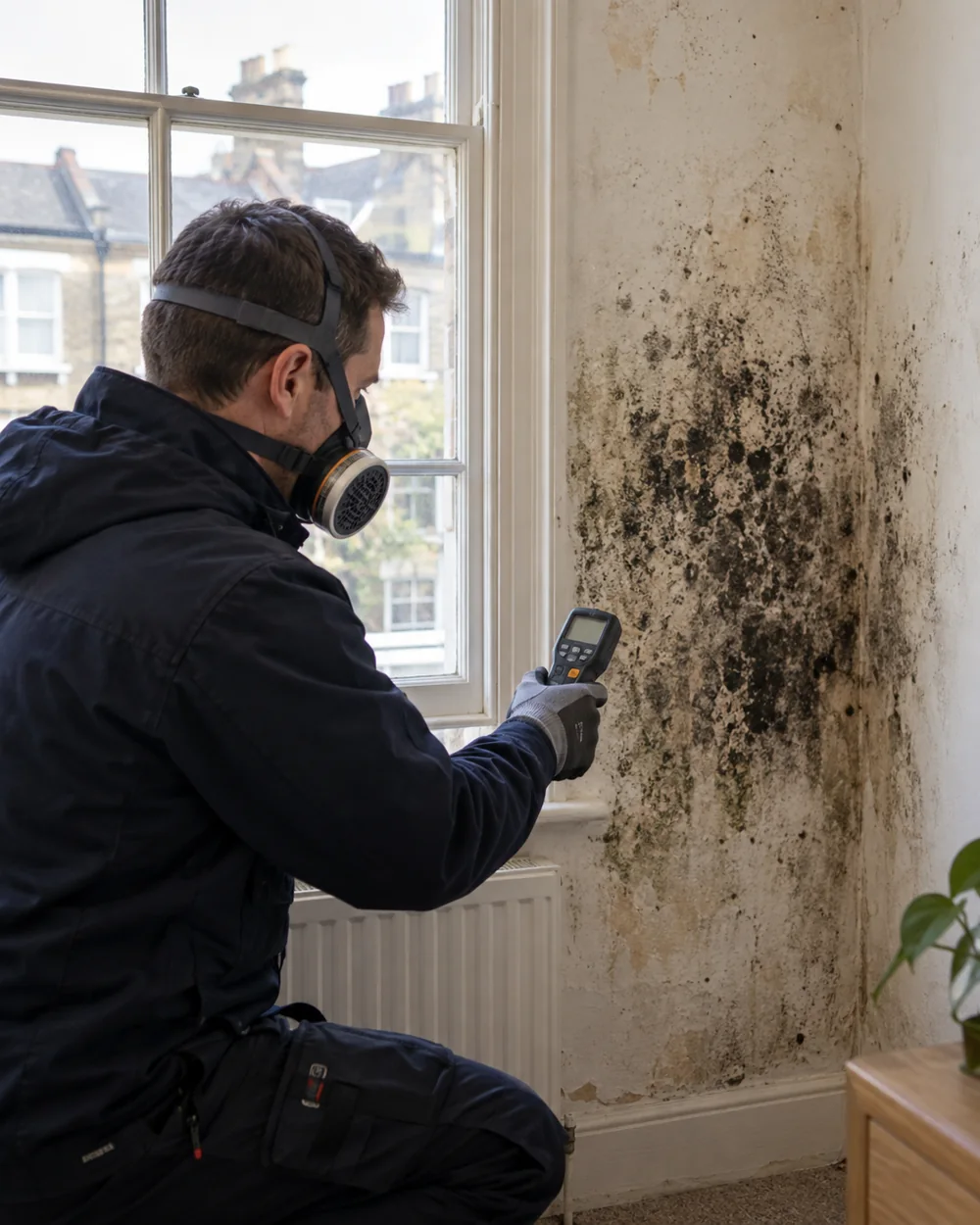
The wall marks beside a service route
If a patch appears near a radiator in your Wandsworth home, note exactly where the damage starts. A mark at a visible valve raises different questions from staining further along a concealed pipe route. A nearby connection may be relevant, but condensation, outside water and another fitting can also produce wetting. Do not choose a wall treatment solely because heating equipment happens to stand beside the damaged surface.
Record whether the patch changes when the heating operates and whether any connection is visibly wet. Take photographs of the whole area, including floor junctions and adjacent walls. Mention recent heating work, moved radiators or flooring changes. If an appropriate plumbing repair is urgently needed, arrange it; preserve the repair description and earlier evidence for assessment of any remaining damp.
Follow the evidence beyond the visible fitting
Our hidden water-source investigation starts with the fitting-use history and visible connections, then follows the damp pattern towards the route needing closer inspection. Readings and, where useful, temperature observations can guide attention. They do not automatically reveal every concealed pipe connection. If a concealed connection needs confirming, we identify the relevant area and explain how an opening there would help the investigation.
A damp assessment of the surrounding surfaces helps establish the extent of the concern. Different finishes affect interpretation, and the stain may outlast the original wetting. We should distinguish signs of continuing moisture from visible damage that may remain after repair. A single dry-looking connection should not be used to dismiss damp further along an inaccessible route.
Repair details are more useful than reassurance
If a contractor has already visited, ask what was checked and what was changed. Was a fitting repaired, or was no water seen at the time? The distinction matters where wetting is intermittent. Provide any available photographs taken before the work. A statement that ‘the heating is fine’ does not describe the scope or establish what is happening behind the wall.
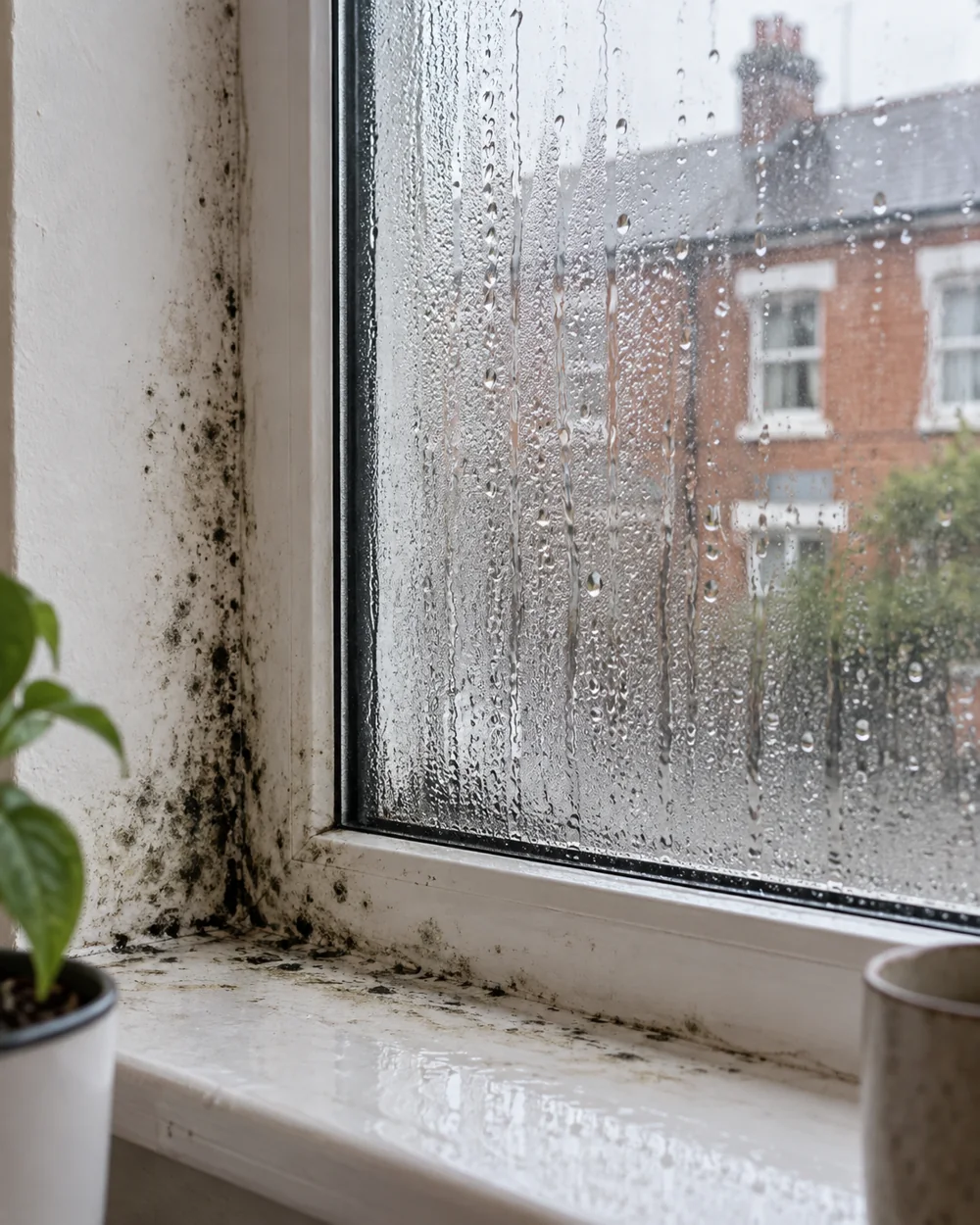
If the stain is on an external wall and follows rain, investigation of accessible outside water routes may be relevant too. The presence of pipework does not rule that out. Explain the weather connection and whether the same wall shows window mould or damage elsewhere. That broader pattern helps avoid narrowing the investigation too soon.
Warm air does not keep every wall dry
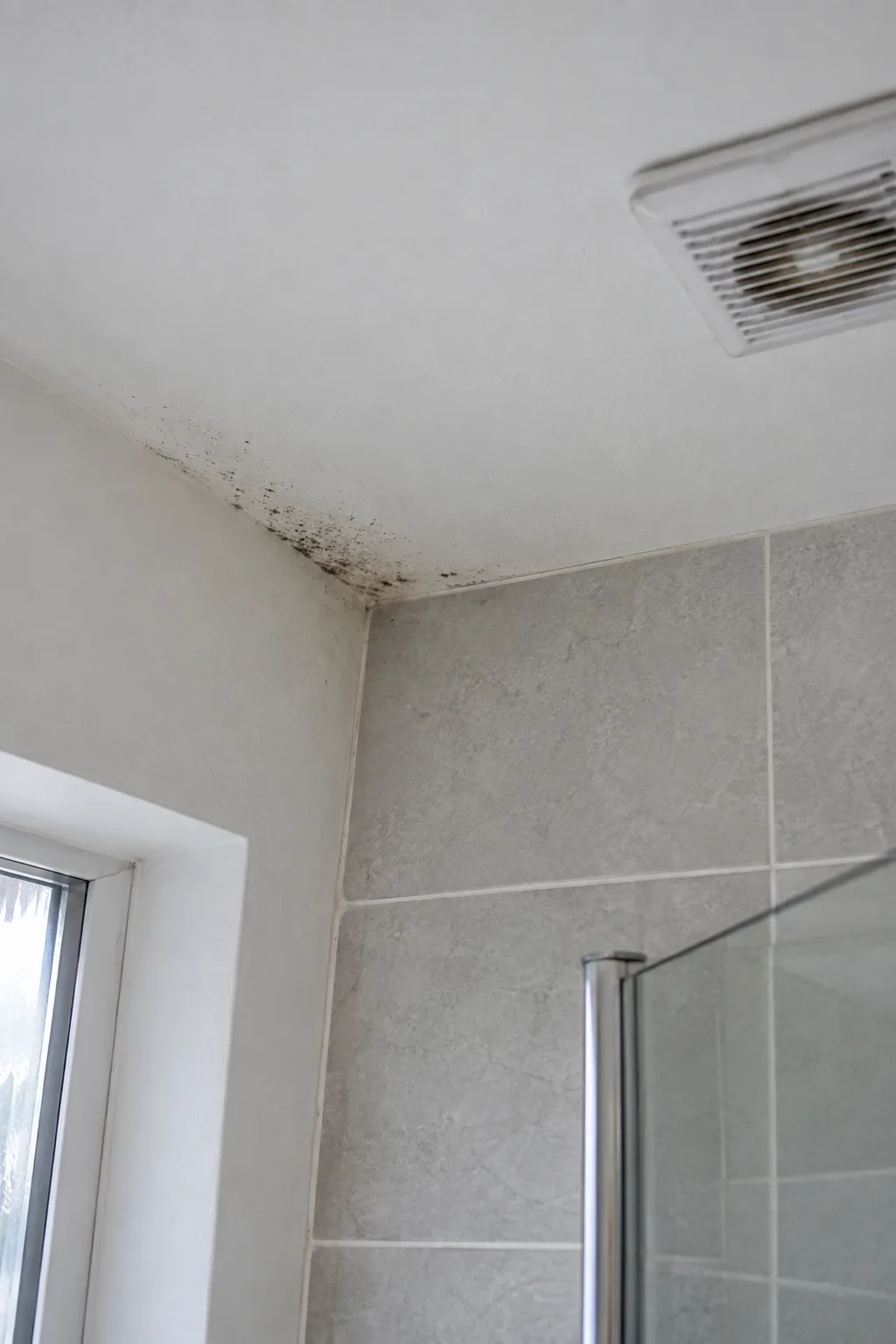
Check the pattern behind furniture and at nearby corners too; those sheltered surfaces can behave differently from the room’s heated central area. A condensation assessment can consider ventilation, room use and cool surfaces where those signs are present. Heating, air movement and indoor moisture need considering together. Changes to one condition may improve a symptom while a separate source remains.
Treat the affected surface after the route is clearer
If mould has developed, discuss surface treatment with the damage and cause in mind. A repair to the water source and treatment of growth are different tasks. The finish may need time and assessment before decoration. Replacing a skirting or painting the wall should not be treated as evidence that the original wetting has stopped.
Review under the conditions that produced the mark
After agreed work, observe the area during normal heating use and relevant weather. Keep photographs from the same position and note any new boundary to the patch. If it appears only when equipment operates, report that pattern accurately. Avoid adding several coatings or changing the layout before documenting the result, because that can make a persistent issue harder to compare.
Tell us before booking if the radiator, floor covering or furniture prevents access to the affected area. Do not disconnect or move heating equipment merely to prepare for inspection. We begin with the wall and connections that can be reached, involving the relevant trade if a specific source check requires equipment to be moved.
Keep any photographs taken while heating connections were exposed. They may help explain the pipe route now concealed by finishes, although they do not confirm its present condition. The investigation can then compare a known route with the current pattern instead of guessing what lies behind the affected wall.
PROPERTY & MOISTURE CHECKS
QUESTIONS BEFORE A VISIT
Useful questions
Does damp below a valve mean that valve is leaking?
It is a useful place to check, but the position alone is not proof. Accessible condition, timing and the wider moisture pattern help establish the source.
Can a heating-related leak be intermittent?
Some wetting varies with operation or conditions. Explain how the patch changes through ordinary heating use and keep dated observations, especially if the connection is dry by the time someone visits.
Does thermal imaging identify water directly?
It shows surface temperature differences. Those observations need interpreting alongside moisture checks and the building condition, and may not confirm a concealed connection.
Should I move the radiator before you arrive?
No. Discuss access first. An appropriate person should alter equipment only for a defined task. Initial checks can help identify which connection or surface needs that attention.
Why is paint still damaged after a plumbing repair?
The earlier wetting may have damaged the finish or left retained moisture. Continued changes also need consideration before assuming the repair has resolved everything.
Nearby areas
Explain the patch before replacing the finish
Call about the Wandsworth room, heating history and timing of the damp. We can discuss suitable investigation.