DAMP & MOULD SPECIALIST
Damp and Mould Specialist Wanstead
A loft clear-out can uncover marks on several different materials. Decide what is affected and what can safely be inspected before booking a treatment intended for ordinary room walls.
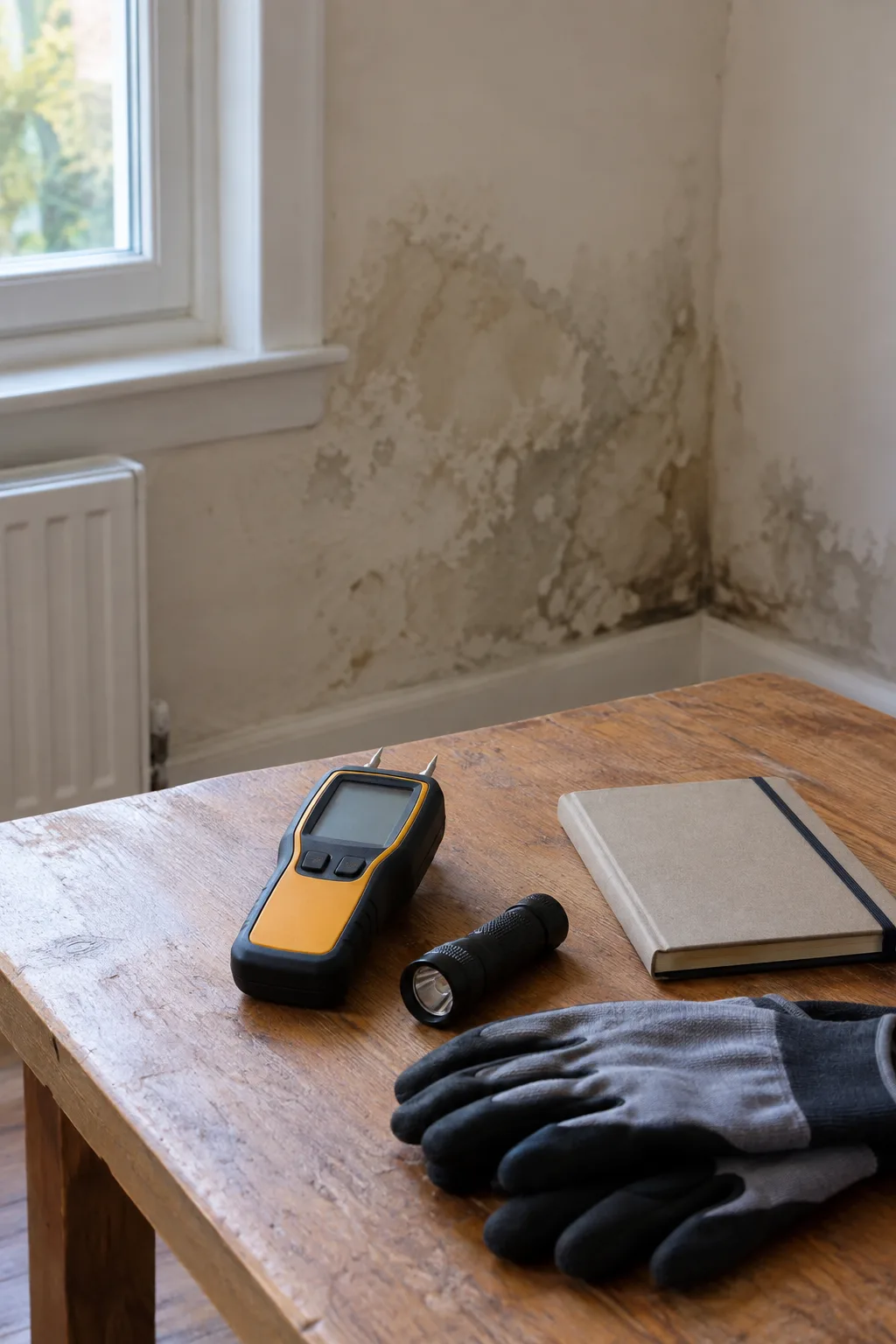
Identify the materials without disturbing them
If storage is cleared from a loft at your Wanstead property and mould or staining appears, describe what you can see from the available access. Distinguish fixed surfaces from stored items. Photograph a wider location if practical and safe. Do not disturb insulation, linings or other concealed materials simply to get a closer view for the enquiry.
A moisture investigation with a defined loft scope can be discussed before booking. Explain the access, affected surfaces and what decision you need answered. An inspection of accessible moisture concerns should not be assumed to include a full roof, structural or concealed-construction survey. Clarifying that boundary makes the visit more useful.
Fresh water and old marks are different observations
Note whether there is visible new water, a stain changing after rain or only an older mark found during the clear-out. State when the surface was last visible if known. A recently discovered patch may have existed for some time. If an active source is suspected, report the change to the person arranging appropriate roof or plumbing checks promptly.
Assessment of possible external water routes may help where accessible evidence points outside. Higher or concealed details can require closer examination by a suitable contractor. A stain’s location below a roof feature does not prove that feature has failed, and a possible route should be distinguished from one confirmed by inspection.
Storage can hide both condition and access
Boxes may obscure surfaces or restrict the available route through the space. Discuss preparation and the available access before booking. Identify which parts can be reached within the scope and which remain unavailable. Do not move onto areas not intended for access. Limitations should be recorded plainly, especially if the main concern remains beyond the agreed inspection area.
Tell us about previous roof repairs, changes to loft use or work on ceilings below. Plans and photographs can help explain the arrangement but cannot show the current state of hidden materials. If another specialist needs to inspect a particular detail, the damp findings should identify the question and the available observations that prompted it.
If a contractor has already seen the loft marks, ask what surfaces were accessible and which further checks they recommended. Keep their observations separate from a broad description of the roof’s condition. Keep the scope precise so the next visit can add relevant evidence. State which hidden areas remained unseen and the reason for any further access request.
Air moisture and building water both need consideration
Moisture conditions can be influenced by the surrounding building, temperature differences and airflow. A discussion of relevant ventilation and condensation checks can establish what falls within the proposed assessment. Ask how the advice fits the known construction and agreed scope. Any concealed arrangement requiring a separate specialist check should be identified.
Accessible pipework or a water system may be relevant where present, but do not guess a source from the loft label. Record any known repair history and observed change. Measurements need context from the material and location. If the available evidence cannot establish the route, a clear next investigation is more useful than a confident cause chosen simply to complete the visit.
Confirm treatment suitability before arranging it
Mould treatment requirements depend on the affected materials, extent and access. Discuss the surfaces found and do not assume ordinary wall treatment covers every loft component or stored object. Some concerns may need another contractor’s assessment or a different preparation plan. Source repair and growth removal should be coordinated where both are needed.
Keep photographs, findings and records of further checks before the space is filled again. Ask what uncertainty remains and which observations would justify follow-up. A clean accessible surface does not confirm the condition of concealed roof areas. The useful outcome is a correctly scoped plan that addresses the discovered evidence without overstating what one visit or treatment can establish.
PROPERTY & MOISTURE CHECKS
QUESTIONS BEFORE A VISIT
Useful questions
Does a standard wall-treatment booking include a loft?
Do not assume that. Explain the materials, extent and access when calling so the assessment and any suitable treatment scope can be discussed before work is arranged.
Should I move insulation to expose more marks?
Do not disturb concealed materials to gather evidence. Describe the accessible concern and agree any further examination with an appropriate person and a clear purpose.
Can marks found during a clear-out be old?
Yes. Discovery date is not necessarily the start date. State when the area was last visible and share any earlier repair or photograph history.
Will the damp assessment replace a roof survey?
No. Confirm the proposed scope. Accessible moisture findings may direct roof questions, but they do not amount to a complete survey of every roof detail.
What if only stored items are marked?
Describe that distinction. The surrounding moisture conditions may still warrant enquiry, while treatment of possessions should not be assumed included in work on fixed building surfaces.
Nearby areas
Define the loft concern before booking the work
Call with the Wanstead property details, visible materials and access information. We can discuss an assessment scope and the roof or treatment questions the discovery has raised.