DAMP & MOULD SPECIALIST
Damp and Mould Specialist Barking
Mould and a lifting paint finish raise separate questions about the wall. We assess the affected materials and wetting before another coat hides the damage or sound finishes are removed unnecessarily.
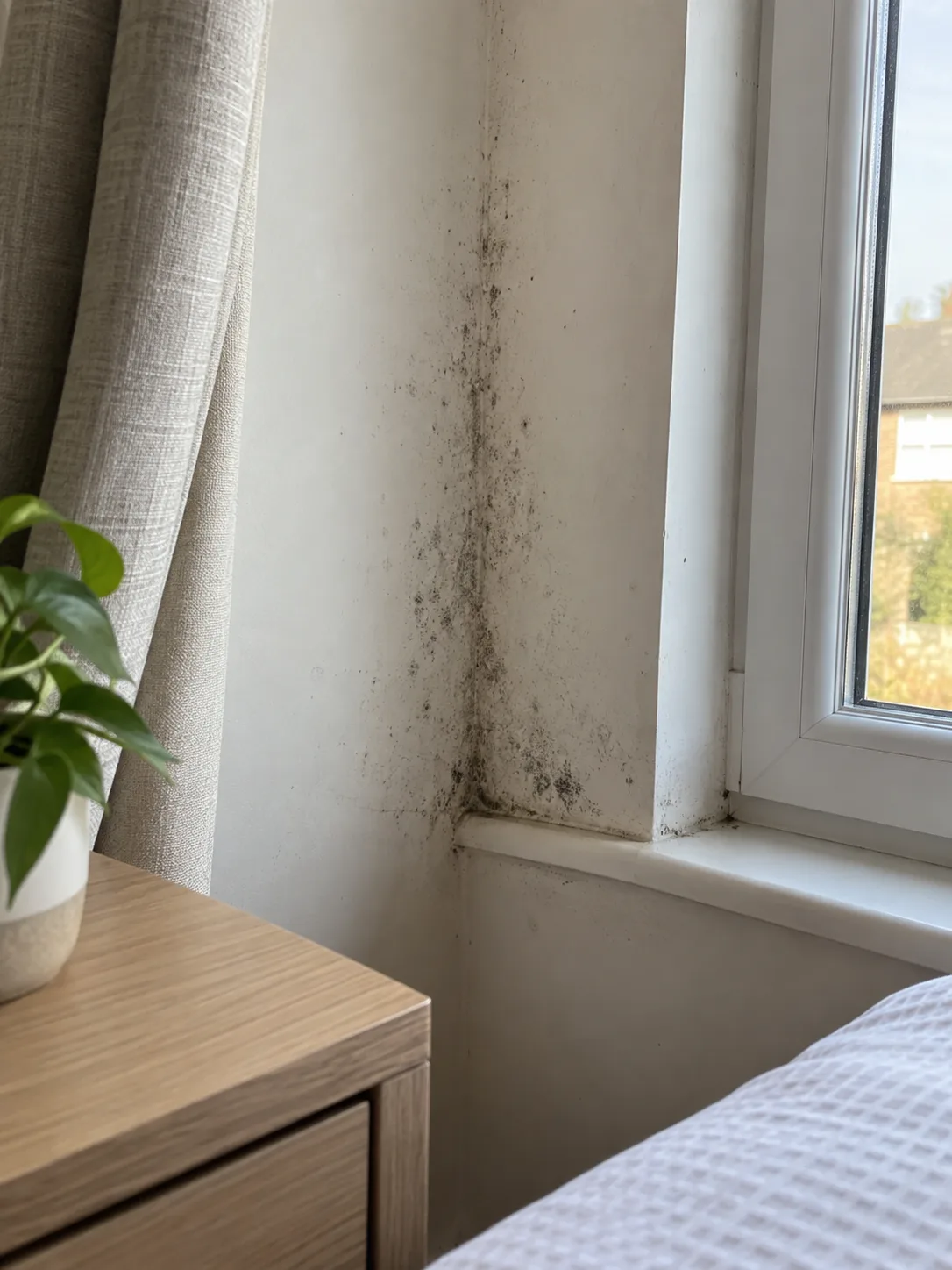
Record growth and coating damage separately
If a bedroom wall in your Barking home has mould beside peeling or blistered paint, photograph both signs before preparing the surface. Note where paint lifts, where dark marks occur and whether the underlying finish is visible. A blister shows a material concern to investigate. It cannot identify the moisture source or establish that the whole wall needs replastering.
Include a wider wall view, the nearest window and any adjoining fitting or room. Record which part changed first and whether it feels visibly wet. Describe any recently applied coating and the preparation documented beforehand. That gives the inspection a useful material history without assuming the latest product caused the damage.
Identify which layer was actually worked on
A decorating invoice may record a new coat over an existing finish, while other work may have replaced plaster or added a lining. These changes create different assessment questions. Tell us what you know about the wall and retain product information, photographs and work dates. If a layer is unfamiliar, describe its appearance instead of guessing its composition.
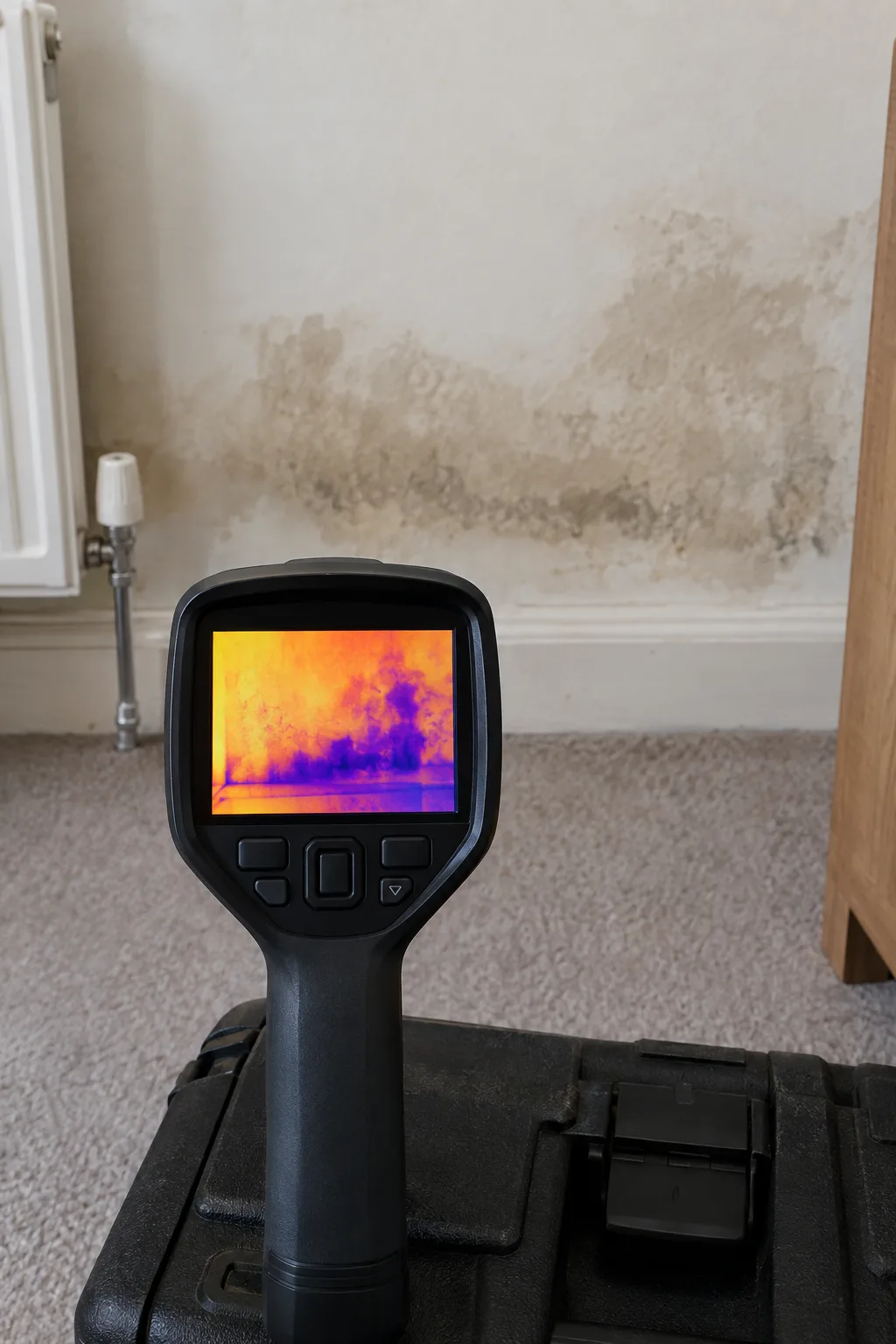
A moisture assessment of the damaged coating and wall considers accessible readings with the materials tested. A measurement on a lifting finish should not be read as a complete account of the plaster or concealed backing. The findings should identify which material was directly examined and which remains outside the available view.
Use the lifted edge as evidence without stripping the room
Where paint has already lifted, the visible edge may help locate the extent and condition of the finish. Photograph it without pulling away more material to prepare for an appointment. Avoid sanding or scraping mouldy or unfamiliar layers before the agreed scope is clear. Existing damage can guide a targeted material question without requiring the entire wall to be stripped.
If closer examination of an underlying layer is useful, ask what view is needed and who will provide it. A small exposed patch supplies evidence at that position; it does not describe every hidden section. Keep photographs of any agreed opening before another contractor covers it. This connects the material findings to the original damaged finish.
Find the water route that the surface work must address
Look at wetting as well as the state of the coating. A local patch that changes with rainfall may need checks of the corresponding outside water-entry details. A patch near plumbing may support a separate fitting enquiry. Record that timing with the exact wall position, keeping it distinct from broadly scattered growth.
For mould at a cooler reveal or furniture edge, a review of repeated surface wetting in the bedroom can consider room moisture and air movement. Those findings should explain how a proposed change relates to the affected finish. Ventilation cannot repair a leak, while an external repair cannot establish that every damaged coating is ready to retain.
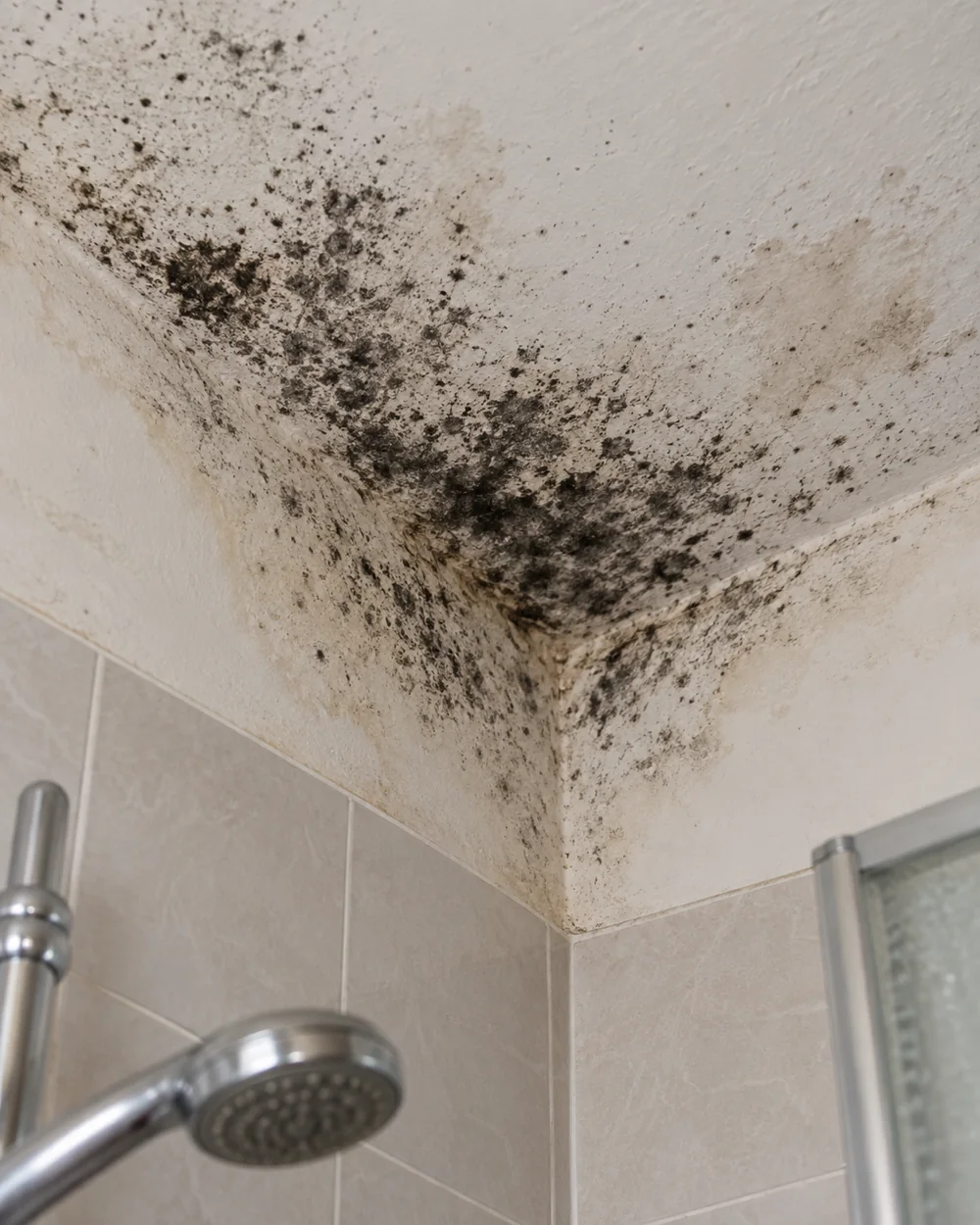
Agree what the treatment includes
Treatment of the mould-affected wall surfaces should take the growth, material condition and access into account. A loose coating may need a preparation or repair decision different from sound paint with visible growth. Confirm what the proposed treatment covers and which plaster, lining or decorative work requires a separate arrangement.
Ask whether any concealed layer still needs assessment before making good. Keep the moisture-source findings alongside the material observations. A clean visible face does not confirm a hidden backing has been examined. Equally, the presence of a damaged patch should not automatically become an instruction to replace every otherwise unassessed section.
Let the material findings guide the next finish
Before repainting, clarify which source work has been completed and what has been established about the accessible wall condition. Share the relevant findings with the person preparing the surface. Product selection and application should account for the actual material and appropriate instructions; there is no universal coating recommendation that follows simply from a photograph of mould.
Keep a record of which area was prepared, repaired or retained. Photograph the original positions after agreed work and note renewed lifting, wetting or growth. Those observations can support a later review without treating a new decorative appearance as confirmation about every concealed layer. When calling, describe the coating damage and wall history so the inspection covers the material concern as well as the visible mould.
PROPERTY & MOISTURE CHECKS
QUESTIONS BEFORE A VISIT
Useful questions
Does blistered paint prove the plaster must be replaced?
No. The affected layers and their condition need assessing. A local coating defect should not be generalised to the entire plaster surface without evidence.
Should I scrape the wall before inspection?
Photograph the existing damage and discuss the scope first. Further removal should expose a defined material question, with suitable preparation and access arrangements.
Can mould treatment include all decorating work?
Confirm the agreed scope. Surface treatment, plaster repair and redecoration have different tasks; the proposal should state which materials and work are included.
Will a different paint stop the blisters and mould?
The material condition, preparation and source of wetting need understanding first. A new coating cannot repair a leak or confirm a concealed wall is sound.
What should the decorator receive from the assessment?
The affected positions, material observations, source findings and any outstanding checks help define preparation. Include the actual repair record and any hidden area not assessed.
Nearby areas
Check the damaged finish before the next coating
Call about your Barking wall with photographs of the mould, lifting paint and any earlier wall work. We can discuss the moisture and material assessment.