DAMP & MOULD SPECIALIST
Damp and Mould Specialist Walthamstow
Changes outside a wall can matter when damp appears indoors. We assess the accessible details and damage pattern before deciding whether the garden arrangement is involved.
What has changed beside the affected wall?
If a wall in your Walthamstow home faces raised planting, paving or another garden feature, record the arrangement when damp appears indoors. Moisture held near a wall and altered external levels can be relevant. They do not prove a particular entry route or establish that every indoor mark comes from outside. The investigation needs to connect the current setting with the actual damage.
Tell us when the feature was added and whether the damp predates it. Photographs of the earlier wall base may help where it is now concealed. Mention drainage changes and nearby openings, but do not excavate or remove heavy materials before an appropriate inspection question and access plan are agreed.
A planted border may obscure an opening that was visible in older photographs. If that is the case, describe it without clearing or digging around the detail in advance. The original view can help establish a targeted inspection question. It cannot prove the current concealed condition, so the findings should distinguish records of earlier construction from what was actually observed during the visit.
Record height, spread and weather changes
Note low damaged paint, a patch around an opening and any growth higher up. These may have different explanations. Record how the damage responds to rainfall and whether it remains during dry weather. A low mark alone cannot establish rising damp or tell you which external alteration caused it.
Checking accessible wall-side water-entry details helps relate the interior pattern to the outside conditions. Identify any wall-base detail hidden by planting or paving, and explain which specific view would help relate it to the indoor damage.
Outside clues do not exclude indoor condensation
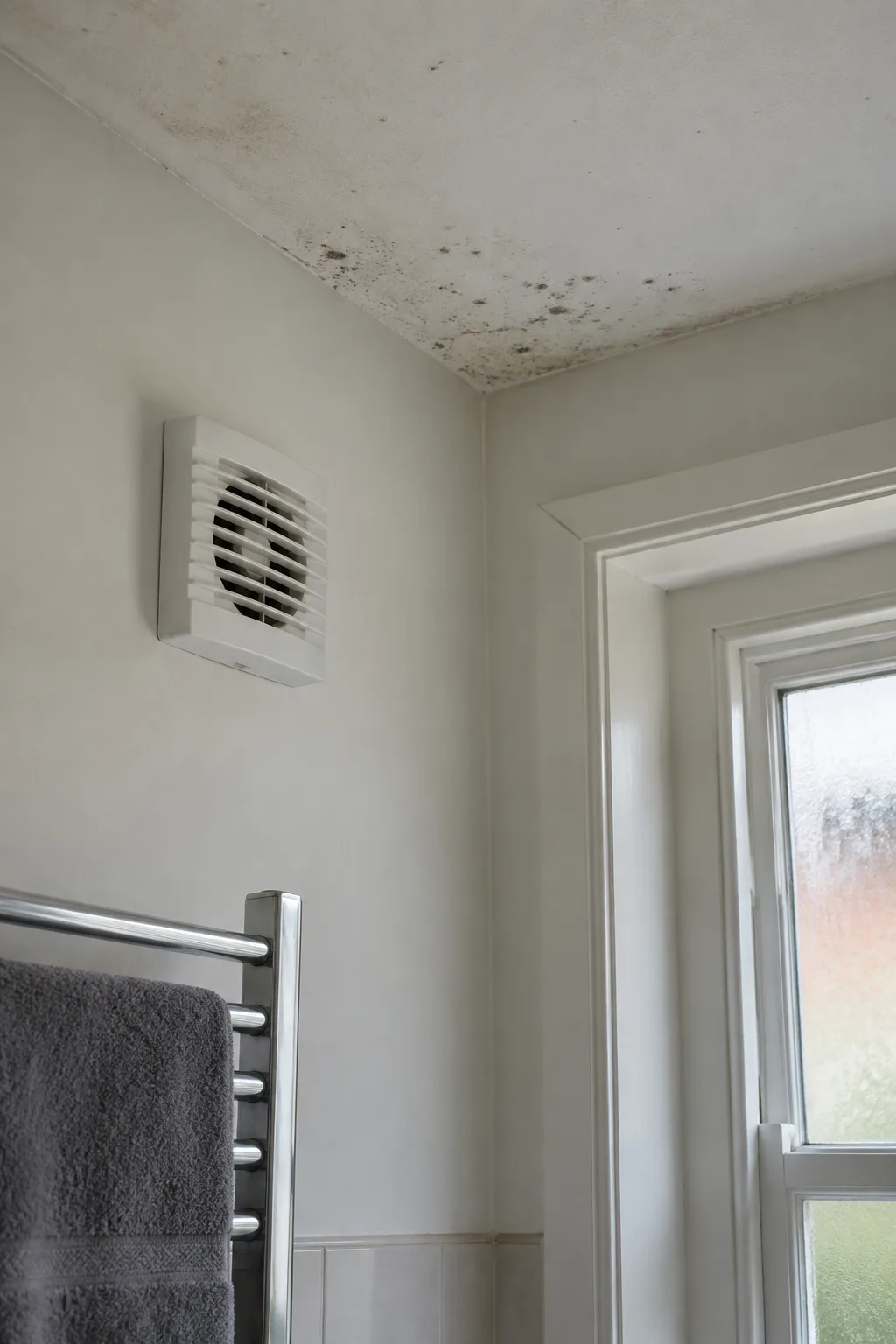
Furniture against an outside wall may restrict air movement. Moisture from cooking, bathing or laundry can settle on a cooler surface even when an external concern is also present. We ask about ordinary room use and compare individual signs with the outside setting, so the recommendations account for both sources of evidence.
A review of the room’s condensation conditions can help assess that contribution. Ventilation advice has a different purpose from external level or drainage work, and the findings should explain which evidence supports each recommendation.
Compare accessible readings with the construction
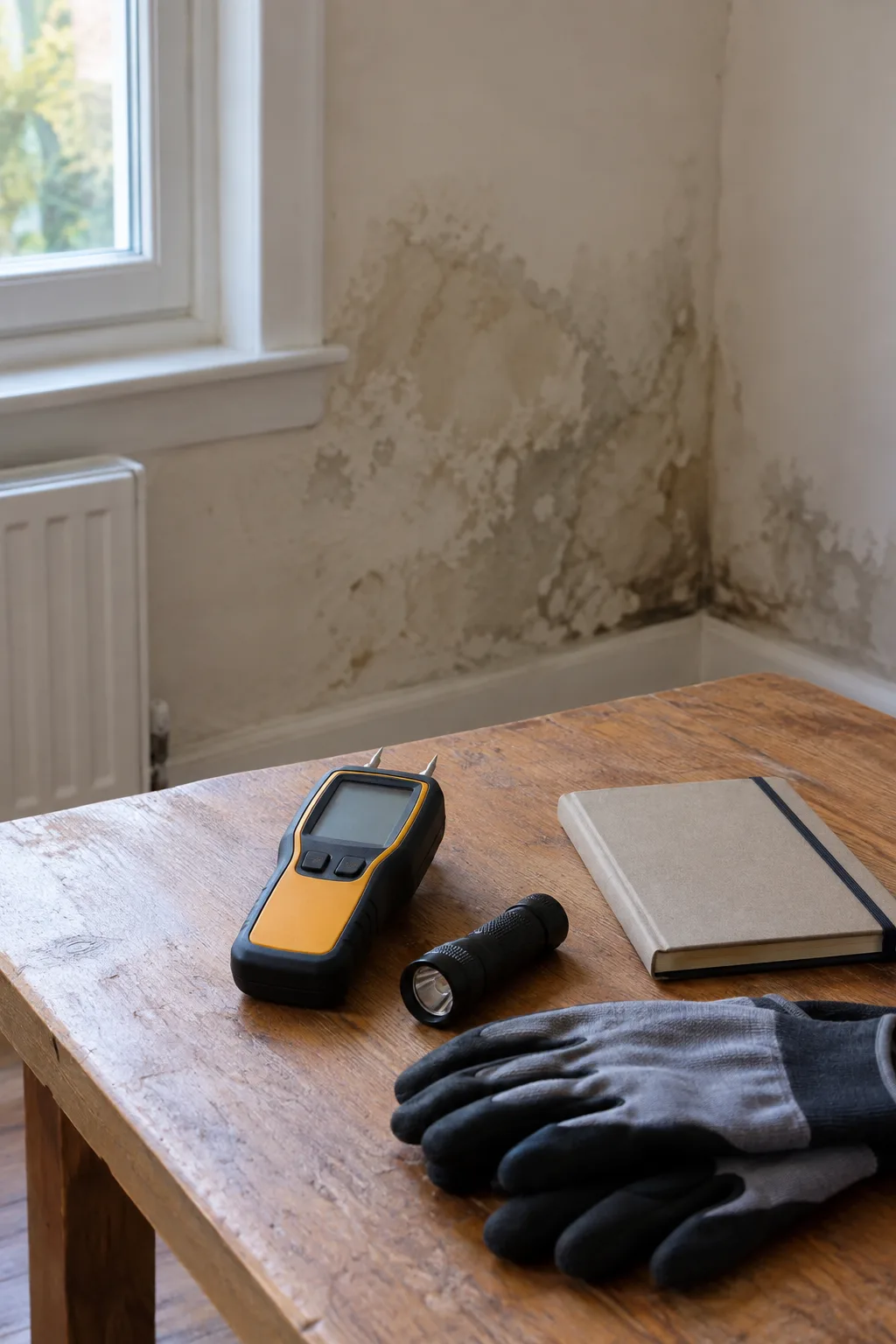
We examine damaged finishes and relevant moisture patterns, considering materials and earlier repairs. A high measurement at the wall base is not enough to prescribe a treatment. External access, possible plumbing routes and the history of wetting all affect interpretation. New coatings may conceal the original outline, so earlier photographs are useful.
Investigating the wall before covering the damage can identify a defined next step. If a concealed junction or below-ground detail needs closer examination, the recommendation should explain what that access would answer and acknowledge the initial scope’s limits.
Separate garden work from surface restoration
Treatment of affected internal surfaces addresses visible growth and the relevant material condition. It does not alter outside drainage or repair a wall detail. If external work is supported, coordinate it with the surface treatment and record how each task addresses the affected wall.
Before new plaster, skirting or paint conceals the area, review the source findings and accessible material condition. Keep a record of what was changed outdoors and any hidden detail exposed during the work. That helps later assessment compare actual repairs with the original symptoms.
Make outside access useful and proportionate
Call with the affected room, the feature outside and any known changes in levels or drainage. Describe safe access and whether a neighbouring owner controls part of the space. The first assessment can often define what needs a closer look without broadly removing every garden feature on a guess. Any excavation or invasive check should have a specific purpose and suitable arrangements.
If the damp appeared long before the garden change, say so. A useful timeline prevents a recent visible feature being blamed automatically for a condition that may have another or earlier source.
PROPERTY & MOISTURE CHECKS
QUESTIONS BEFORE A VISIT
Useful questions
Does raised planting prove the indoor wall is taking in water?
It is a relevant outside condition, but the route and relationship to the damage still need investigating. Other moisture mechanisms remain possible.
Should the planter be removed before inspection?
Discuss access and the investigation question first. Heavy removal or excavation should not be undertaken solely to prepare for an initial visit.
Is a low wall stain enough to identify the damp type?
No. The material, pattern, external details and other possible sources need considering together.
Why ask if the damp predates the paving?
The timeline helps distinguish an existing condition from one that may relate to later alterations, without treating timing as proof of cause.
Could condensation affect the same wall?
Yes. Indoor moisture can settle on cooler surfaces while a separate external issue also contributes. The assessment should distinguish the findings.
Nearby areas
Check the relationship between garden and wall
Call about your Walthamstow property with the outside arrangement and indoor damage history. We can discuss a focused assessment.