DAMP & MOULD SPECIALIST
Damp and Mould Specialist Clapton
Internal shutters can conceal a window reveal for much of the day. We assess the surface behind them and the reasons it becomes wet before recommending treatment.

The space behind the closed shutters
If your Clapton bedroom has internal shutters and mould appears around the opening, the enclosed reveal deserves a closer look. Closing the shutters changes how room air reaches that surface. Condensation may contribute, but a leak around the opening remains possible. The investigation should consider the normal shutter use without treating the fittings as the automatic cause.
Describe whether the shutters are fixed to the reveal, how long they stay closed and what glazing is installed. Tell us if the marks existed before the shutters or appeared after window work. Installation photographs may help clarify concealed margins, while earlier images show whether the present problem is new.
If each shutter closes differently, note any panel that stays partly open or has a fixed section. The accessible reveal and enclosed area may differ across the opening. Record the normal arrangement instead of making every panel uniform for the visit. That helps interpret a one-sided pattern while still keeping local water-entry details under consideration alongside possible condensation.
Look behind each panel, not only at the glass
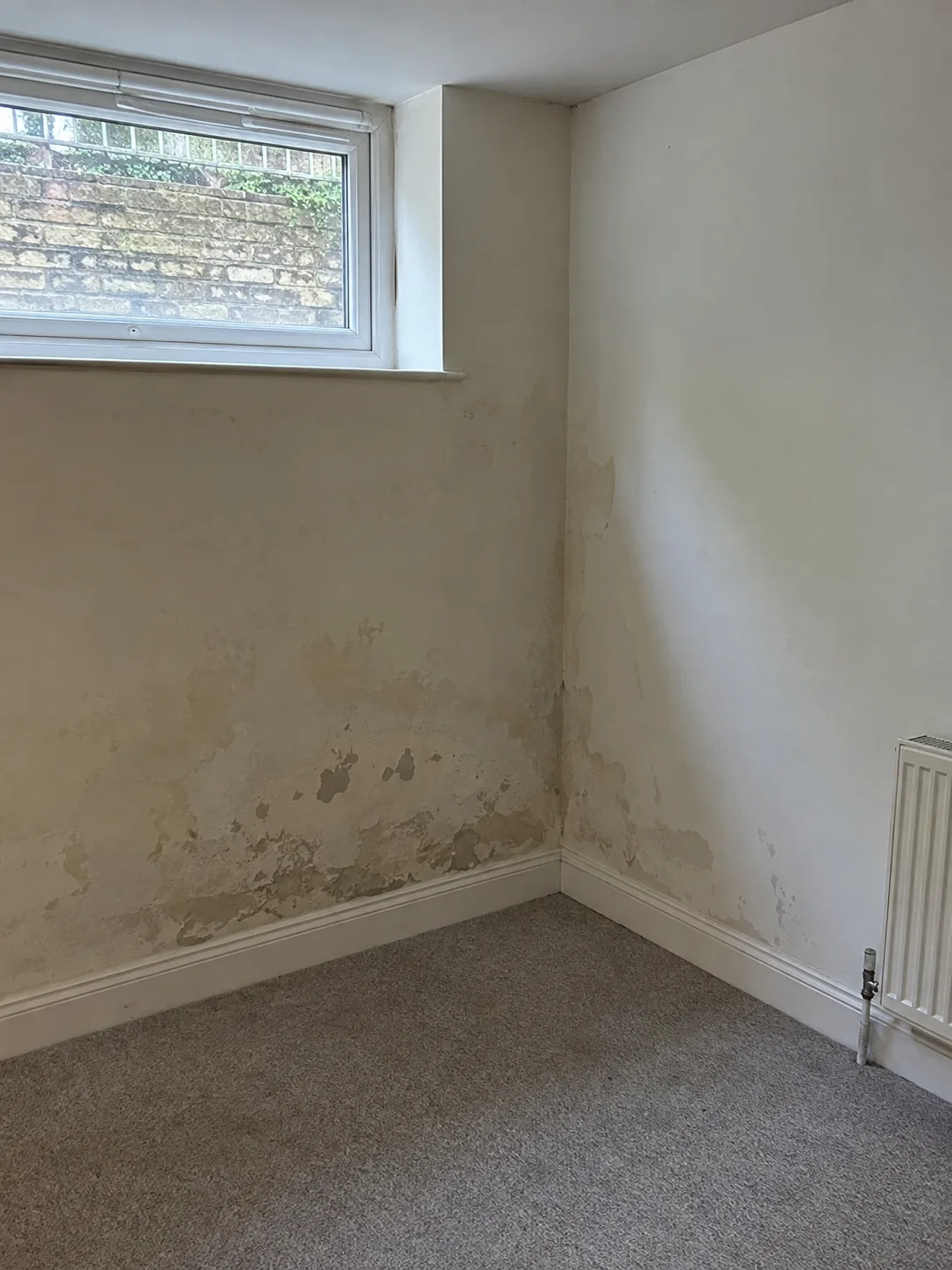
Record growth at the upper corners, side reveals and sill separately. Moisture on the glass may coexist with a distinct stain at one junction. Note whether surfaces become wet during cold nights or change after rain. Photograph the opening in its normal arrangement, then any accessible affected surfaces, so the layout remains part of the evidence.
Checking shuttered window reveals and cold surfaces helps explain the precise growth pattern. Check the reveal behind the closed panel as a separate surface, including any concealed margin whose condition still needs assessment.
Airflow needs considering around the enclosure
We ask about bedroom heating, ventilation and moisture moving from elsewhere in the home. The shutter arrangement is one factor alongside the room’s broader conditions. Discuss how the shutters are used and what changes are practical, so the recommendations fit the bedroom and the surfaces that become wet. External defects and hidden water routes still need attention if supported by the signs.
A review of airflow at the window and through the room can help assess repeated condensation. It should explain what was checked and where the fixed installation limits observation.
A local stain may need external investigation
Damage concentrated near a frame junction and changing with rain warrants consideration of outside details. Assessing accessible entry points around the opening can help identify a next check. Water may travel before it becomes visible, so the indoor stain is not an exact map of the failed component.
Avoid resealing every visible joint before the assessment. New sealant may cover clues while leaving the relevant route unchanged. If an installer needs to examine a junction, share its position, the recorded wetting and the particular detail still needing confirmation.
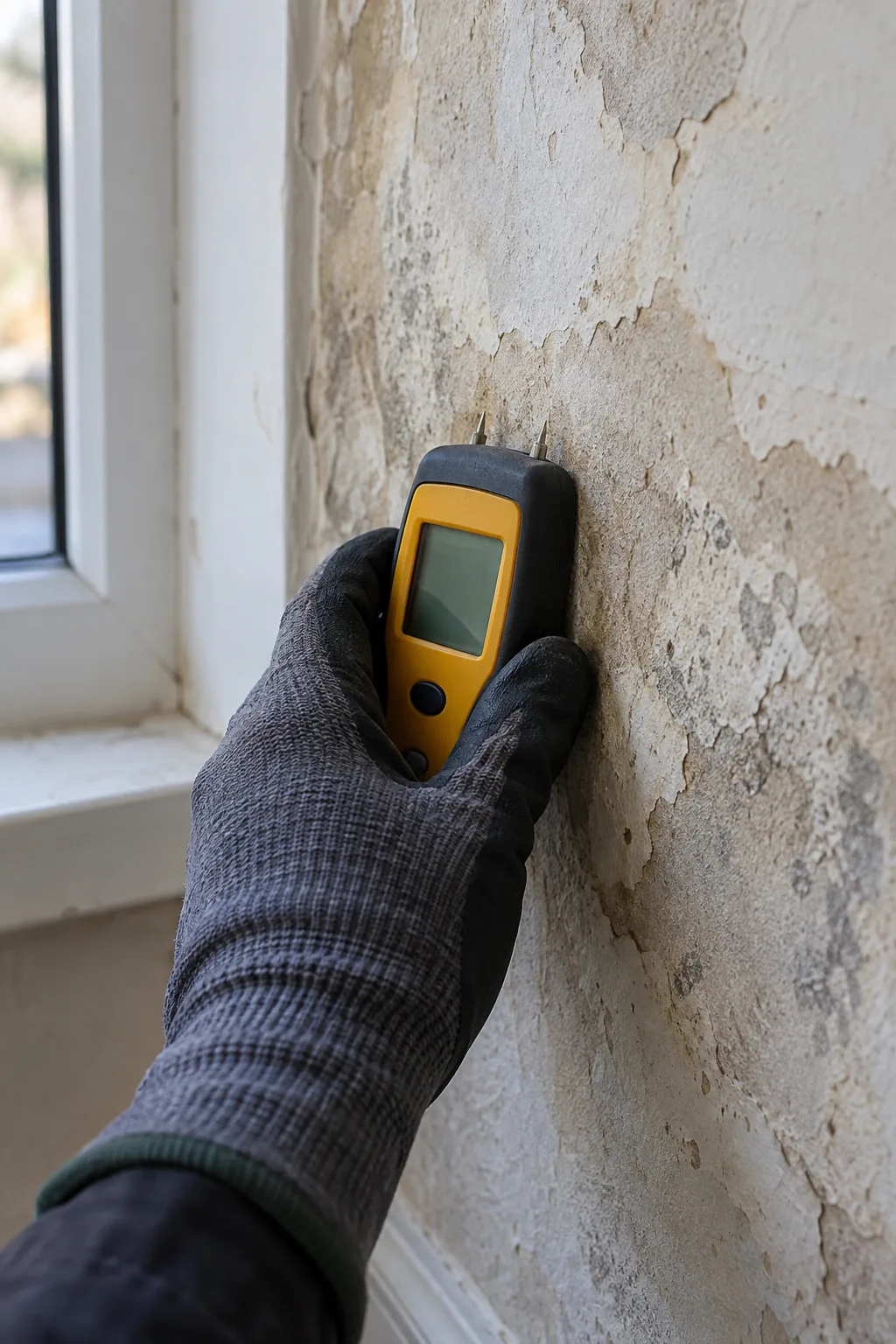
Treat the reveal with the moisture findings in mind
Treatment of the affected reveals should account for the material condition and accessible growth. Fixed shutter frames may hide margins that cannot be assessed without agreed access. The plan should not imply that cleaning the visible face confirms every concealed edge is unaffected.
Any ventilation change or external repair has its own role alongside treatment. Before painting or refitting trims, consider whether the underlying surface needs reassessment. Keep the original photographs and record which parts were treated, which source work took place and which margins remained inaccessible.
Explain the fittings before arranging access
Tell us which panels open normally and whether any part would require a fitter to remove. Do not dismantle unfamiliar fixtures to prepare for the visit. A useful first assessment can identify whether existing access is sufficient and what targeted opening would answer. That helps avoid damage to the installation before the moisture question is clear.
If cleaning has already removed the visible growth, explain the method and retain earlier photographs. Dated evidence of where it returned can support the history without being treated as proof that the same unconfirmed cause is responsible every time.
PROPERTY & MOISTURE CHECKS
QUESTIONS BEFORE A VISIT
Useful questions
Can internal shutters affect reveal condensation?
They can alter air movement and conditions around the enclosed surface. The wider room and other water sources still need assessing.
Does wiping the glass keep the reveal dry?
Not necessarily. The wall behind a shutter may remain damp for different reasons, so the surface itself needs checking.
Must the shutter frame be removed?
Existing access may be useful. If a concealed margin needs examination, targeted removal should be discussed and agreed with an appropriate fitter.
Could only one shuttered corner be affected by ingress?
Yes. Local external details can matter. The wetting pattern and weather history should guide a separate water-entry enquiry.
Would changing the window solve this?
Replacement is not an automatic answer. The reason for repeated wetting should be established before choosing a window or fitting change.
Nearby areas
Check the surfaces behind the shutters
Call about your Clapton bedroom with the window arrangement and where moisture appears. We can discuss a practical inspection.