DAMP & MOULD SPECIALIST
Damp and Mould Specialist Twickenham
A viewing may reveal a stain without giving you enough time to understand it. A focused inspection helps establish which moisture concerns need further attention.
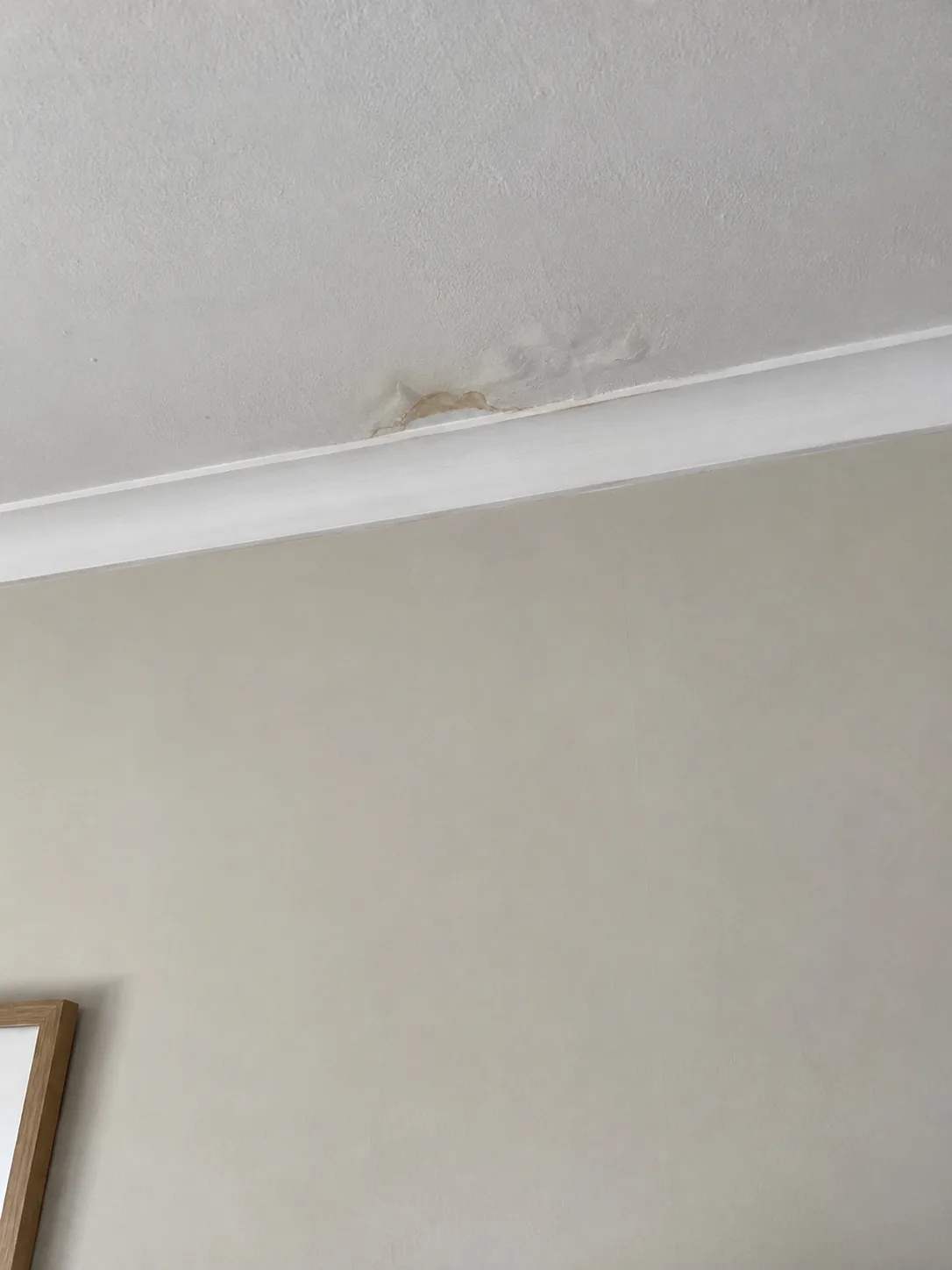
The mark you noticed during a short viewing
If you have seen damp or mould in a Twickenham property you are considering buying, record the location and the question it raises. Was there a ceiling stain, damaged paint at floor level, mould beside glass or a musty cupboard? Each sign deserves context. A brief viewing rarely establishes whether the source is active, previously repaired or hidden behind recent decoration.
Keep photographs if the seller or agent permits them, and share any relevant wording from an existing survey. Avoid turning a viewing impression into a diagnosis. A high-level stain does not automatically mean a roof fault, and mould does not automatically prove condensation. The useful next step is to agree a focused inspection that addresses the actual concern and states its practical limits.
Agree the areas and arrange access
Our pre-purchase damp survey focuses on moisture-related questions. It does not replace a wider building survey. Tell us what you need clarified before the appointment, including any concern already raised by another surveyor. Access must be arranged with the seller or agent, and rooms, cupboards or external areas that remain inaccessible should be identified.
Ask whether the property will be occupied and arrange access around movable furnishings, particularly at the wall or window identified in the survey concern. Fixed units and recent linings may limit assessment of the construction behind them. A finding about an accessible surface should not be presented as a guarantee about every concealed wall. Clear limitations help you decide what further information to request before proceeding.
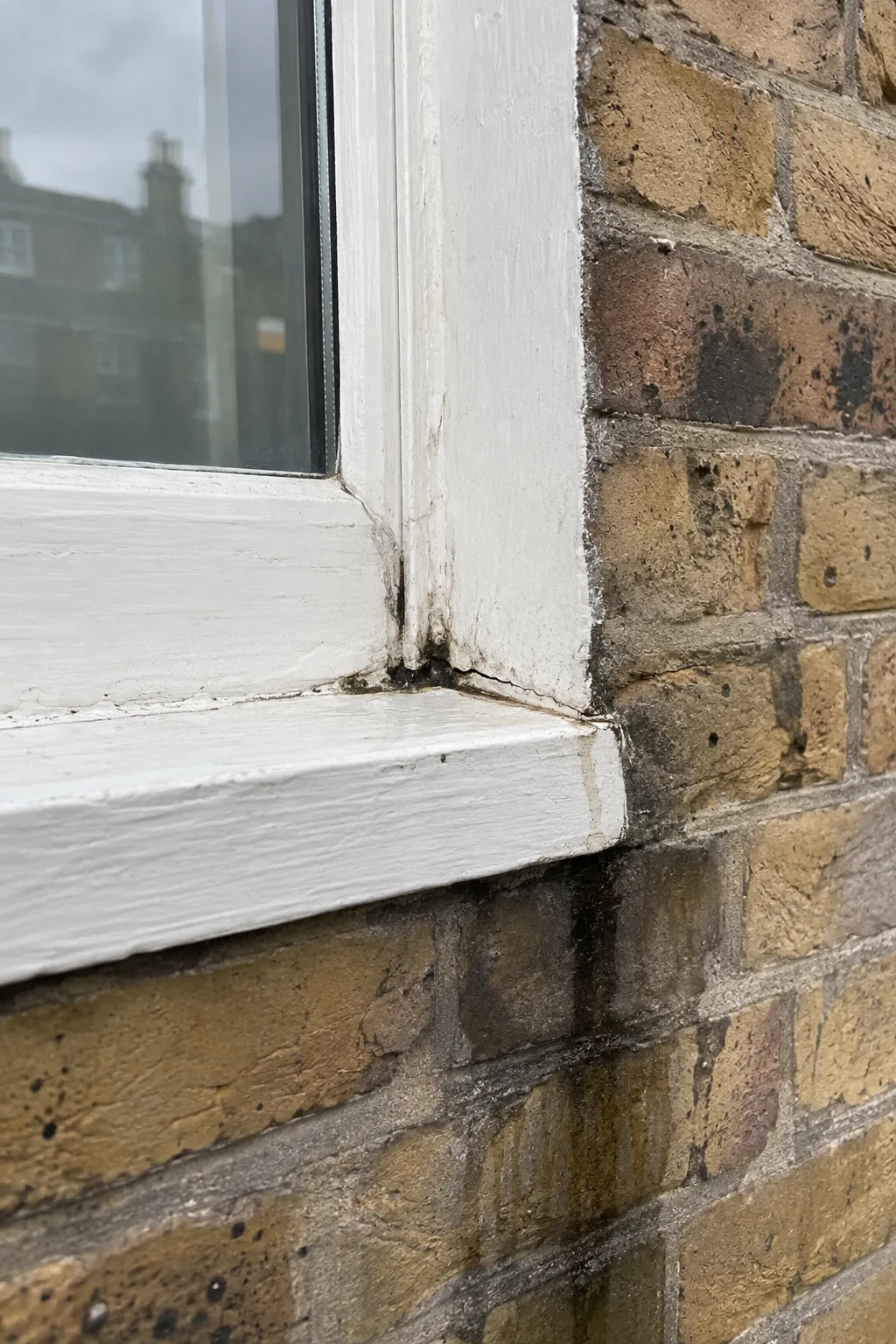
Distinguish a visible symptom from its source
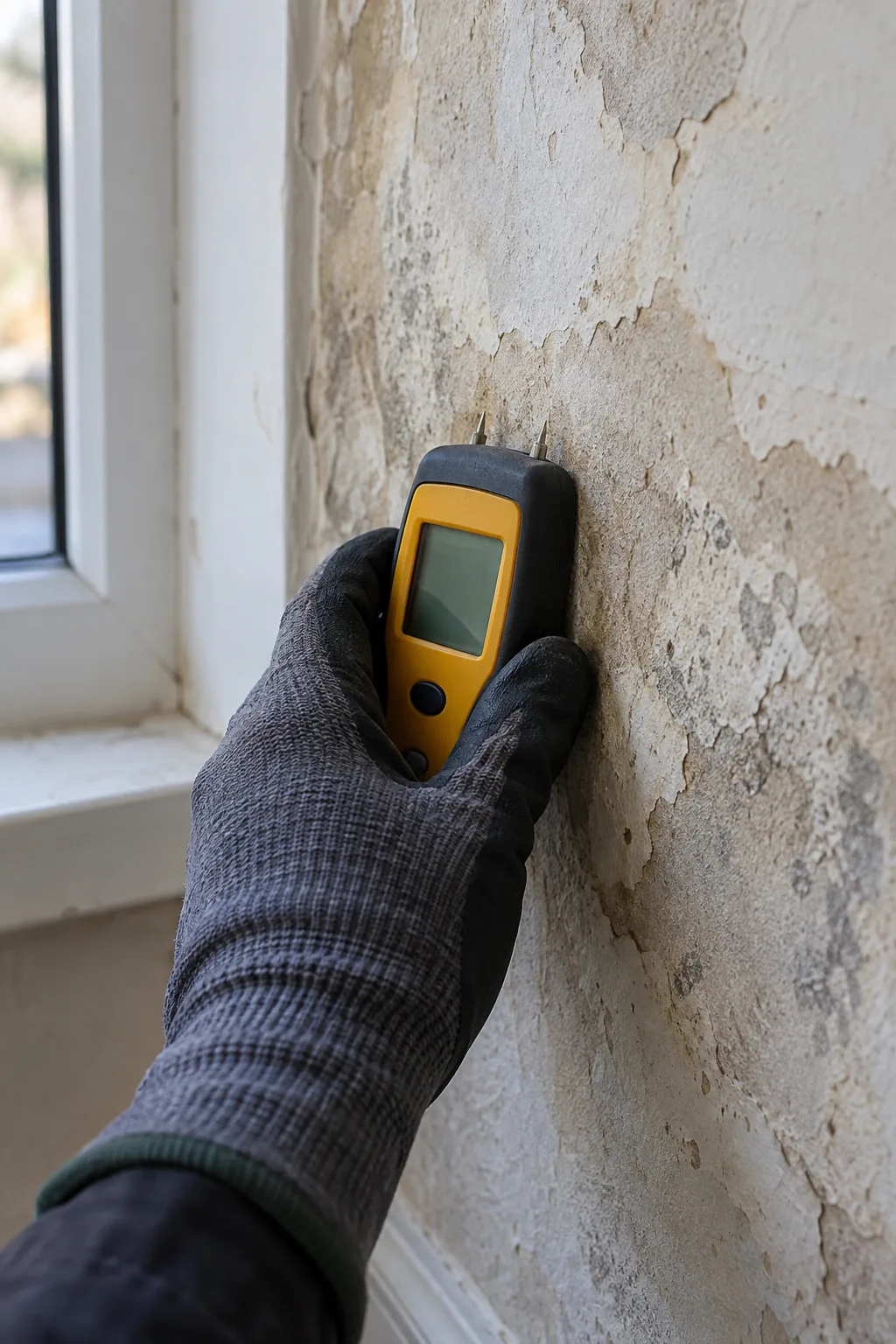
A focused moisture investigation compares the pattern, material and accessible readings. One elevated meter result is not a complete explanation. The inspection needs to consider the finish, adjacent surfaces and possible routes for water. Fresh decoration can conceal history, so any seller-supplied repair records may be useful alongside observations made on the day.
Where a stain is associated with rain or an external opening, checks for outside water entry may be relevant. High or concealed details may need separate access or another contractor. Ask which possible source is supported by evidence and which remains uncertain; those are different levels of information when considering the property.
An empty property may behave differently after occupation
Vacancy changes moisture production and sometimes heating. Record vacancy and heating conditions with the findings, as everyday cooking and bathing will introduce a different moisture pattern after occupation. A review of ventilation and condensation provision considers relevant accessible features, but the findings should recognise the conditions during the visit. It is better to explain that context than predict future performance with unsupported certainty.
Understand the recommendation before negotiating work
The findings may identify a repair, further investigation or treatment of affected mould. Ask what the proposed task is intended to resolve and whether additional access is needed before its scope can be agreed. A focused damp inspection does not automatically price every repair or replace specialist advice on wider construction. Keep the distinction clear when discussing next steps with the seller.
Use the report alongside the other purchase information
Read any limitations as part of the findings, not as small print to skip. If an inaccessible area is central to the concern, decide what further assessment is needed before relying on the conclusion. A sensible purchase discussion addresses the observed problem, the uncertainty and the work still to arrange. Avoid assuming that a coat of paint offered before completion settles the moisture issue.
If the seller says the cause was repaired, request the date, description and any available record. That information may help interpret an old stain, but a repair claim should not override current evidence. Share it before inspection where possible so the visit can consider the relevant area and avoid spending its time reconstructing a history that could have been supplied in advance.
PROPERTY & MOISTURE CHECKS
QUESTIONS BEFORE A VISIT
Useful questions
Is a damp survey the same as a full building survey?
No. It addresses moisture-related concerns within the agreed scope. Wider construction, structure and other building matters belong to the relevant broader assessment.
Can you inspect before I own the property?
Access must be agreed with the seller or agent. Discuss the areas needing assessment and any practical restrictions before booking the visit.
Does recent decoration make the property uninspectable?
Not necessarily, but it can conceal useful signs. We explain how visible finishes and available access limit the conclusions, and earlier photographs may help.
Can the inspection confirm every future repair cost?
No. Findings may identify work or further checks without providing enough detail to price every task. Separate repair scopes or specialist access may be needed.
What should I send from my existing survey?
Provide the relevant observations, photographs and questions about damp. Those details help focus the damp visit on the questions still open, leaving the wider building survey’s other findings available for the relevant advice.
Nearby areas
Clarify the moisture concern before buying
Call about the Twickenham property, the viewing signs and the available access. We can discuss a focused damp survey.