DAMP & MOULD SPECIALIST
Damp and Mould Specialist Kew
A cupboard smell during a viewing is easy to dismiss and hard to interpret. Before purchase, turn that uncertainty into a specific inspection question with agreed access.
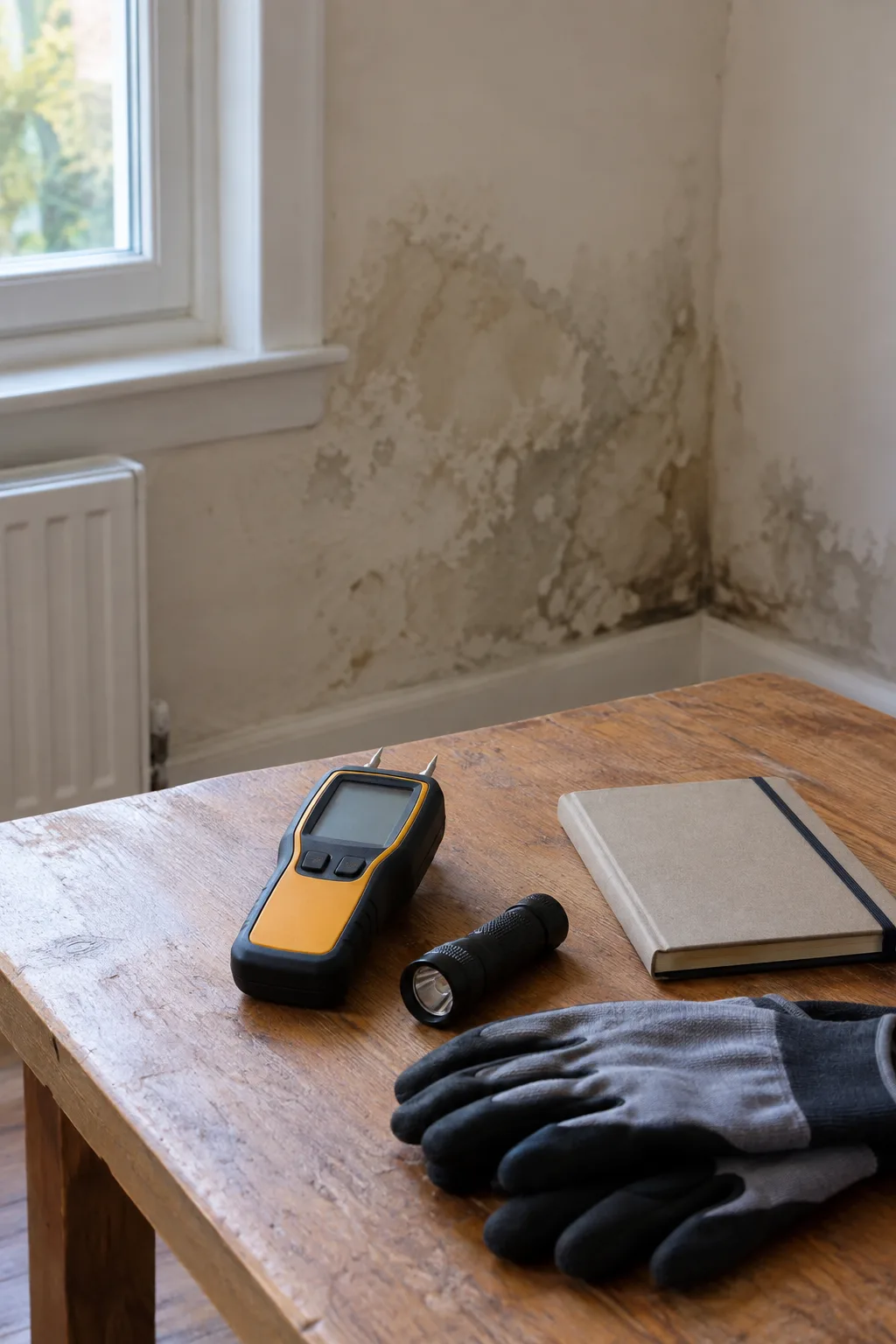
Make the concern specific before booking
If you notice mustiness in a Kew property you are considering buying, note which cupboard or room was involved and what you could actually see. A smell alone cannot identify a moisture source. Record staining, loose finishes or growth separately. Keep the location relative to an outside wall, bathroom or window, because those details help direct a focused assessment.
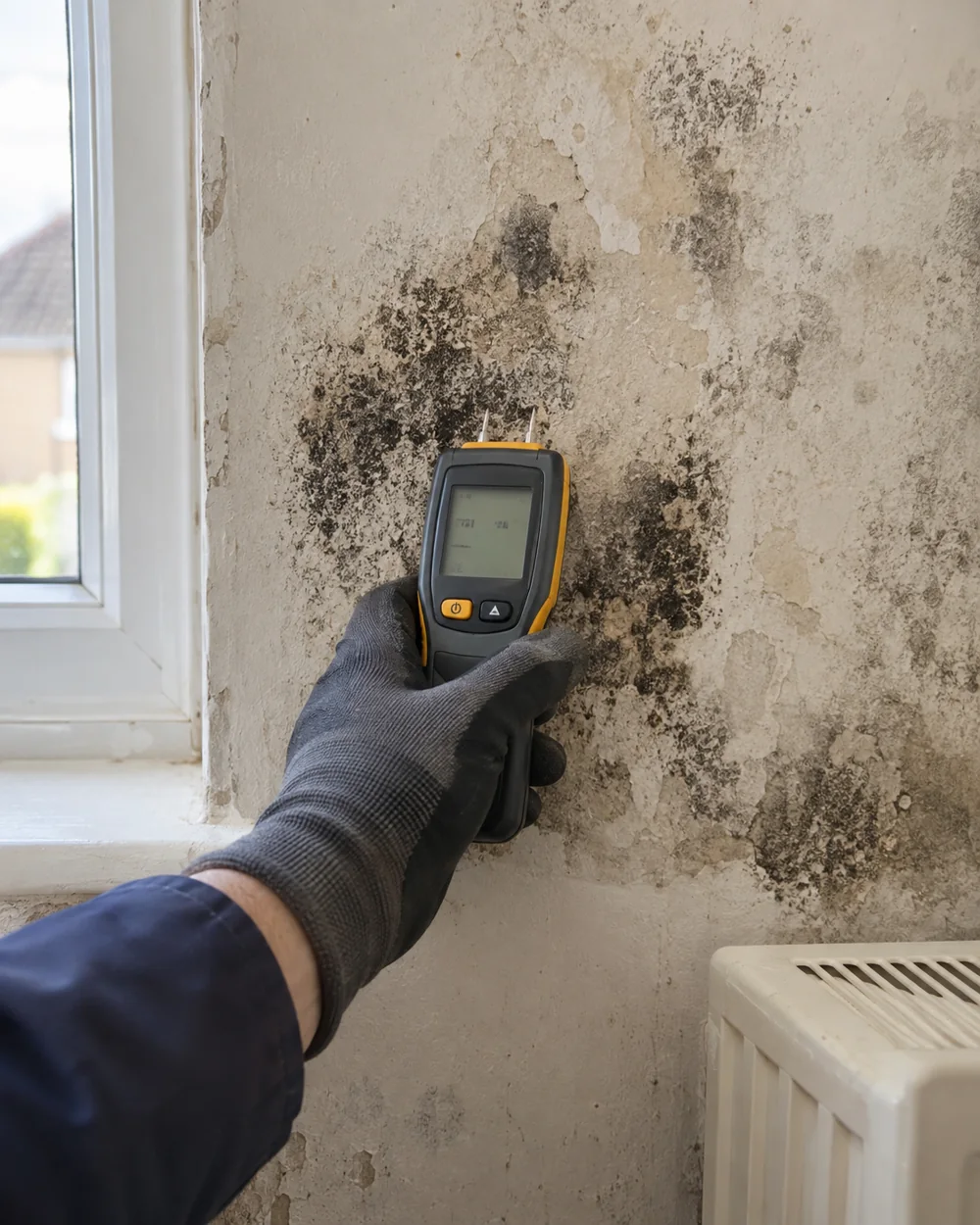
A pre-purchase damp survey can consider that concern within an agreed scope. Share any relevant observations from a wider building survey and tell us what decision remains unanswered. It does not replace the full building survey or establish the condition of every concealed area. Its purpose is to investigate the moisture-related questions you have identified.
Access belongs in the purchase discussion
Arrange entry through the seller or agent and clarify which spaces can be opened. Stored belongings, fitted backs and inaccessible external details can limit what the visit can establish. Agree reasonable preparation with the seller or agent beforehand. Identify which surfaces must be visible and who can arrange that access. Permission for a visual inspection does not automatically include dismantling joinery or opening construction.
If the concern is behind a fixed panel, the findings may explain why further access is needed without confirming the concealed condition. Decide how that uncertainty will be addressed before relying on the report. An empty adjoining cupboard may help, but it is not a substitute for seeing the specific wall where damage is suspected.
During the viewing, note if the cupboard contains an accessible pipe, adjoins a shower room or sits beside an external opening. Describe only what is visible. A simple location note can help the survey’s preparation more than an unsupported suggestion that the smell indicates a particular damp type or repair cost.
A tidy finish can leave a difficult moisture question
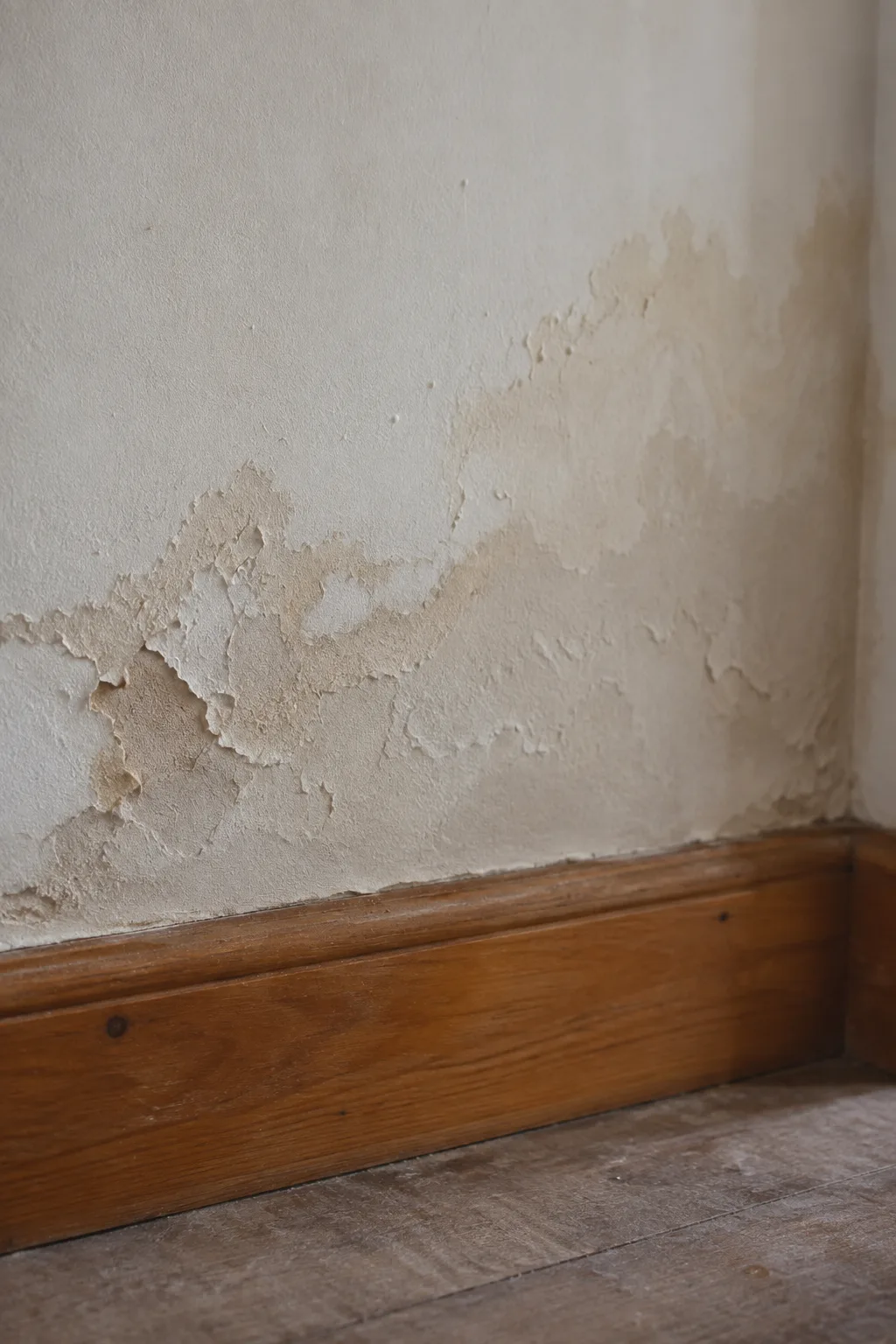
Recent paint may cover the earlier outline of a stain. Mention any decoration the seller describes and any photographs available. New finishes do not prove there is damp, and they do not rule it out. A focused moisture investigation considers accessible readings, observed materials and that history together. Ask how the evidence supports the conclusion and what remains uncertain.
Cupboards on cooler walls can also have restricted circulation. A review of the room’s ventilation conditions may be relevant if the pattern suggests surface wetting. The home’s condition during a viewing may differ from ordinary occupation, especially if heating and doors have changed. Those circumstances should be recorded as part of the inspection context.
Do not price the whole problem from one patch
The assessment may identify likely source work, surface damage and questions for another contractor. It does not follow that every repair can be priced from the damp visit alone. Ask what is confirmed, what is provisional and which further checks are needed. That distinction gives your purchase discussion a firmer basis than a broad estimate built around an uncertain cause.
Where visible growth is present, mould treatment requirements should be considered alongside the moisture explanation and affected materials. A promise to clean the cupboard before completion does not answer whether the source is resolved. Keep surface treatment, building repair and any further investigation as separate decisions in the information you review.
Use the report to ask the next useful question
Tell the inspector about your purchase stage and available access, with the moisture questions clearly identified. Findings can help you request relevant records or further specialist checks. If a water event is reported as repaired, ask what evidence exists for that repair and whether remaining material moisture has been considered.
Read the limitations as carefully as the observations. An inaccessible wall, concealed pipe or absent exterior view is part of the result, not a minor footnote to ignore. Share relevant questions with the seller or your advisers. The useful outcome is clearer moisture information before commitment, including an honest account of what still cannot be established.
PROPERTY & MOISTURE CHECKS
QUESTIONS BEFORE A VISIT
Useful questions
Does a musty cupboard prove a damp wall?
No. It is a reason to examine the surrounding condition, but it does not identify the source. Describe visible signs and the location as well as the smell.
Can the seller clean the cupboard before inspection?
Leaving the signs visible usually preserves more evidence. If cleaning occurs, request earlier photographs and details of what was applied so the inspection can consider the original concern.
Is this the same as a building survey?
No. A damp survey focuses on moisture concerns within its scope. A wider building survey considers other aspects of the property and may identify separate questions.
What if the agent cannot arrange cupboard access?
That restriction should be recorded. Discuss whether another visit or agreed preparation is needed; an unseen surface should not be represented as fully checked.
Can findings tell me how much to reduce an offer?
They can explain observed moisture concerns and further checks, but they do not determine a purchase price. Repair scope and advice from your advisers may be needed before making that decision.
Nearby areas
Get the cupboard question answered before purchase
Call with the Kew address, your viewing observations and the access offered by the seller. We can discuss a focused damp survey and the uncertainty you need it to address.