DAMP & MOULD SPECIALIST
Damp and Mould Specialist Kingston upon Thames
Fresh decoration can make a property harder to assess. A focused damp survey examines the evidence still available and explains where finishes or access limit the findings.
Look past the fresh finish without guessing
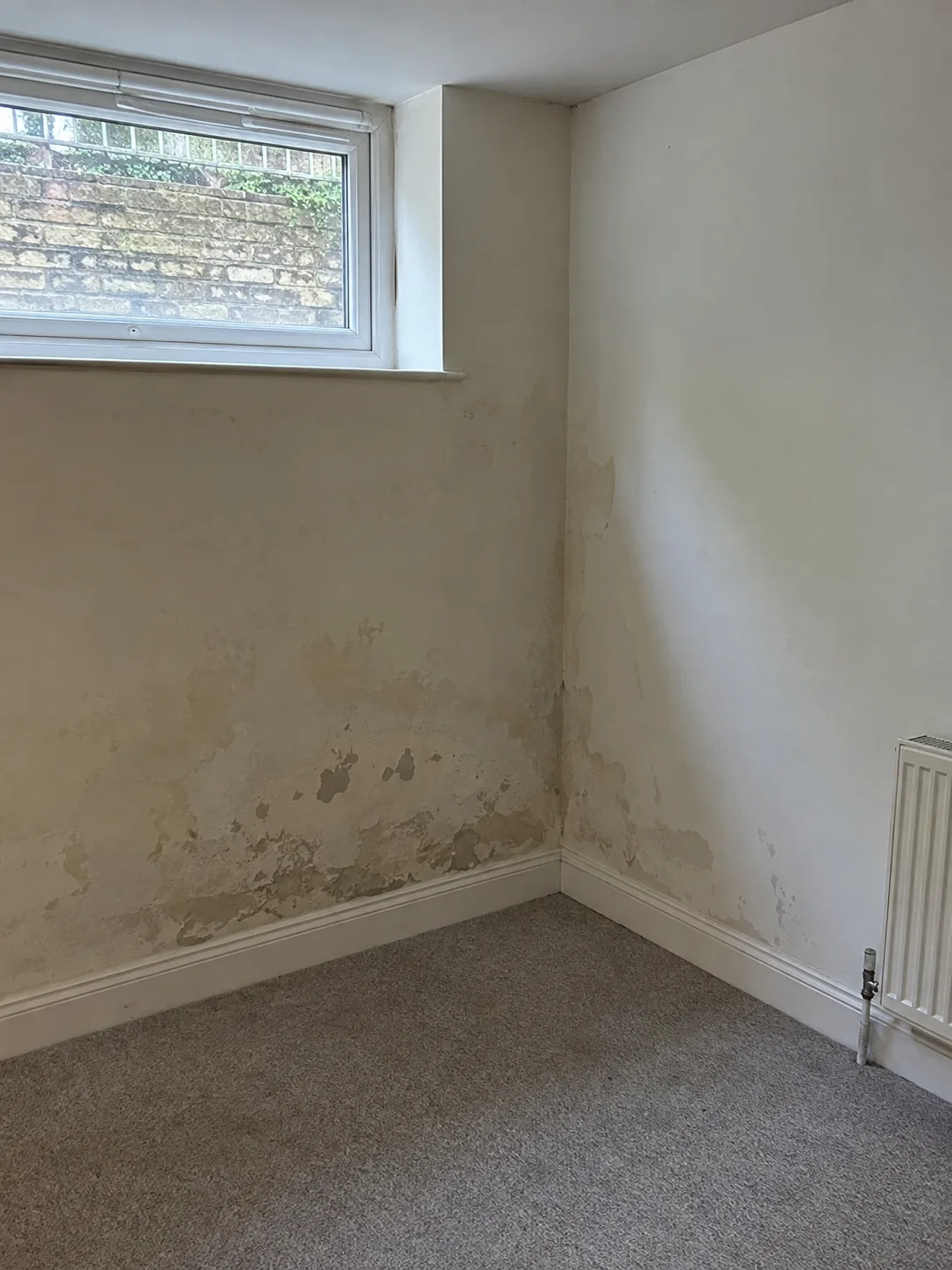
If a property you are considering in Kingston upon Thames has recently been decorated, clean walls are only part of the evidence. New paint may conceal earlier staining without resolving its cause. It may also be entirely routine decoration. The assessment should avoid assuming either a hidden defect or a clean bill of health simply from the appearance. Your viewing observations and the seller’s records can help frame the relevant questions.
Identify which rooms concern you and share any comments from an existing building survey. Tell us if the home is empty or furnished, because access differs. A focused damp survey examines moisture-related concerns; it is not a substitute for a wider assessment of the property’s structure and condition.
If the seller provides a damp-treatment document, check which rooms and areas it actually covers. A property-wide label on paperwork may refer to work at one location. Sharing the detailed scope helps the survey avoid treating unrelated walls as already assessed.
Useful clues during a viewing
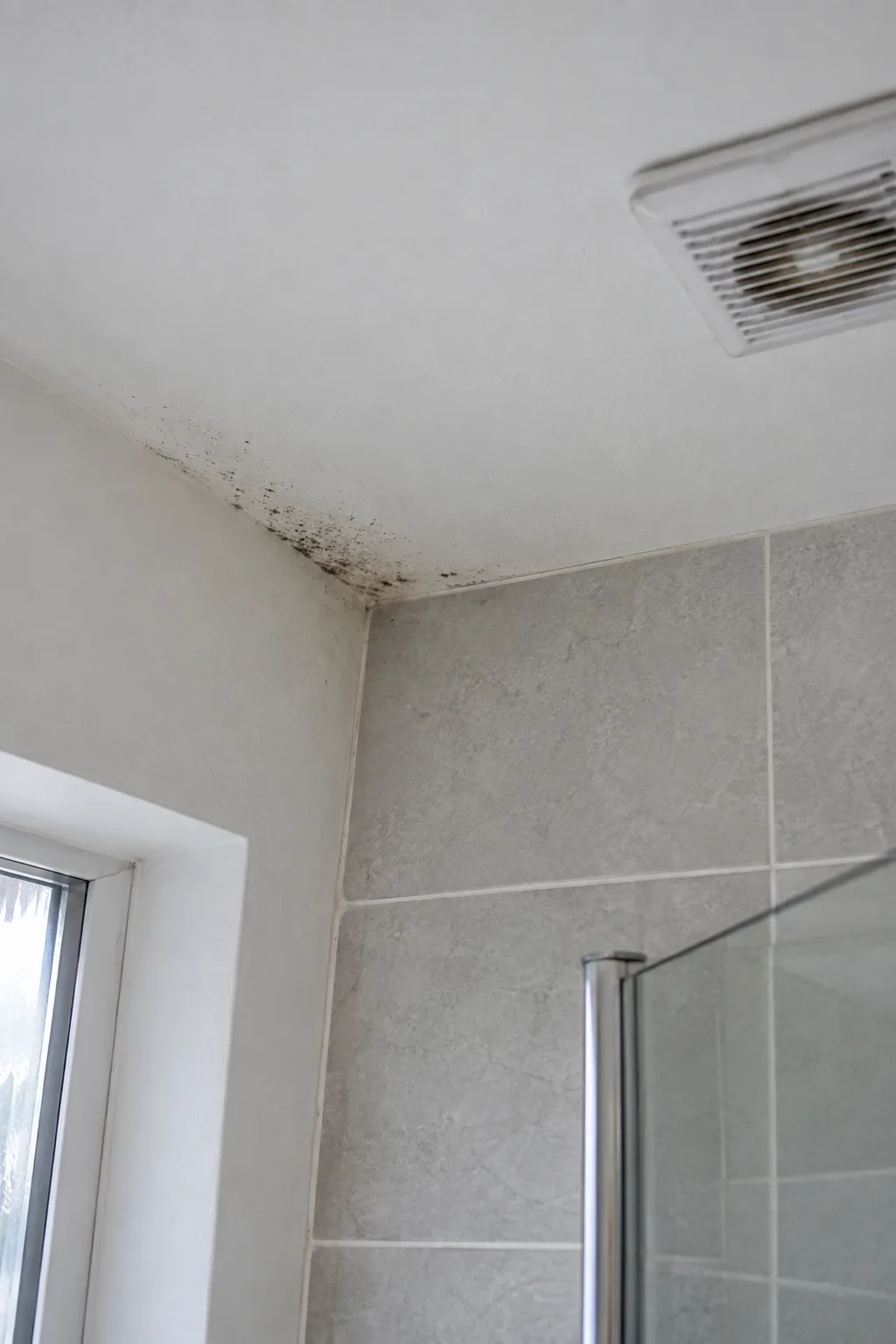
Notice mismatched patches of finish, peeling edges, marks inside accessible cupboards and mould at window corners. A musty smell may warrant further investigation, but cannot establish a cause or extent by itself. Photograph concerns with permission and record their position. Avoid relying on a brief viewing with open windows to determine how the home behaves during ordinary occupation.
Our pre-purchase damp survey can address defined concerns before a buying decision. Agree access through the seller or agent and explain the concern you need assessed. Confirm which rooms and surfaces can be reached before booking.
Ask what was done before the decoration
A repair record can distinguish repainting from work to a moisture source. Ask which fitting or building detail was repaired, when the work took place and whether the original symptoms were reviewed afterwards. Ask whether any leak investigation or material assessment was completed separately from the decorating invoice, and request that scope where available. Equally, an absence of records does not prove there was a defect.
Earlier photographs may clarify where the original stain sat. Keep these separate from assumptions made during the viewing. The survey should explain which conclusions rely on direct observations and which depend on information provided by others.
What accessible checks can tell you
We compare visible signs with readings on accessible materials and consider relevant plumbing, outside walls and indoor moisture conditions. Measurements need interpretation. New finishes, furniture and wall linings can restrict direct inspection. The findings should identify which relevant surfaces were obscured and how that affects the conclusion.
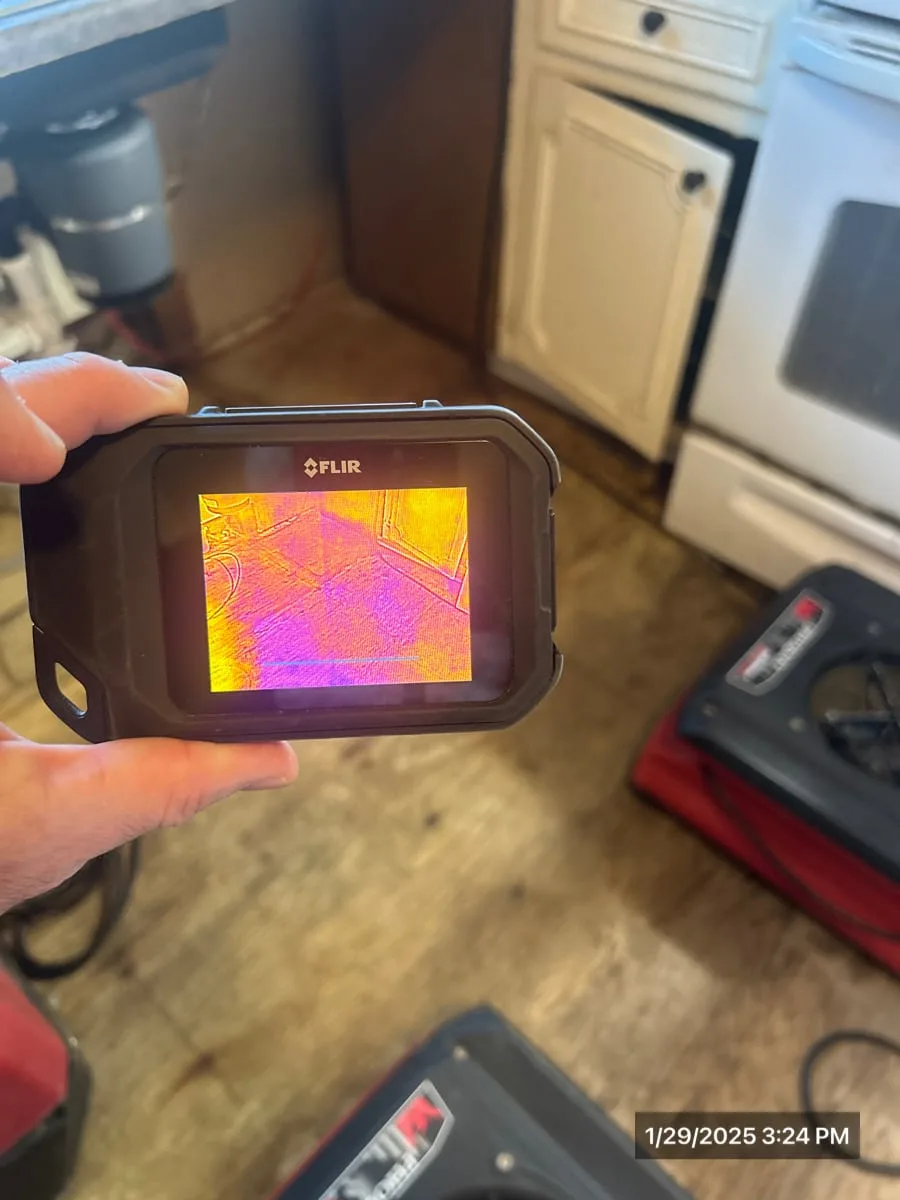
A targeted investigation of the moisture concerns may identify a further check required before the source can be confirmed. Thermal observations can support the assessment where appropriate, but do not see through new decoration or establish every hidden layer’s condition.
Separate a concern from a confirmed repair requirement
The findings should distinguish visible damage, likely causes and unresolved questions. If there are signs of a concealed water route, further checks for hidden moisture may be recommended. That is different from confirming a particular pipe has failed. Buyers need that distinction before assuming the repair scope or negotiating around an unverified explanation.
Where growth appears mainly at cooler windows, checking the window-side conditions may be more useful than treating the property as uniformly damp. Different rooms can have different issues, with distinct recommendations and access needs.
Use the report to ask better follow-up questions
The survey should help identify what further information or specialist access is worth seeking. It cannot promise the cost of every repair or remove uncertainty created by inaccessible areas. Share the relevant questions with the seller or agent while access can still be arranged. Keep the scope, supporting photographs and findings together. Use them to identify what is known about the wall and which question remains unanswered before purchasing.
If opening up is recommended, agree its purpose and permissions before work takes place. A focused check at an unresolved junction may provide more useful evidence than broadly removing finishes without a clear question.
PROPERTY & MOISTURE CHECKS
QUESTIONS BEFORE A VISIT
Useful questions
Does fresh paint mean damp has been concealed?
It may limit visible evidence, but does not prove concealment or a defect. The inspection considers accessible signs and any repair history.
Will this replace the building survey?
No. It focuses on moisture-related concerns. A wider building survey assesses other aspects of the property’s condition.
Can the seller’s photographs help?
They may show the original stain or repair area. Their date and context matter, and they should be considered alongside current observations.
Can you assess walls hidden by furniture?
Access limits the scope. Agree practical access through the seller or agent and confirm which relevant surfaces will remain obscured during the visit.
Will the survey price all the necessary work?
Not every repair can be defined or priced from accessible damp checks. Findings may identify further investigation before repair decisions are possible.
Nearby areas
Check the moisture concerns before buying
Call with the Kingston upon Thames address, viewing observations and survey comments. We can discuss the scope and required seller access.