DAMP & MOULD SPECIALIST
Damp and Mould Specialist Surbiton
The damp sits between two spaces, so the investigation needs to consider both. A conservatory connection can involve outside water, room conditions or more than one moisture contribution.
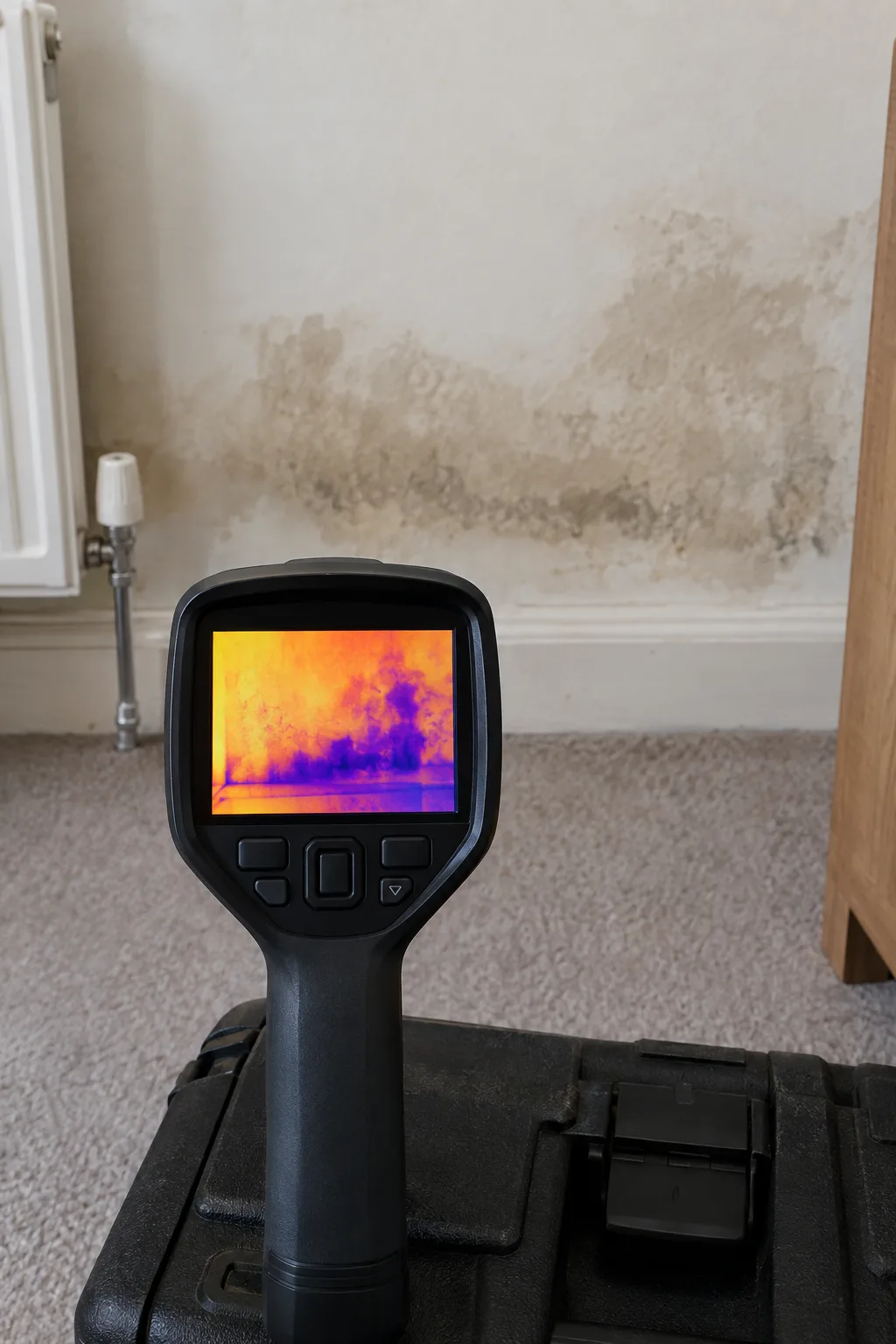
Do not assign the stain to one room too soon
If your Surbiton property has damp beside a conservatory connection, record which face of the wall is affected and how the mark relates to the doorway. Show both spaces in photographs. Note whether the internal door is usually open and how each space is heated. If the two sides show different damage, keep that distinction in the description.
A moisture assessment of the connecting wall can compare accessible surfaces on both sides. Explain whether the mark follows rain, colder weather or a change in use. The inspection should test those clues against the construction and materials before choosing a source explanation.
Different temperatures can influence the junction
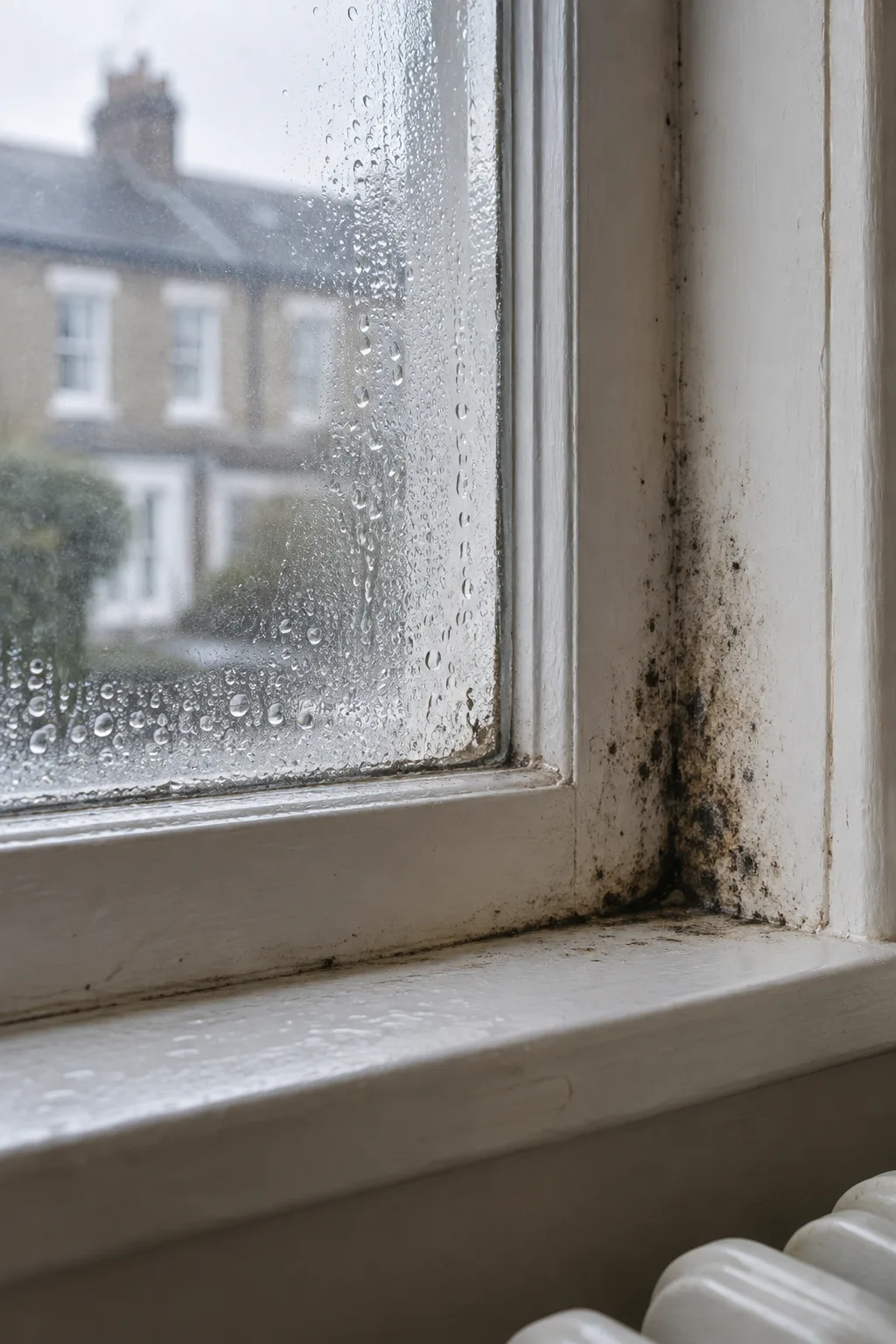
Air moving between warmer and cooler spaces can affect where condensation forms. A wall or reveal near the connection may remain cooler than the main room. Ventilation and condensation checks across the doorway can consider heating patterns, moisture production and the usual air path. Opening the door on the inspection day may change conditions, so describe its normal use.
Furniture, blinds or stored items can also restrict circulation near the mark. Record their positions if they have been moved. A change in the surface pattern after rearranging the room is useful evidence, but it does not establish the only cause. An external defect may still contribute at the same junction.
Weather-related changes deserve outside checks
Where the patch becomes darker or spreads after rain, assessment of accessible external connection details may be relevant. Water can move from an entry point before it appears indoors. Visible seals or roof junctions should be considered in relation to the damage, with inaccessible details identified for any further examination.
Keep earlier repair records and photographs showing work around the connection. A recent seal repair may help the enquiry but does not prove all possible routes are sound. If fresh water is appearing, report the change to the person arranging repairs promptly. Do not access roofs or dismantle an external junction yourself to gather evidence.
A painted reveal can hide the same problem twice
If decoration has been repeated, describe how long it took for the mark to reappear and where it started. Avoid another layer before the surface is assessed where practical. Paint can conceal the outline without changing wetting. The inspection needs to understand both the present material condition and the earlier pattern that may now be hidden.
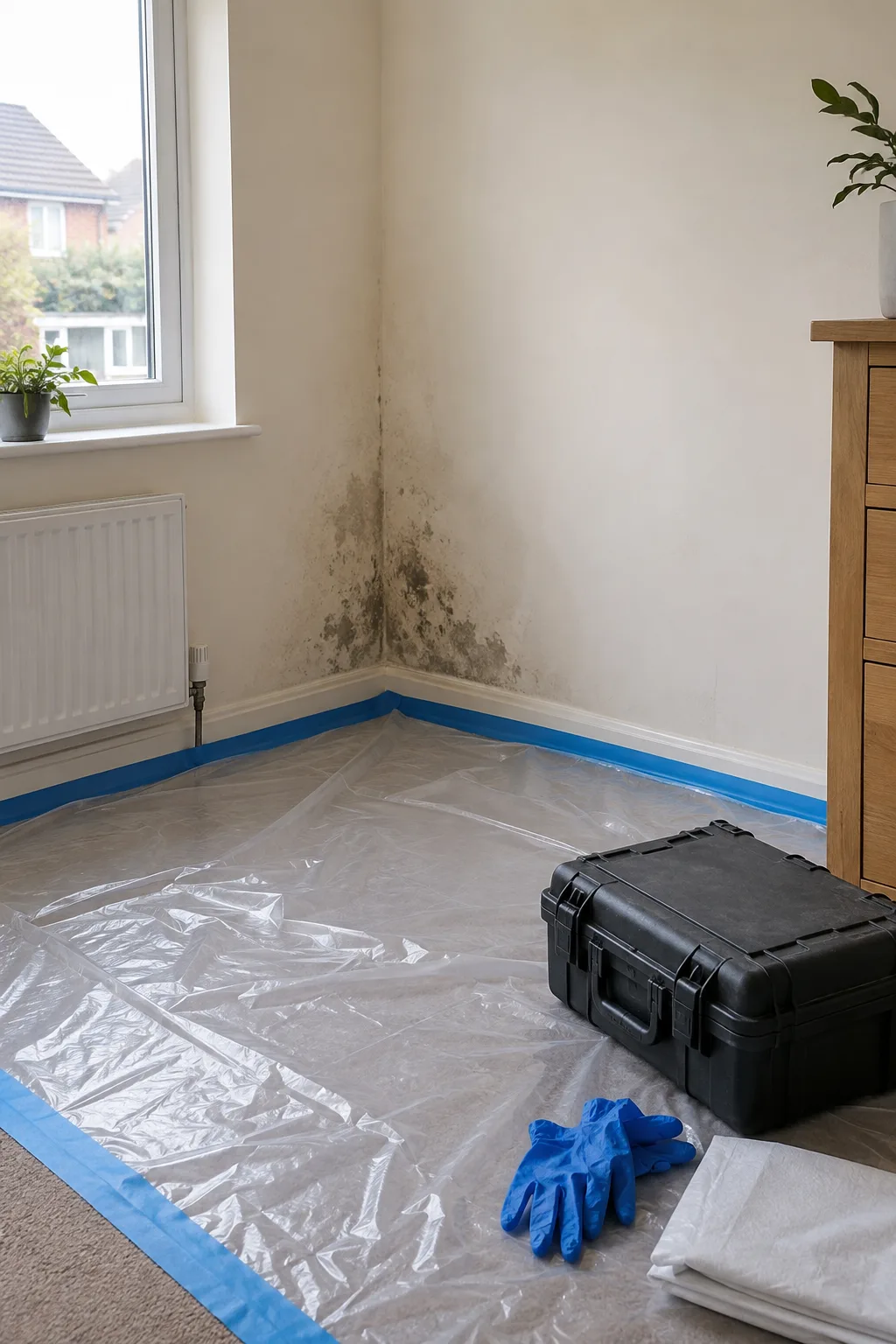
Treatment of mould at the room junction can be planned after the extent and surfaces are considered. Cleaning does not repair a weather seal or alter the temperature relationship between spaces. Ask which recommendations address the visible growth and which address the conditions that allowed it to recur.
Choose work that matches the way the spaces connect
Tell us about recent glazing, heating or layout changes. Their timing may be relevant, but it should not be treated as proof that the newest feature has failed. Accessible readings and observations should support the reasoning. If hidden construction leaves the answer uncertain, ask what additional access would resolve the specific question.
After agreed repairs or ventilation measures, keep photographs of the connecting wall and review the affected material condition before finishing. Ask which observations support readiness and whether a continuing moisture question needs another check. Share those findings with the contractor arranging the next work, including what was examined and any detail still inaccessible. This gives the finishing task a scope linked to the source evidence and both rooms’ conditions.
If separate contractors maintain the house and conservatory, establish who will review the junction findings. The connection can otherwise become a gap between two work scopes. Ask each proposed repair to state the detail being addressed and keep photographs of the completed work, making it easier to assess any later change on the connecting wall.
PROPERTY & MOISTURE CHECKS
QUESTIONS BEFORE A VISIT
Useful questions
Is the conservatory always the source?
No. The connection can be affected by moisture conditions on either side or by external entry. Its location guides the inspection without deciding responsibility for the damp.
Should I keep the connecting door open?
Describe the normal doorway use and heating in both spaces. Advice about air movement should explain how it fits that temperature and ventilation arrangement.
What if a seal was repaired recently?
Share the scope and photographs of that work. The inspection can consider what was addressed and whether another route or residual material moisture remains possible.
Can painting test whether a repair succeeded?
No. A clean finish can conceal new changes. Review the source work and material condition before decoration, with the remaining uncertainty stated clearly.
Who needs the inspection information?
The person deciding repairs and any relevant glazing, building or ventilation contractor. Share the observations and limitations so further work answers the unresolved moisture question.
Nearby areas
Assess the connection before repairing the finish again
Call about the Surbiton property with photographs of both spaces and the pattern you have noticed. Tell us about earlier junction repairs so the visit can focus on what remains unanswered.