DAMP & MOULD SPECIALIST
Damp and Mould Specialist Cheam
A closed fireplace can leave questions about the wall and concealed chimney space. We assess the visible damp without assuming the closure explains every mark.
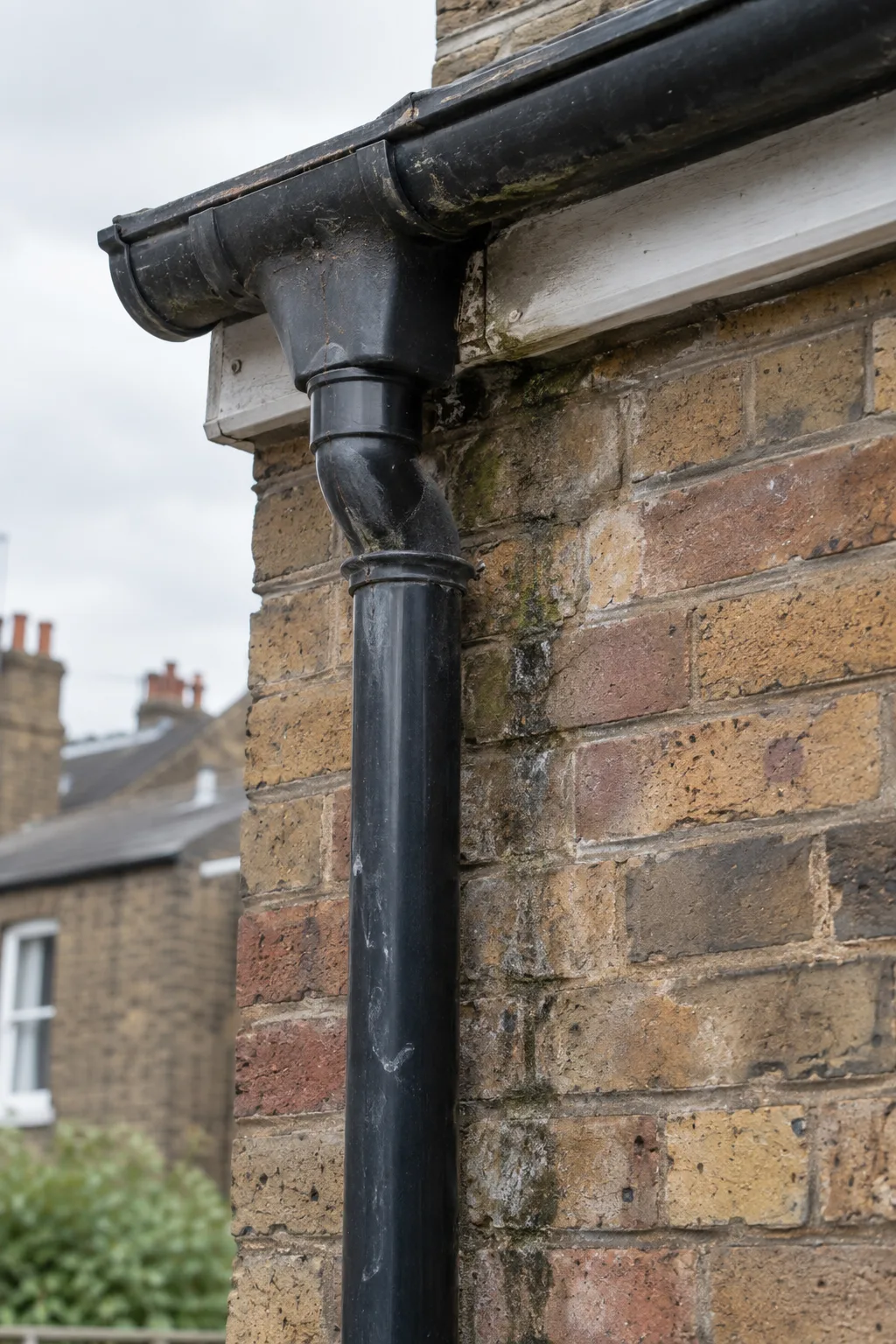
Understand what was changed at the fireplace
If a fireplace in your Cheam home has been closed or covered, the alteration history helps frame the assessment. The chimney breast may have different temperature and moisture conditions from the surrounding wall. A stain could relate to the chimney above, indoor condensation or another nearby source. The fact that a fireplace was blocked is relevant, but it is not enough to select a repair.
Tell us when it was closed, whether any ventilation provision remains and what is known about the chimney’s condition. Previous inspection or roofing records may be useful. Do not open the closure or interfere with the flue before an appropriate scope is agreed, especially when the construction or use of connected parts is uncertain.
If shelving or a cupboard was added over the closed fireplace, it may now conceal both the original closure and the adjoining wall. Explain those later changes separately from the fireplace work. An inspection record should distinguish the chimney-breast face that was visible from areas hidden behind storage, especially when a proposed repair depends on understanding which surface first became marked.
Record the marks on and beside the breast
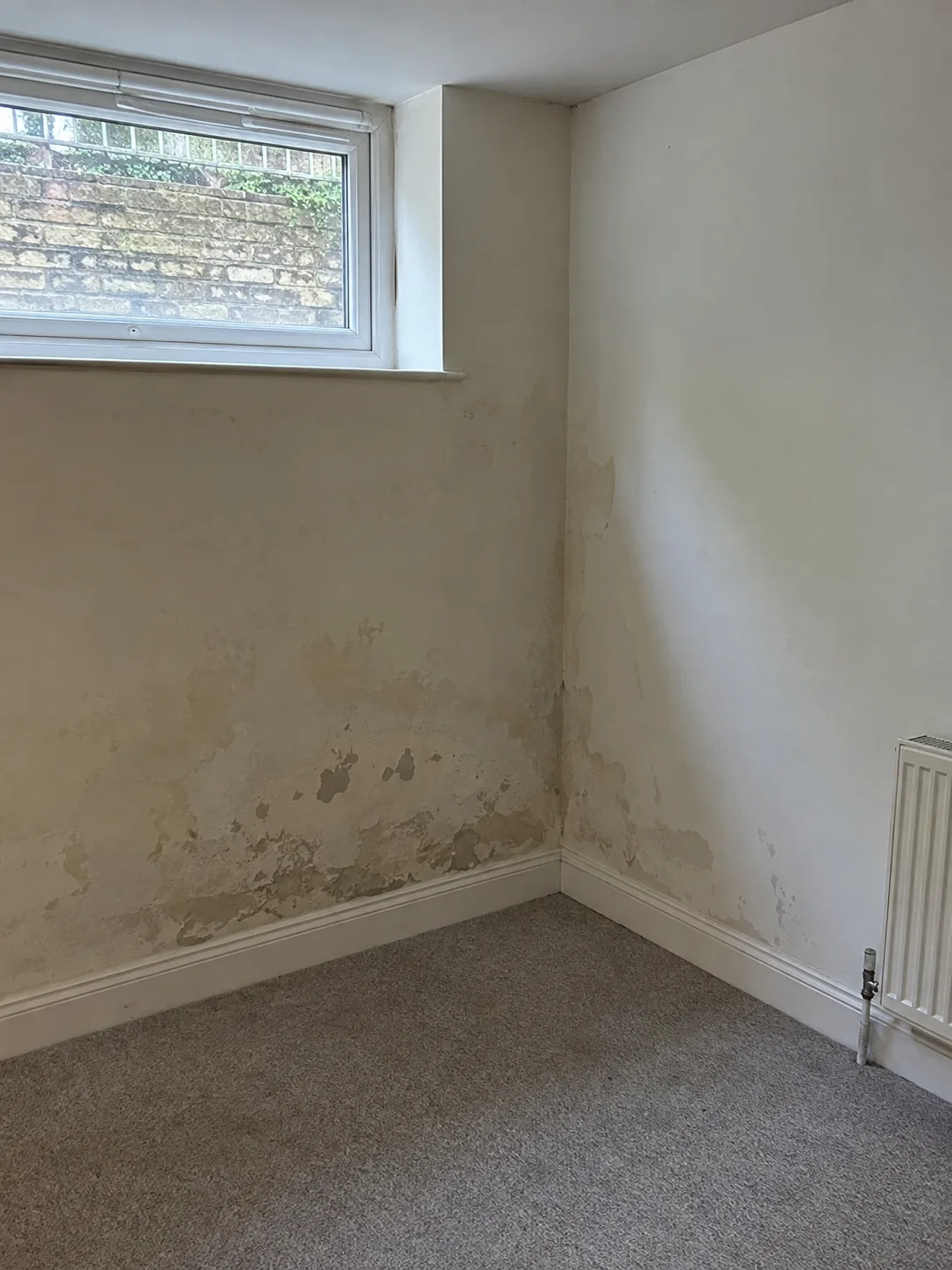
Distinguish a patch on the chimney breast from growth in the alcove beside it. They may have different explanations. Note whether the marks change after rain, whether a stain reappears through fresh paint and whether nearby furniture encloses the wall. The colour of a patch alone does not identify its moisture source or prove that the underlying material is currently wet.
A damp assessment of the chimney-breast surfaces can compare the accessible pattern with adjacent areas. We interpret readings with the materials and possible residues in mind, then compare them with the wall condition and recorded changes after rain.
The upper chimney may require a separate inspection
Where symptoms vary with rainfall, checking accessible external water-entry clues helps establish the next enquiry. A chimney-related roof detail or exposed masonry may need closer access than an indoor visit provides. The stain inside cannot identify every upper defect on its own.
We explain whether the evidence suggests a separate chimney or roof specialist should examine specific details. That is preferable to treating the entire breast with a coating while the condition above remains unknown. Keep earlier repair records, including what was checked and which areas were not accessible.
An alcove can have its own conditions
The space beside a chimney breast may be enclosed by shelving or furniture. A colder wall with restricted airflow can collect moisture independently of a rain-related stain on the breast itself. We ask about ordinary heating, ventilation and use, while considering other possible sources too. It is possible for two neighbouring marks to require different work.
Assessing moisture and airflow around the alcove can help explain recurring growth. Explain how any proposed change fits this alcove, its normal furniture arrangement and the signs observed during the inspection.
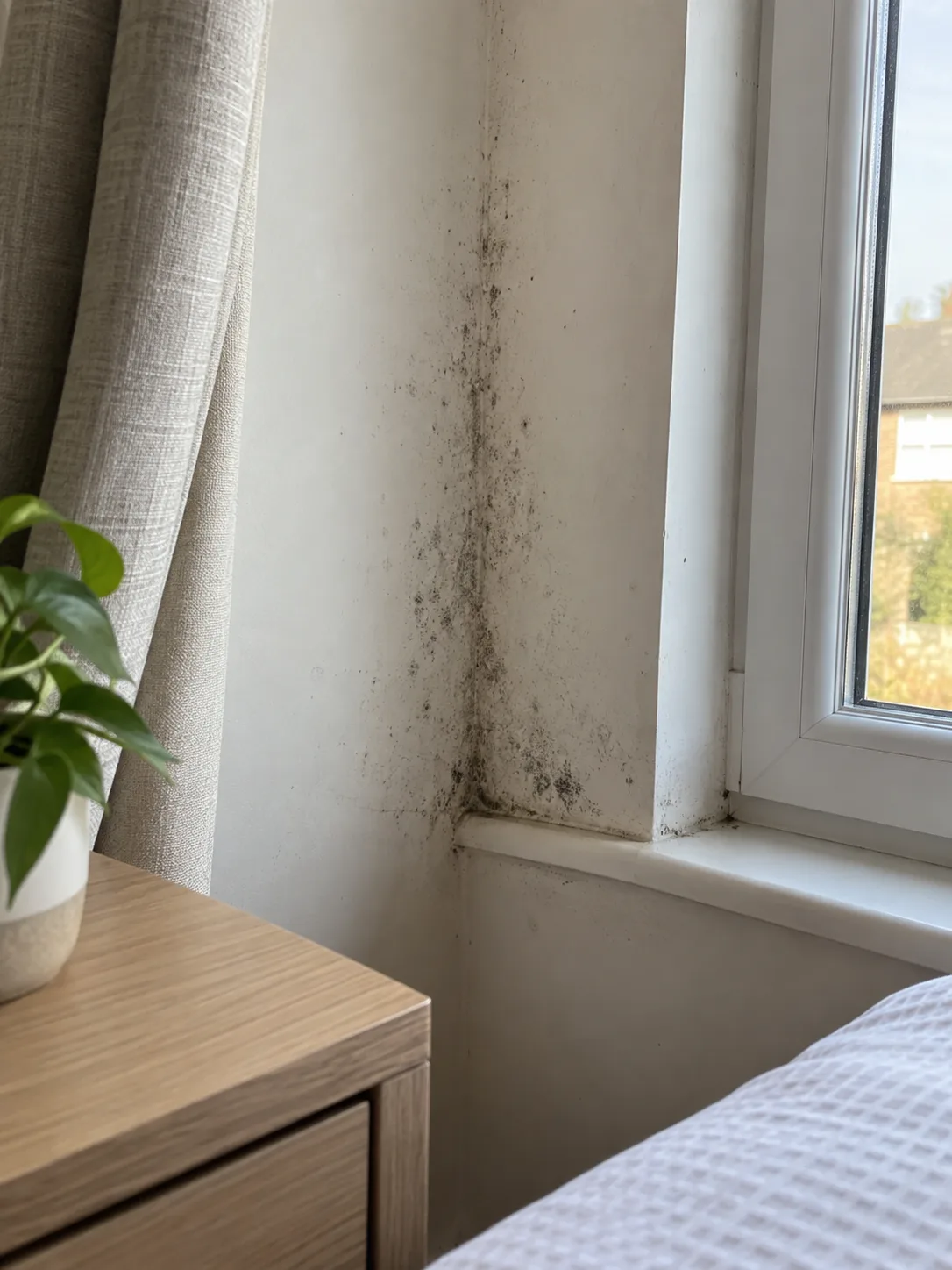
Choose surface work after the cause is investigated
Treatment of mould around the fireplace addresses affected surfaces, not a concealed defect in the chimney. The underlying material and extent of damage need considering before decorating. Where a stain persists through paint, another coat may hide the appearance briefly without explaining its cause.
A repair plan should state what source work is proposed and which finishes require reassessment afterwards. Retain photographs of the original outline and any newly exposed surfaces if agreed access takes place. Decisions about reopening or relining should follow a specific assessment of the relevant construction, not a guess based on the room’s smell.
Useful information before the visit
Send the position of the fireplace, the affected wall and any known history of the closure. Mention whether the chimney serves another part of the building and what access is available. A clear account helps define the first inspection and identify where specialist checks may be needed. The aim is to reduce uncertainty before undertaking invasive work or committing to a decorative solution.
PROPERTY & MOISTURE CHECKS
QUESTIONS BEFORE A VISIT
Useful questions
Does closing a fireplace automatically cause damp?
No. The altered construction is relevant, but rainfall entry, indoor conditions and other sources need assessing before attributing the marks to the closure.
Can the alcove mould have a different cause from the breast stain?
Yes. Restricted airflow beside a cooler wall may coexist with another moisture issue on the chimney breast itself.
Will an indoor check establish the chimney’s upper condition?
It may identify clues, but close external or specialist access can be needed to assess the relevant upper details.
Should I open the fireplace before inspection?
Discuss the construction and scope first. Opening should have a defined purpose and be arranged appropriately when further access is justified.
Why does the mark show through new paint?
The underlying condition or staining may remain. Investigating the material and possible moisture source helps decide what source or surface work is needed before painting again.
Nearby areas
Get the fireplace-area marks investigated
Call about your Cheam property with the closure history and where the damp appears. We can discuss a useful first assessment.