DAMP & MOULD SPECIALIST
Damp and Mould Specialist Carshalton
A marked entrance corner does not automatically mean the front door needs replacing. Check the surface, the everyday moisture around it and any signs of outside water.
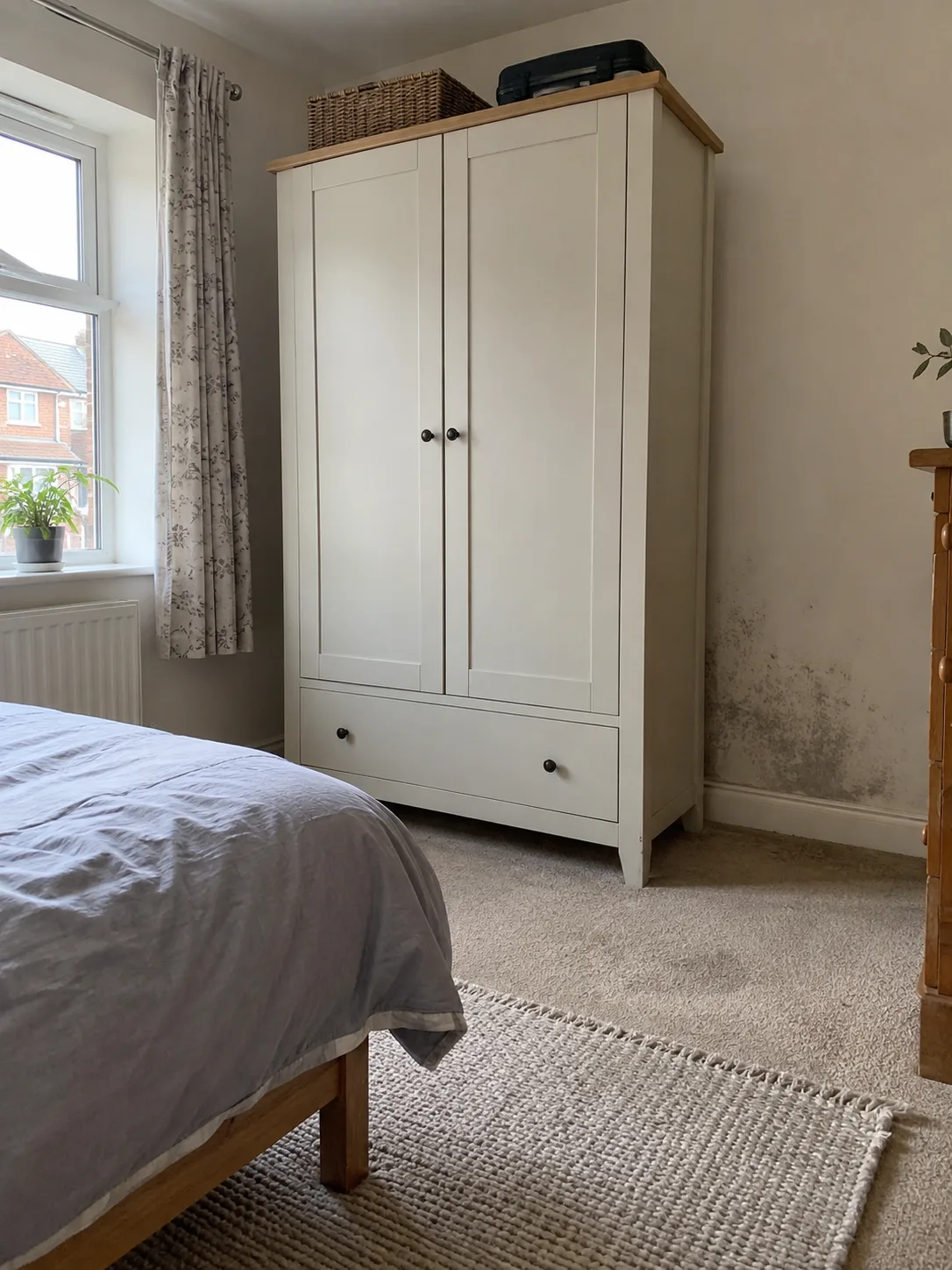
Show the whole entrance arrangement
At a Carshalton home with hallway mould, photograph the corner with the door, nearby window and storage visible. Record where wet coats or shoes are normally kept, how the hall is heated and any change to those arrangements before the marks appeared. The inspection can use that layout and timeline to assess why the particular entrance surface becomes wet.
A hallway moisture investigation can compare the marked area with nearby surfaces and consider the history. Tell us whether the wall has been repeatedly painted or if the door was recently altered. A narrow entrance can have several overlapping conditions, and its most obvious feature should not decide the diagnosis.
Storage changes the corner’s conditions
Coats and cabinets can limit air movement next to a cool wall. Wet items also introduce moisture to the space, although that does not explain an independent rainwater or plumbing route. A review of hallway airflow and moisture can consider the arrangement, connected rooms and heating without assuming you can remove all storage permanently.
Tell us how internal doors are normally used and whether warm air from other rooms reaches the hall. The entrance may be cooler than occupied rooms, particularly at surfaces near the opening. These differences can help interpret mould position. A comfortable temperature elsewhere in the home does not prove the entrance corner remains dry.
A threshold or entrance repair may affect access to the damaged finish, so tell us if work is already booked. The moisture findings can help identify what should be photographed or checked while a particular detail is visible. That gives the contractor a useful question to answer before the surrounding trim and decoration conceal it again.
Check whether rain changes the picture
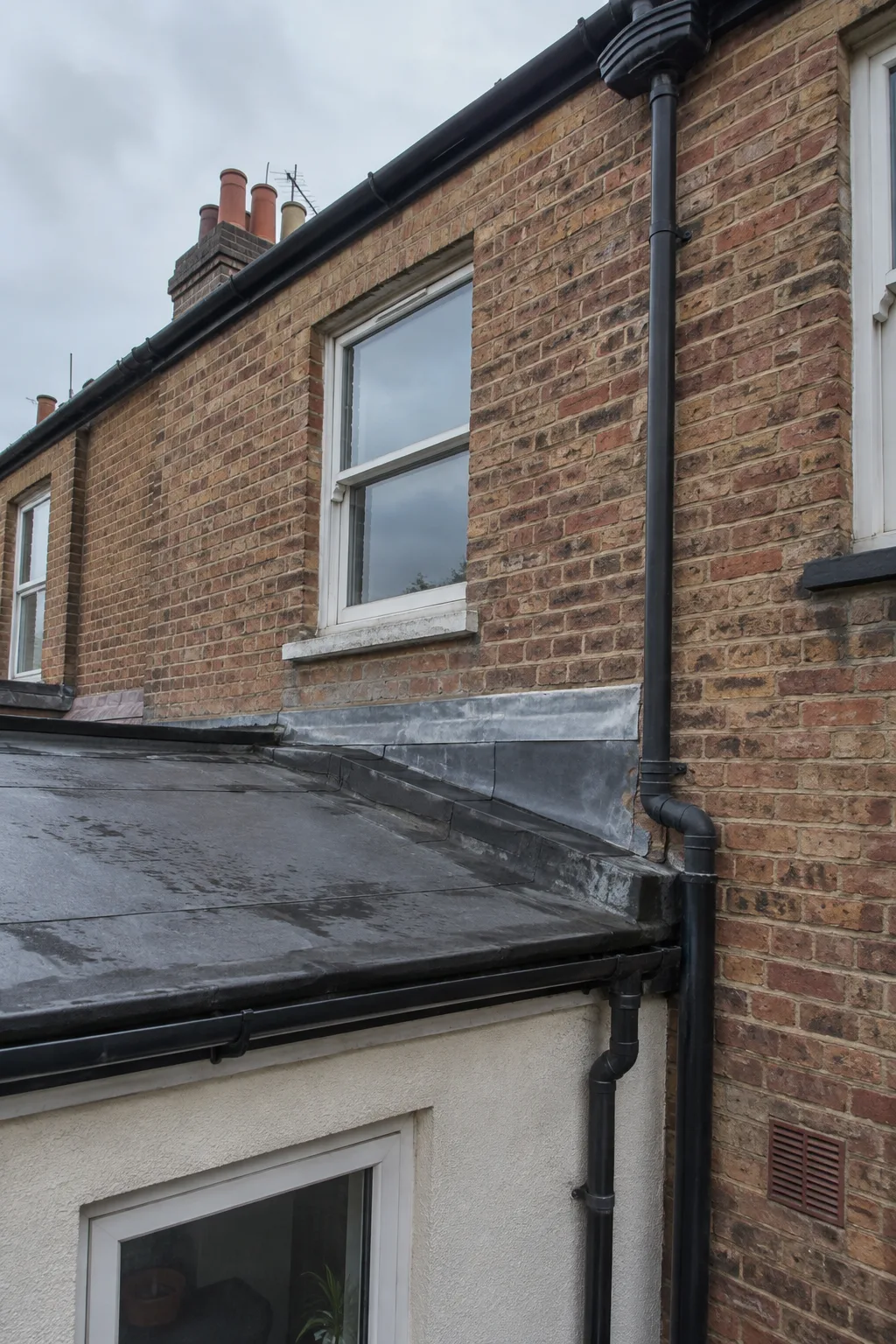
A stain below the door surround, moisture at a threshold or a mark that changes after rain may need examination of outside details. Checks of accessible entrance water-entry points can compare the opening with indoor damage. The inside mark does not necessarily identify the exact point at which water enters.
Describe earlier repairs to seals, masonry or drainage near the entrance where relevant. Keep the repair scope and observations. They help establish which outside detail was addressed and which possible route still needs examination. Outside access and hidden construction can restrict certainty. The inspector should explain which features were seen, what they suggest and whether a closer or different check is needed before a repair is selected.
Separate damp materials from surface spots
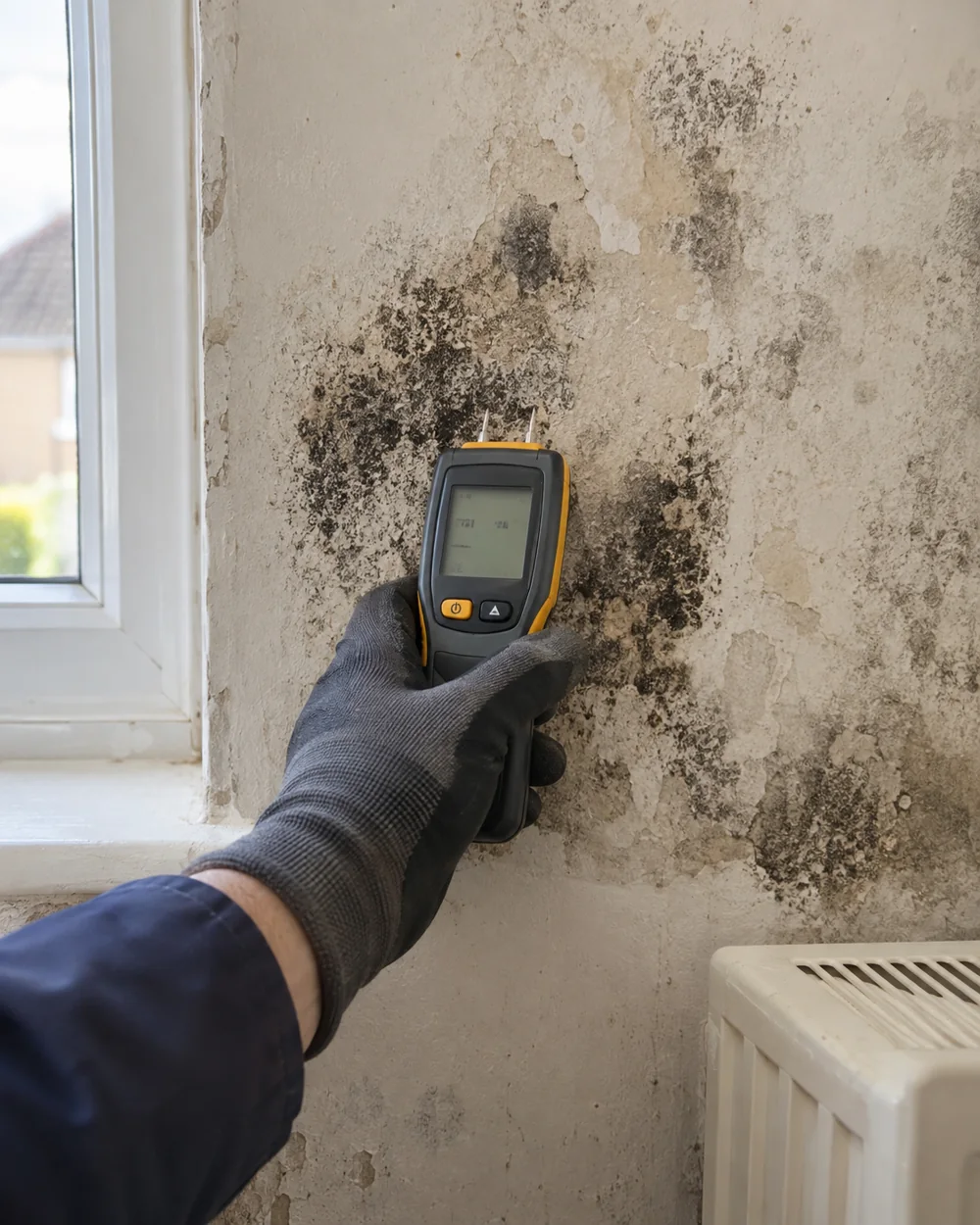
Look for peeling paint, swollen skirting or an expanding patch in addition to mould. Mention those signs when calling, particularly if they are new. Take photographs before cleaning where possible. Do not scrape material away or lift finishes to find the cause; damage and hidden services need consideration before opening an area.
If a cabinet has recently been moved, record its previous position. A newly visible mark may have developed earlier than it appears. If the hall has just been decorated, describe what was covered and which products were used. This helps the inspection interpret a cleaner-looking surface without treating appearance as a reliable measure of the moisture history.
Improve the entrance after the source decision
Mould treatment for the hallway finish should be considered with any repairs or airflow changes identified. Cleaning can remove visible growth but cannot correct an external gap or demonstrate that storage and surface conditions have changed. Ask how the proposed work addresses the growth and repeated wetting separately.
Before replacing the door or redecorating, ask which evidence supports that investment. The source might involve another building detail or an indoor condition needing a different response. Keep the findings and repair photographs for later reference. If growth returns, a record of completed work provides a better starting point than simply purchasing another product for the same corner.
PROPERTY & MOISTURE CHECKS
QUESTIONS BEFORE A VISIT
Useful questions
Does mould near the door mean the door leaks?
Not necessarily. Cold surfaces and restricted airflow can contribute, while outside water remains another possibility. The pattern and history should guide the checks.
Can wet coats matter in a hallway?
They add moisture locally, and storage can restrict circulation. Those conditions should be considered without assuming they explain every damp patch or damaged material.
Should I remove the coat cupboard before inspection?
Make the affected wall accessible where practical and describe the normal arrangement. Fixed joinery should only be opened with an agreed reason and appropriate help.
Why is the entrance affected but the living room is clear?
Room temperature, ventilation and surface conditions can differ. The inspection should consider the hallway itself and its connection to surrounding rooms.
Would replacing the front door settle the problem?
Only if the identified issue is actually addressed by that work. Establish the moisture explanation before choosing replacement so a different source is not left unresolved.
Nearby areas
Give the entrance corner a clear explanation
Call about the Carshalton hallway and describe the storage, affected surfaces and any rain-related changes. We can discuss the checks needed before door work or decoration.