DAMP & MOULD SPECIALIST
Damp and Mould Specialist South Kensington
Mould found after a home has been closed for a while needs a careful history. The marks may relate to room conditions, an unnoticed leak or water entering while nobody was there.
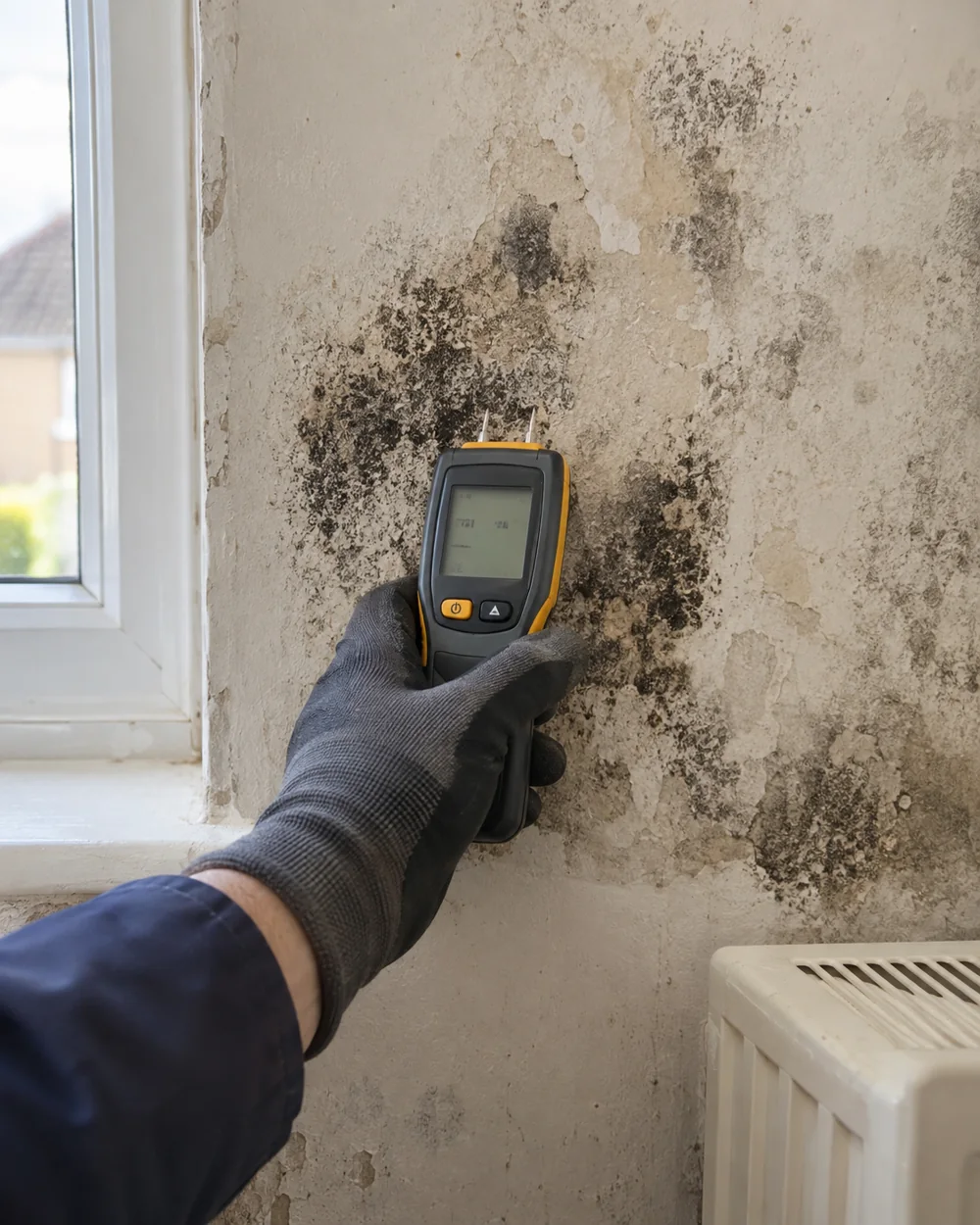
Start with the last known dry condition
If you return to a South Kensington property and find new marks, note when the affected room was last checked. Look for dated photographs or records of recent maintenance. Do not invent a start date based on the size of the patch. A gap between visits is itself useful information because the inspector cannot assume conditions stayed constant throughout it.
A damp investigation after a period of absence can examine the accessible damage and the arrangements left in place. Explain whether heating, extraction and water systems remained on. Tell us about anybody who visited or carried out work. That gives the observations context without assuming an unoccupied home can only have condensation.
A closed home still has moisture conditions
Cooling surfaces and limited air exchange can affect rooms between visits. Some moisture may already be present in the air or materials, while a plumbing issue may continue unnoticed. The return of heating when you arrive can change conditions again. Describe both the settings during your absence and how you have used the home since discovering the marks.
A review of ventilation and heating arrangements can help where growth appears across cold corners or window surrounds. Review the heating and ventilation actually installed, how they operate during an absence and any limitations relevant to the affected rooms. Any proposed change needs to suit the building and its use; it should not substitute for investigating a distinct damp patch.
Check for evidence of continuing water
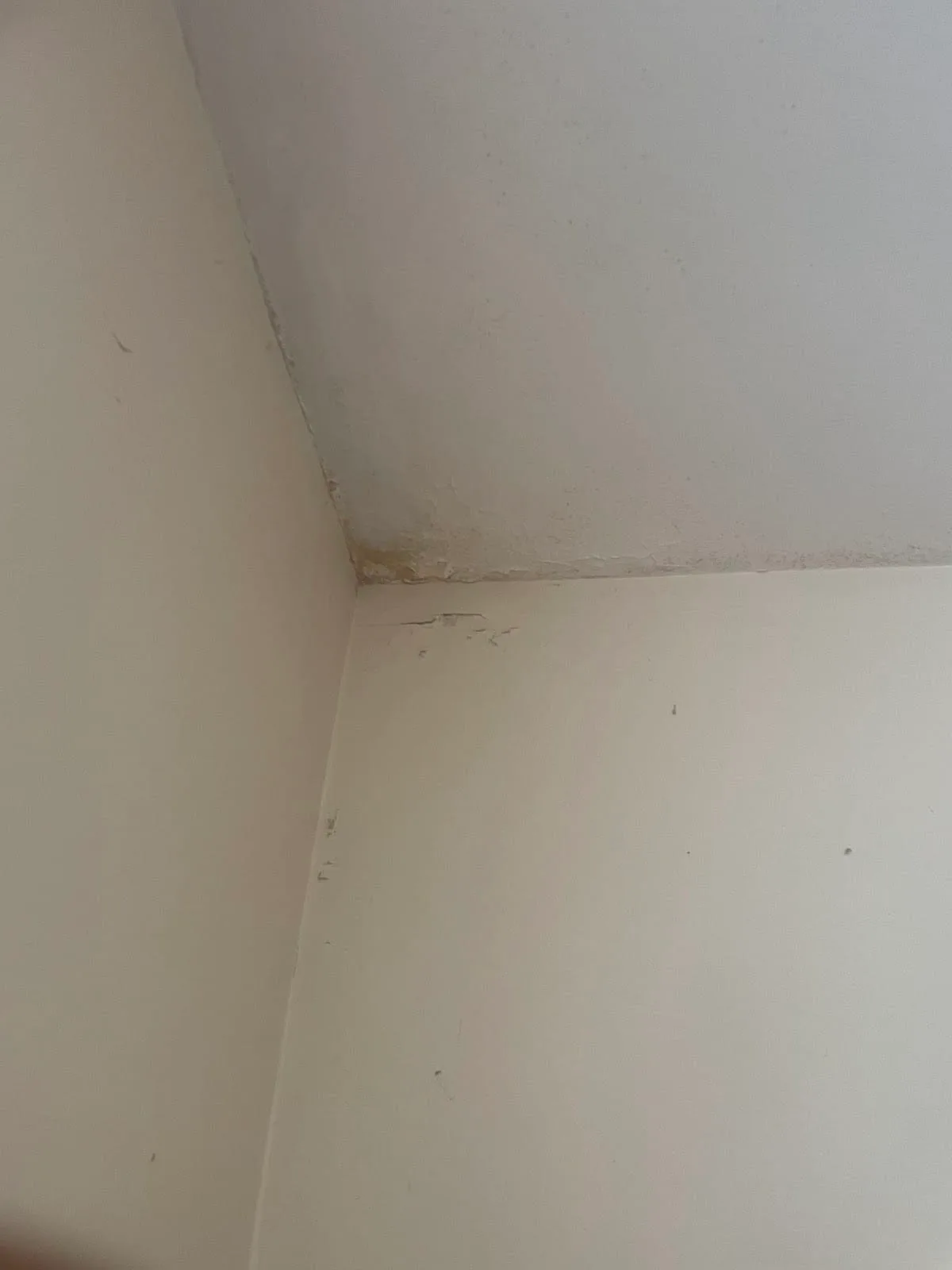
Look at accessible areas without moving damaged materials. Fresh water below a fitting, expanding ceiling staining or persistent damp next to plumbing should be reported promptly to the person arranging repairs. A room left empty can still contain an active source. If the origin is unclear, investigation of possible concealed water may be a relevant next step.
External exposure matters too. Tell us if windows were left open, if outside work happened or if anyone noticed overflowing gutters. Do not make an inaccessible exterior check yourself. The relationship between internal damage and available outside observations can guide further access. Where the history is incomplete, record the period of uncertainty. The current observations can still guide checks without assigning an unsupported start date.
Cleaning on arrival can lose useful clues
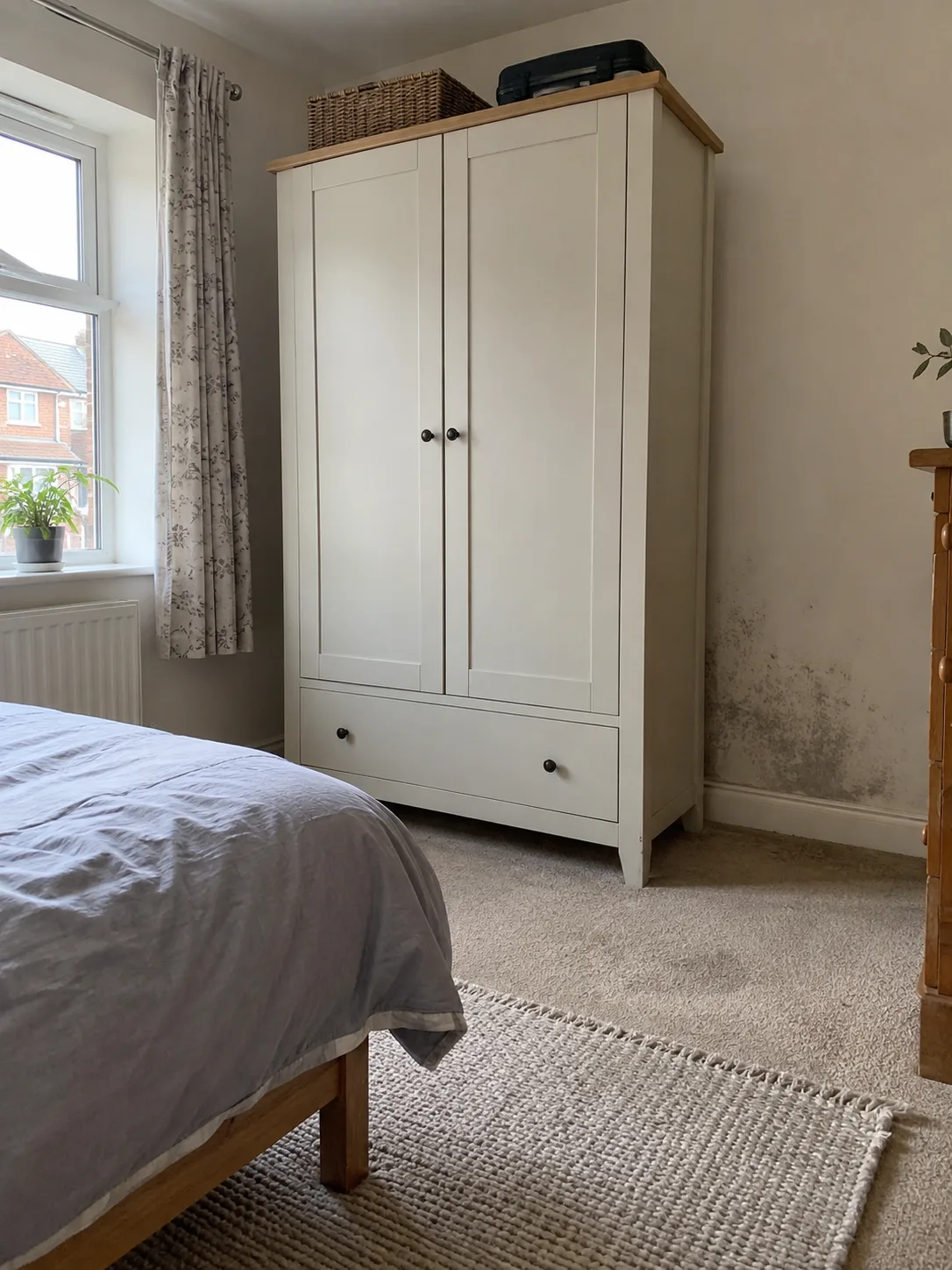
Before treating marks, take images of their location and outline. A wider photograph showing furniture, curtains and ventilation points is often more useful than several close-ups of spots. If cleaning has already happened, say which product was used and where. It may still be possible to assess the surrounding moisture conditions even though the original growth is less visible.
Mould treatment in the affected rooms can be discussed after the surfaces and likely moisture causes have been reviewed. Do not assume every marked material can be dealt with identically. Paint, plaster, seals and joinery may need different preparation, and a hidden wet area can remain outside the scope of surface treatment.
Leave a practical plan for the next absence
Ask what needs repairing before the property is closed again and which conditions should be checked afterwards. A plan might distinguish building repairs, ventilation provision and sensible observation of particular surfaces. It should be based on the inspection, not an arbitrary list of gadgets. A humidity reading at one moment cannot establish how a room behaves throughout a long absence.
If another person checks the home, give them specific places to look and an agreed contact for reporting change. Keep the repair and treatment records available. Returning growth in the same position is useful information, not a reason to repeat cleaning indefinitely. The next investigation can then compare the new condition with what was actually completed previously.
PROPERTY & MOISTURE CHECKS
QUESTIONS BEFORE A VISIT
Useful questions
Can an empty home develop mould?
It can if surfaces remain damp. Absence changes how rooms are heated and ventilated, but leaks or outside water can also be involved. The inspection needs to consider more than occupancy alone.
Should I turn the heating up to solve it?
Heating affects surface conditions, but it does not repair a water source. Explain the existing arrangements and ask how any change addresses the findings. Source repairs and material condition still need their own review.
What if nobody knows when the marks began?
State the period between checks and any work carried out during it. The uncertainty matters. Available photographs, maintenance records and the present pattern can still guide investigation.
Can I arrange access through a keyholder?
Discuss the arrangement when booking, including which rooms are accessible and who can provide the property history. Make clear who can authorise any additional work after the inspection.
Does opening windows during my visit settle the cause?
No. It changes conditions temporarily but cannot show what happened while the home was closed. Keep a record of your changes so the assessment can interpret current observations properly.
Nearby areas
Bring the property’s absence history into the assessment
Call about the South Kensington home and tell us when it was last checked, what remained running and where the marks appeared. Those details help define a useful visit.