DAMP & MOULD SPECIALIST
Damp and Mould Specialist Shepherds Bush
The meeting point between an extension and the original building can produce confusing damp signs. We investigate the wall and the construction around it before recommending work.
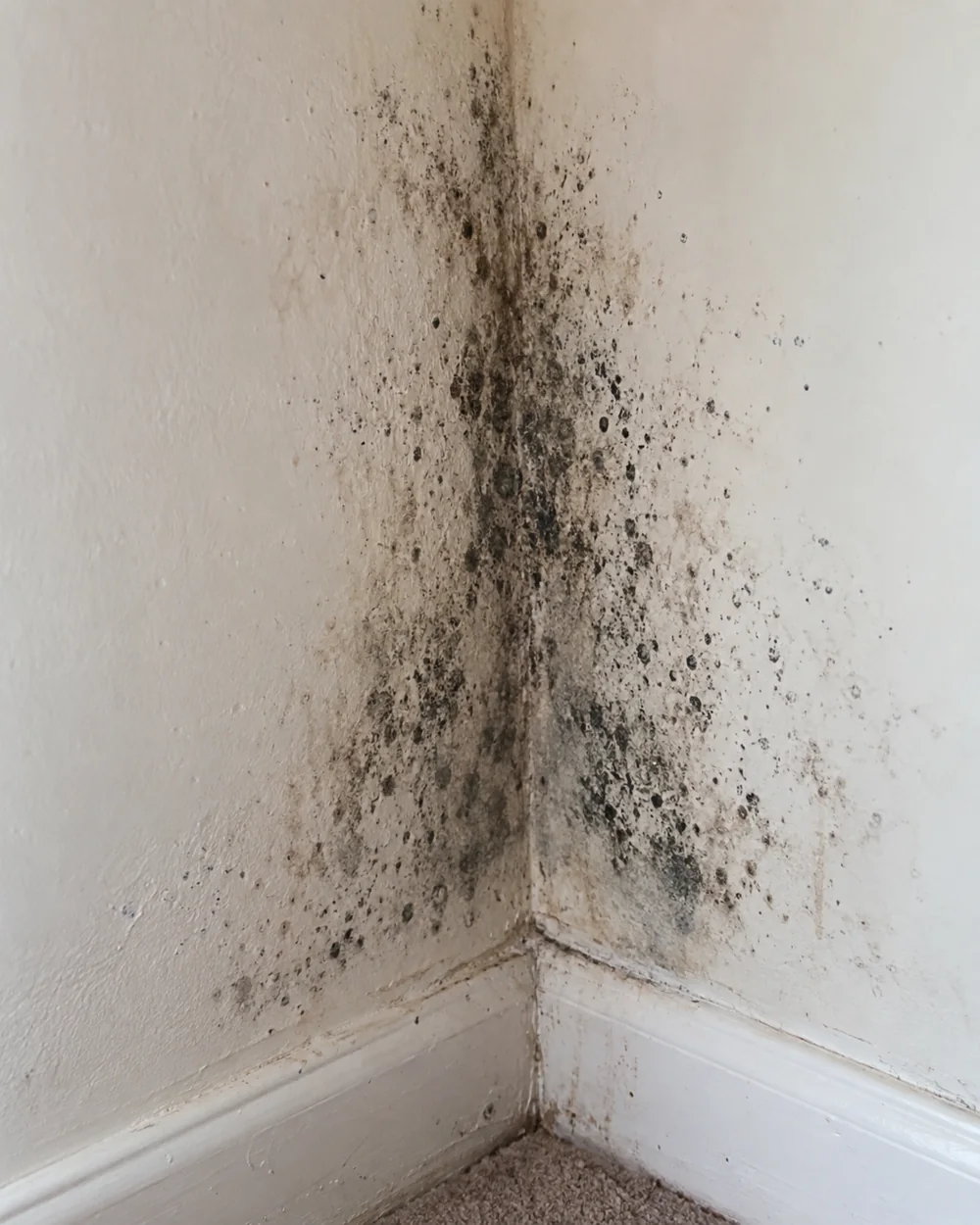
The connection between old and new rooms
If your Shepherds Bush home has a rear extension and the damp sits near the original wall, the connection between the two parts deserves a careful look. Changes in materials, roof details and indoor temperatures can affect that junction. None establishes the cause alone. The extension may be sound while a nearby pipe leaks, or moisture may enter through an external detail and appear lower down indoors.
Tell us when the extension was built, what the affected space is used for and whether the mark appeared after a later alteration. Drawings and photographs of the construction can be useful, especially when finishes conceal the original wall. A clear timeline helps distinguish a longstanding condition from something linked to recent work.
Pay attention to any trim added over the internal junction after construction. It may hide the original outline or prevent comparison of the adjacent materials. If older photographs show that detail before it was covered, keep them with the extension records. They help frame a targeted access question without assuming that the trim or construction joint is itself the source of damp.
Follow the line of damage
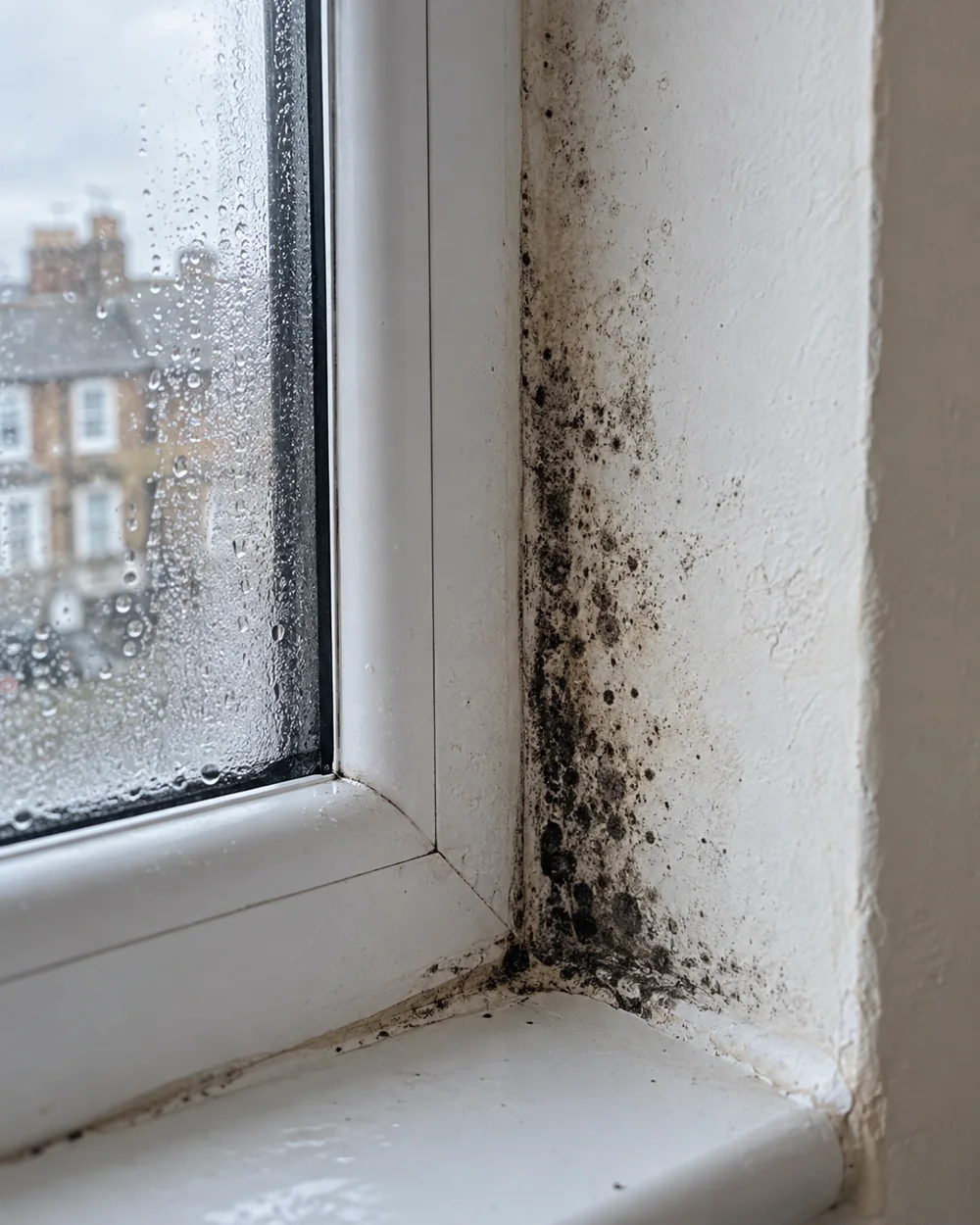
Notice whether staining follows the junction vertically, sits beneath the roof connection or appears as scattered mould in a cool corner. Compare changes after rain with wetting after cooking or drying laundry. Photographs from similar viewpoints make it easier to see whether the mark is spreading. Avoid interpreting a neat straight line as proof that the construction joint itself has failed.
Examining accessible extension junctions can help relate the internal pattern to outside details. Roof edges, openings and drainage may need closer inspection than is possible from the available position, and the findings should identify those limits.
Cold surfaces can sit beside ingress problems
A change in construction may create a colder area where indoor moisture condenses. That could explain mould without explaining a distinct wet stain nearby. It is possible for condensation and rainwater ingress to affect neighbouring parts of the same wall. Ask which observed signs each recommendation addresses. A repair to water entry and a change to indoor moisture removal have different purposes.
A review of moisture and airflow across the extended space considers extraction, room connections and ordinary use. A larger kitchen does not automatically have adequate ventilation just because the new room feels open.
The checks behind a repair recommendation
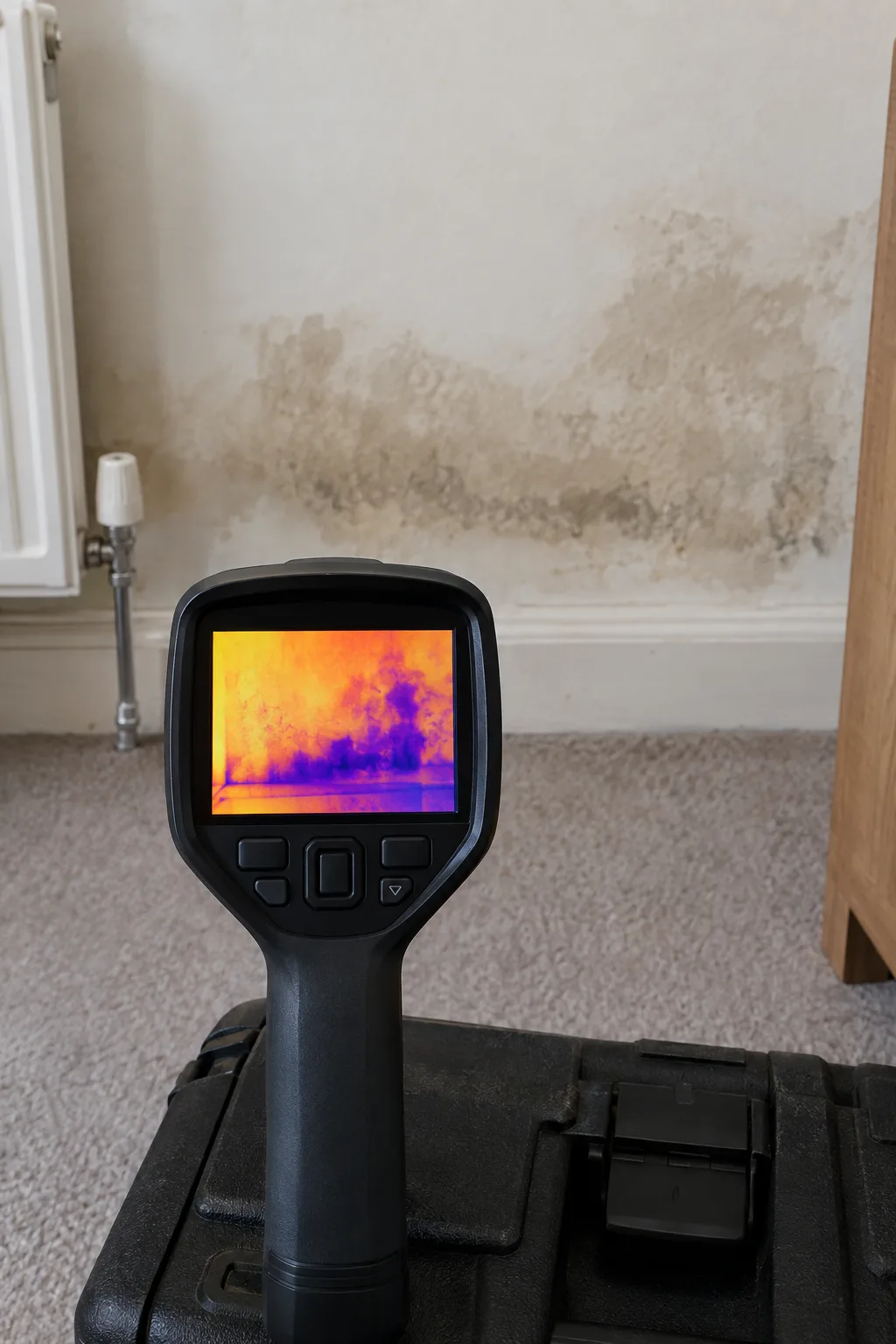
We compare visible damage and accessible moisture readings, taking the wall material and finishes into account. Previous plastering or coating work may affect what can be interpreted. We ask about weather exposure and plumbing routes as well as the extension’s history. The aim is to explain the evidence that supports a proposed repair and any remaining uncertainty.
For an unclear moisture pattern, investigating the wall before redecorating helps define what further checks are needed. If a junction needs opening, agree what the view would help confirm and which section should be examined before the work starts.
Deal with the source and the damaged finish
If growth is present, mould treatment for the affected room can be discussed with the moisture work. It will not correct an external junction or a leaking connection. Likewise, a building repair does not automatically make every affected surface ready for paint. The condition of plaster and other finishes needs consideration afterwards.
The work should leave a record of which defect was repaired and which indoor areas were treated. Keep photographs before and after the repair, then compare the same wall position, including its edges and adjoining finishes. Any follow-up assessment should compare the same area and acknowledge changes in weather and room use.
What to have ready when you call
Describe the junction, the height of the mark and whether the extension contains kitchen or bathroom fittings. Let us know what external access is possible and whether the original plans remain available. You do not need a technical diagnosis before calling. A useful account of what changed and where the damage appears helps establish an inspection that fits the property instead of a generic damp treatment.
PROPERTY & MOISTURE CHECKS
QUESTIONS BEFORE A VISIT
Useful questions
Does damp at an extension joint prove poor building work?
No. The position warrants investigation, but plumbing, condensation and other outside details can contribute. The findings should support any conclusion.
Can the new room create a cold corner in the original house?
Differences in construction and airflow can affect surface temperatures. That needs assessing alongside other possible moisture sources.
Would the original extension drawings help?
Yes. They may clarify concealed junctions and intended details, although the actual accessible condition still needs checking.
Should the junction be opened immediately?
Start with the evidence available. Further opening should have an agreed purpose and scope when accessible checks cannot resolve the concern.
Why record the weather as well as room use?
Rain-related ingress and indoor condensation can have different patterns. Both records help avoid mistaking one mechanism for the other.
Nearby areas
Get the extension junction assessed
Call about your Shepherds Bush property with a description of the damp and any changes after rain or cooking.