DAMP & MOULD SPECIALIST
Damp and Mould Specialist Hammersmith
A stain that changes after rain gives the investigation a useful lead. The water may enter some distance from the mark you can see indoors.
Keep track of the weather connection
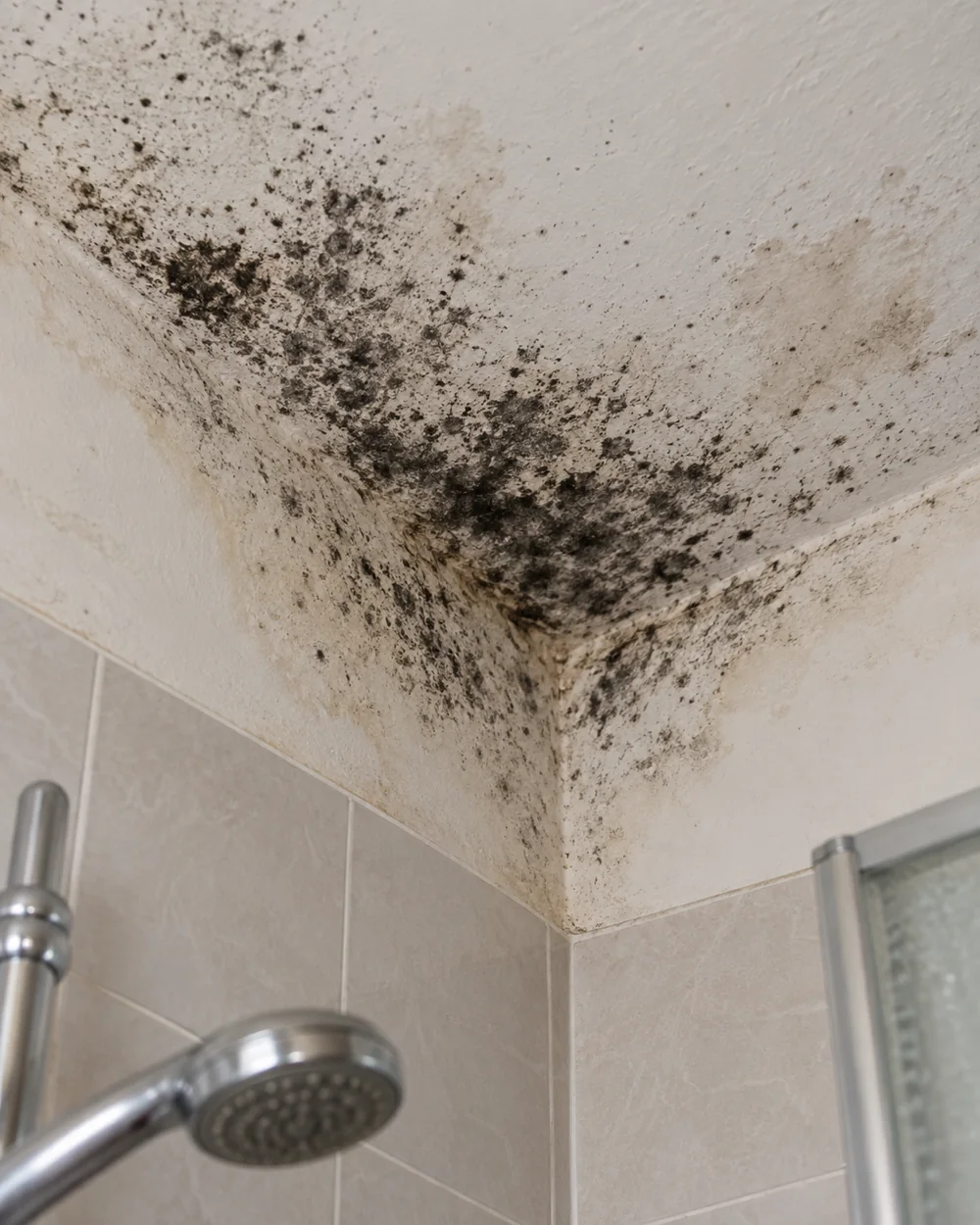
If a wall in your Hammersmith home darkens after rainfall, record the change before it dries or gets covered. Note whether it happens after every shower of rain or only prolonged wet weather. Photograph the stain boundary and its relationship to the ceiling, window or floor. The timing and stain location help identify which opening, joint or drainage feature should be compared with the interior damage during inspection.
Water can travel through construction before becoming visible. A patch beside a window might begin at an opening, a joint higher up or another nearby defect. Resist repairing only the indoor mark without checking its source. Equally, do not assume a conspicuous external crack is responsible simply because it looks untidy; the investigation needs a plausible connection between outside conditions and internal wetting.
Compare the inside damage with accessible external details
Our external damp and water ingress checks consider visible openings, joints, drainage features and the internal pattern. Access determines what can be assessed. A high-level gutter or concealed roof detail may require another form of access, and that should be stated clearly. An inspection from available positions cannot confirm the condition of every building surface.
Tell us about previous pointing, window sealing and gutter work. Photographs showing a defect before repair can help explain what has changed. If the patch became smaller but did not disappear, there may be remaining moisture, an incomplete repair or a separate source. These possibilities should be distinguished before the same repair is commissioned again.
Use readings to support the observations
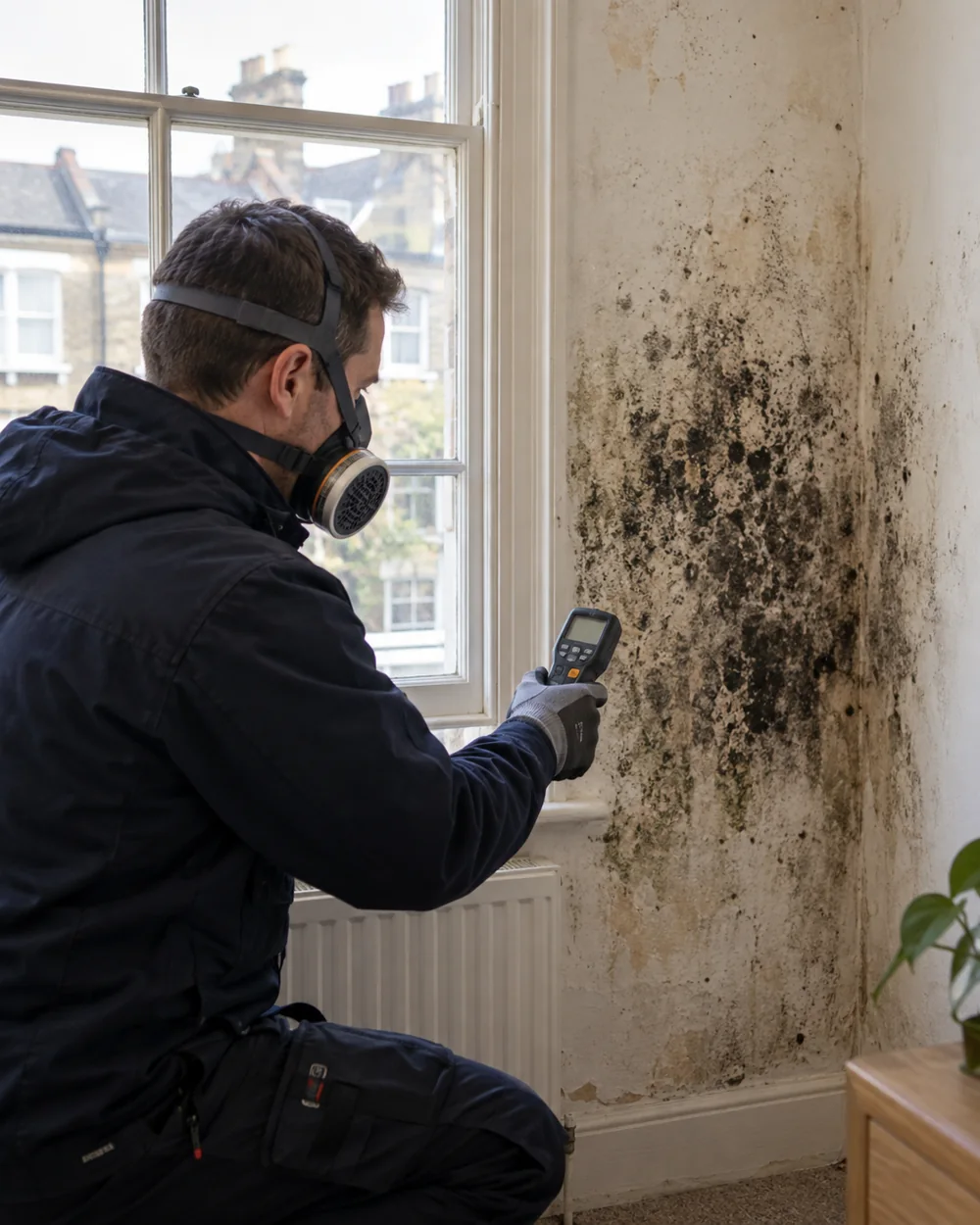
For moisture diagnosis inside the room, we follow the reported stain boundary and compare the wall condition across affected and adjacent finishes. Meter readings support the assessment but need interpretation against finishes, material and pattern. Staining can outlast the original wetting, and new paint may hide a change in the boundary. We explain how certain the findings are and what would need checking to resolve remaining uncertainty.
Consider any plumbing route near the wall as well. If damp remains during a dry spell or changes after use of a fitting, checking a concealed water source may be appropriate. A rainfall connection is useful, but overlapping issues are possible. Bring the weather record and fitting-use observations together so the repair decision accounts for the full pattern of wetting.
Plan treatment alongside the source repair
Growth on a repeatedly damp finish needs assessment alongside the water route. Treatment of the mould-affected wall addresses the surface, while the relevant building repair addresses renewed wetting. The finish itself may need attention if it has deteriorated. Explain which cleaners or coatings have already been used so the current appearance can be interpreted sensibly.
Know what the repair is intended to achieve
Before work proceeds, ask which observed feature the proposed repair addresses and whether closer inspection is still required. Not every investigation includes roofing, gutter replacement or masonry repair. The scope should be explicit, with the relevant trade involved where needed. Keep photographs and descriptions of completed work; they will help if the stain changes again during later rainfall.
Follow the repaired area before decoration
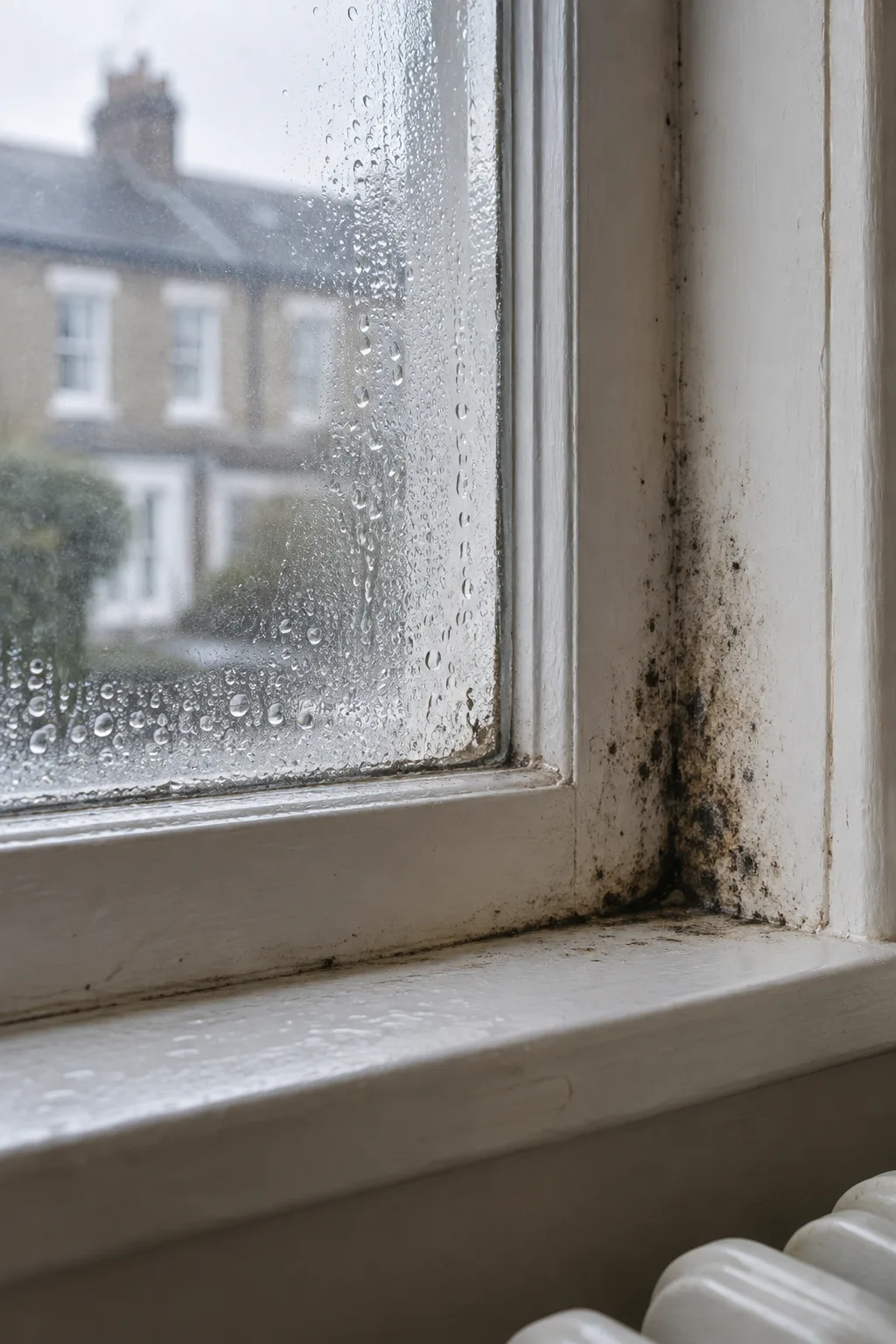
A repaired water route does not make a saturated finish ready for immediate painting. Assess the condition of the wall and track changes as it dries. If new wetting appears, record it before adding another finish. Where the room also has wet windows or cool corners, condensation checks may identify another contributor that remains after external repairs.
If the external area is shared, establish who can arrange access and supply maintenance records. A rear wall, roof junction or shared downpipe may not be reachable from the affected flat. Tell us about those restrictions before booking. The findings can then identify which shared feature needs closer inspection, who can arrange that access and what the repair decision still depends on.
PROPERTY & MOISTURE CHECKS
QUESTIONS BEFORE A VISIT
Useful questions
Is the water entry point always behind the indoor stain?
No. Water can travel before showing through a finish. We compare the stain with nearby openings, joints and visible drainage details to investigate the route water may have followed.
Can an inspection assess a high gutter from the ground?
Visibility and access impose limits. We explain what can be seen and whether closer access or a separate contractor is needed to assess a particular detail.
Should I reseal the window before you inspect?
Photograph the original condition and discuss the concern first. An unplanned surface repair may cover useful evidence without addressing the actual route.
Why is the stain still there after a gutter repair?
Discolouration and retained moisture may remain, or another source may still be active. Its behaviour after repair and accessible measurements help guide the next checks.
Does rain-related damp rule out condensation?
No. The same room can have external wetting and condensation. Those contributions should be assessed separately so the repair plan addresses the relevant conditions.
Nearby areas
Tell us what happens after rain
Call with the Hammersmith address and the stain history. We can discuss accessible checks and what information to gather.