DAMP & MOULD SPECIALIST
Damp and Mould Specialist Poplar
A stain beside a service cupboard can require checks beyond the room surface. We assess the accessible evidence and identify which access or records may help establish the route.
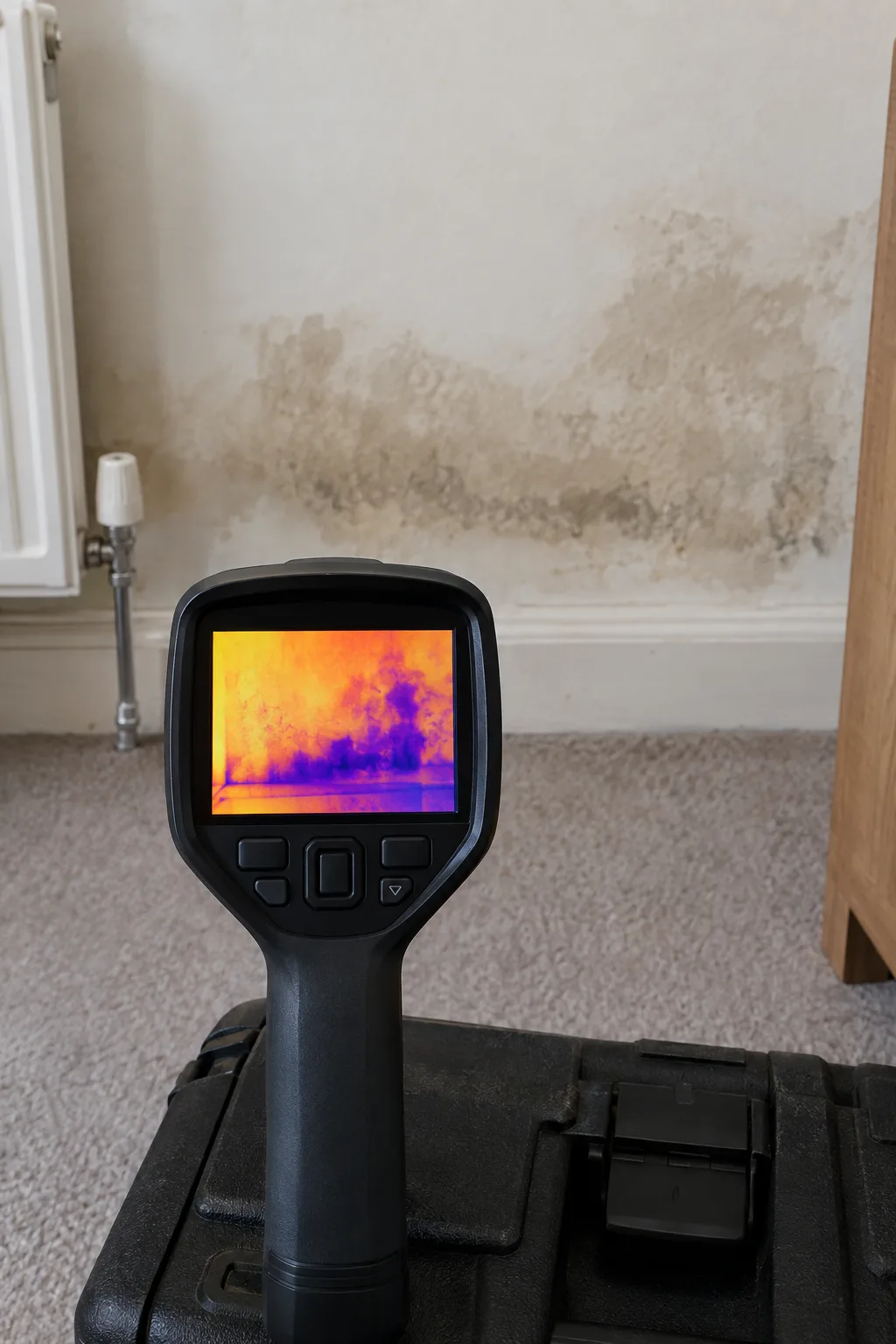
The patch is beside a space you cannot inspect fully
If a wall in your Poplar flat becomes damp beside a service cupboard or riser, record the damage without opening shared or restricted installations yourself. The nearby services may provide a useful lead, but the location does not prove a pipe is leaking. Moisture can arrive by another route or collect on a cooler surface. Record the room-side damage and which service area is restricted, so the investigation can separate the initial wall checks from the source access still needed.
Photograph the affected room wall and its relationship to the cupboard opening. Note whether the mark spreads, changes with use of a fitting or continues during an absence. Include any recent work carried out to relevant services if known. Do not guess which hidden component is responsible; a factual pattern is more useful when arranging access with the person managing the building.
Establish what the room-side checks can show
A moisture investigation beside the cupboard follows the stain across the room-side finish, checking readings there and at nearby surfaces for a related pattern. Material, lining and coating influence interpretation. A measurement through one finish cannot confirm the condition of every service beyond it. The findings should explain observed evidence and supported possibilities, while making any inaccessible area an explicit limitation.
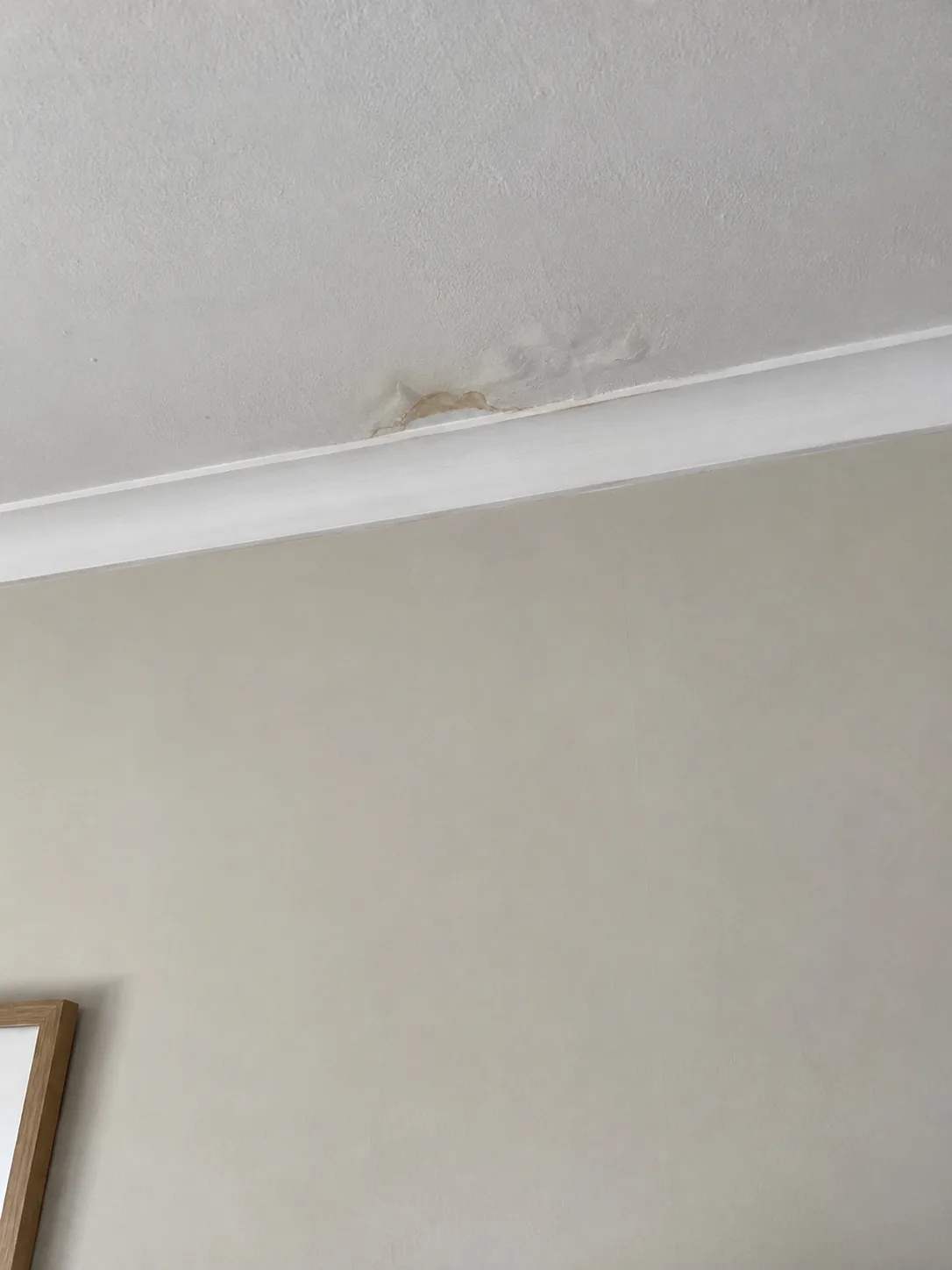
If the wall has recently been painted or repaired, share photographs from before the work. They may show an earlier boundary now hidden by the finish. A stain may remain after previous wetting, or new changes may indicate a continuing source. The sequence helps distinguish those questions without treating the current appearance alone as proof that a concealed route is active.
Arrange the right access to the relevant services
Where plumbing is a plausible contributor, checks for a concealed water source can help guide further investigation. Additional access may be needed before confirmation. Shared services can require arrangements through a landlord or managing agent. The initial visit should not imply that restricted installations will be opened or that every concealed fitting can be ruled out from outside the cupboard.
Ask for the actual scope of earlier service checks. Dates, photographs and a description of a repaired connection are more useful than an assurance that the pipes are fine. A task completed elsewhere in the building may not concern the route beside your stain. Keeping the information specific helps the next assessment avoid treating unrelated maintenance as evidence about this particular source.
Keep other wetting routes within the investigation
A weather-related change may justify assessment of external water entry where access permits. Water can travel before appearing indoors, so the service cupboard need not be the origin. Tell us if nearby openings or other walls show damage. Record any relevant shared feature that could not be inspected, with the source question and the person able to arrange a closer check.
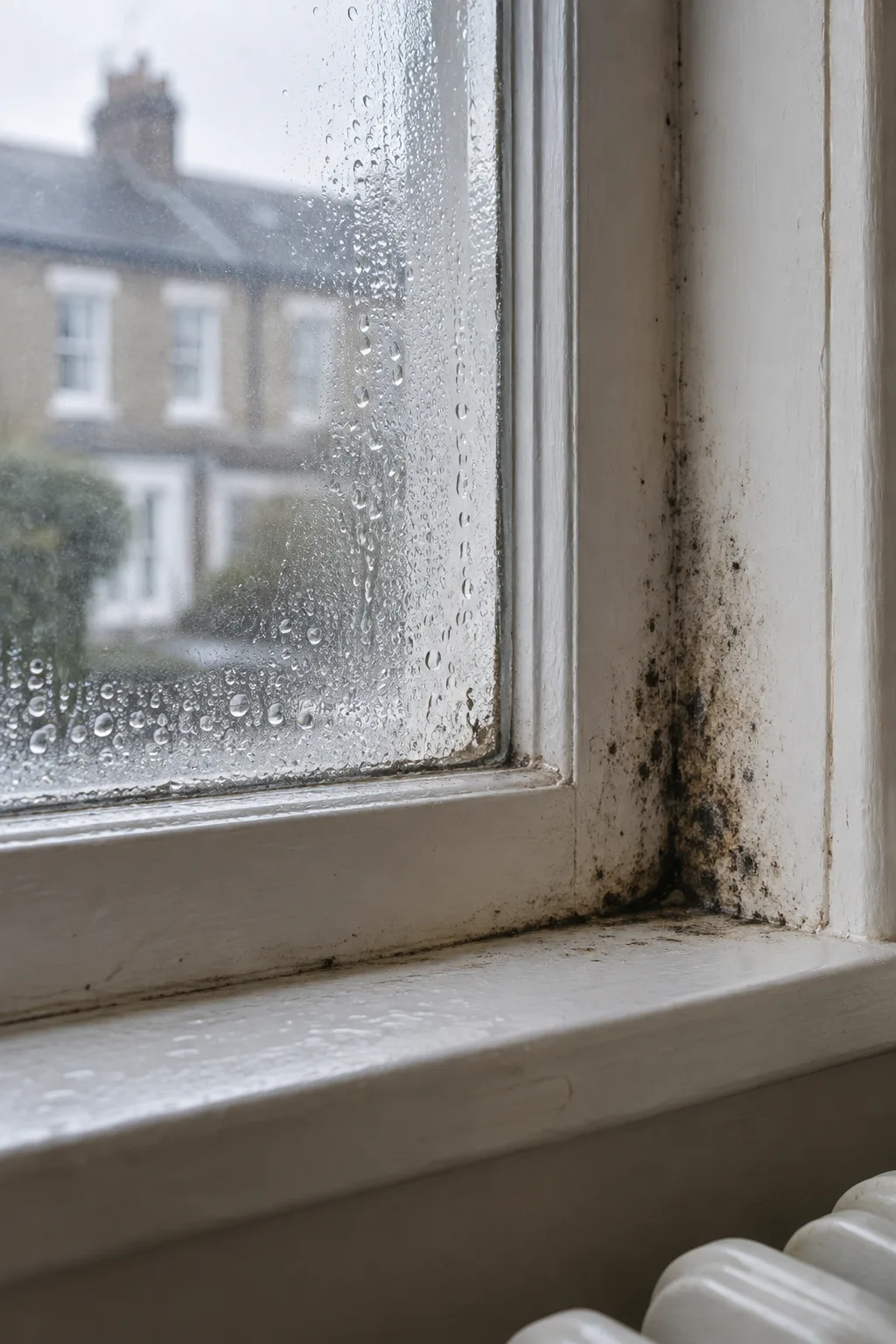
For scattered mould or a cool sheltered recess, a condensation review may assess heating, ventilation and indoor moisture. A cupboard boundary can have local conditions different from the room centre. That is relevant context, but should not replace checks of a defined persistent stain. Different signs may have separate contributions and need different tasks.
Do not make surface work the substitute for source access
Discuss treatment of affected mould with the condition of the finish and the source findings in mind. Cleaning the room wall does not repair shared pipework or establish the state of an inaccessible installation. Ask which work can proceed, which depends on further checks and what should be established before the wall is closed or decorated again.
Make the handover useful
Keep the inspection findings, access limits and photographs together for the person arranging follow-up work. Identify the question that the next contractor needs to answer. A clear task such as checking a particular accessible route is more useful than a broad instruction to investigate the whole building without context. Record what was actually examined and repaired afterwards.
Compare the stain after the agreed work
Observe the original area under ordinary occupation and relevant weather, preserving any renewed marks before cleaning or paint alters them. A completed shared-service repair does not automatically show the room finish is ready for decoration. Assess the remaining material condition and changes over time. If one symptom improves while another remains, record both results with the work dates so the next discussion can focus on the unresolved part.
PROPERTY & MOISTURE CHECKS
QUESTIONS BEFORE A VISIT
Useful questions
Should I open a shared service riser before inspection?
Do not open restricted installations yourself. Explain the access available and arrange any authorised access with the relevant person so the inspection scope and limits are clear.
Does a stain next to pipework prove a pipe leak?
No. Its position guides checks, but outside water and condensation may also be relevant. The timing and accessible pattern help distinguish the possibilities.
Which service records matter for this wall?
Records identifying the relevant route, component, date and task are useful. Unrelated building maintenance should not be treated as confirmation about the concealed area beside the stain.
Can surface readings confirm every hidden connection is dry?
No. They support investigation within practical limits. If confirmation depends on a concealed component, the findings should identify it and explain the specific access or specialist check needed to investigate that route.
What if the wall still looks stained after a service repair?
Old damage may remain, or further wetting may continue. Record whether the boundary changes and assess the finish before assuming the visible stain proves one outcome.
Nearby areas
Clarify the checks beside the service cupboard
Call about the Poplar flat, stain history and available service access. We can discuss an initial assessment and useful next arrangements.