DAMP & MOULD SPECIALIST
Damp and Mould Specialist Canary Wharf
A ventilation grille tells you where air may enter or leave, but not how the concealed route performs. Recurring mould needs room evidence and the system’s available information considered together.
Describe the installed arrangement without guessing its performance
If your Canary Wharf flat has mould and ventilation parts disappear into ceilings or cupboards, tell us what is visible and which controls you use. Share any maintenance information you have. Do not assume the type or operation of concealed equipment from the grille alone. The room’s wet surfaces and actual use are equally important to the assessment.
An assessment of the flat’s moisture and ventilation can consider accessible provision, room conditions and the reported pattern. Explain whether windows become wet, whether growth is confined to one bedroom or whether several rooms are affected. The inspection should identify which observations support a ventilation concern and what remains beyond accessible checks.
Get the records that answer a specific system question
If a managing agent or another contractor maintains relevant ventilation components, ask what information is available about your flat’s arrangement and recent work. The useful request is the actual scope and observations, not a general statement that the building has ventilation. Clarify who can arrange further access or a specialist system check if the damp findings show it is needed.
An inaccessible duct or component should be recorded as a limitation. It cannot be confirmed effective because air is audible or a control light is on. Nor should it be called faulty without evidence. The next investigation should have a defined question, such as whether an accessible room is receiving or removing air as intended within that particular arrangement.
If earlier maintenance notes describe a completed task but no room observations, keep that distinction clear. A component replacement or routine visit may not have investigated the mould complaint. Use the damp assessment to frame the remaining room-specific question for the system contractor. Check which part of that concern the maintenance scope actually examined.
Keep separate sources on the inspection list
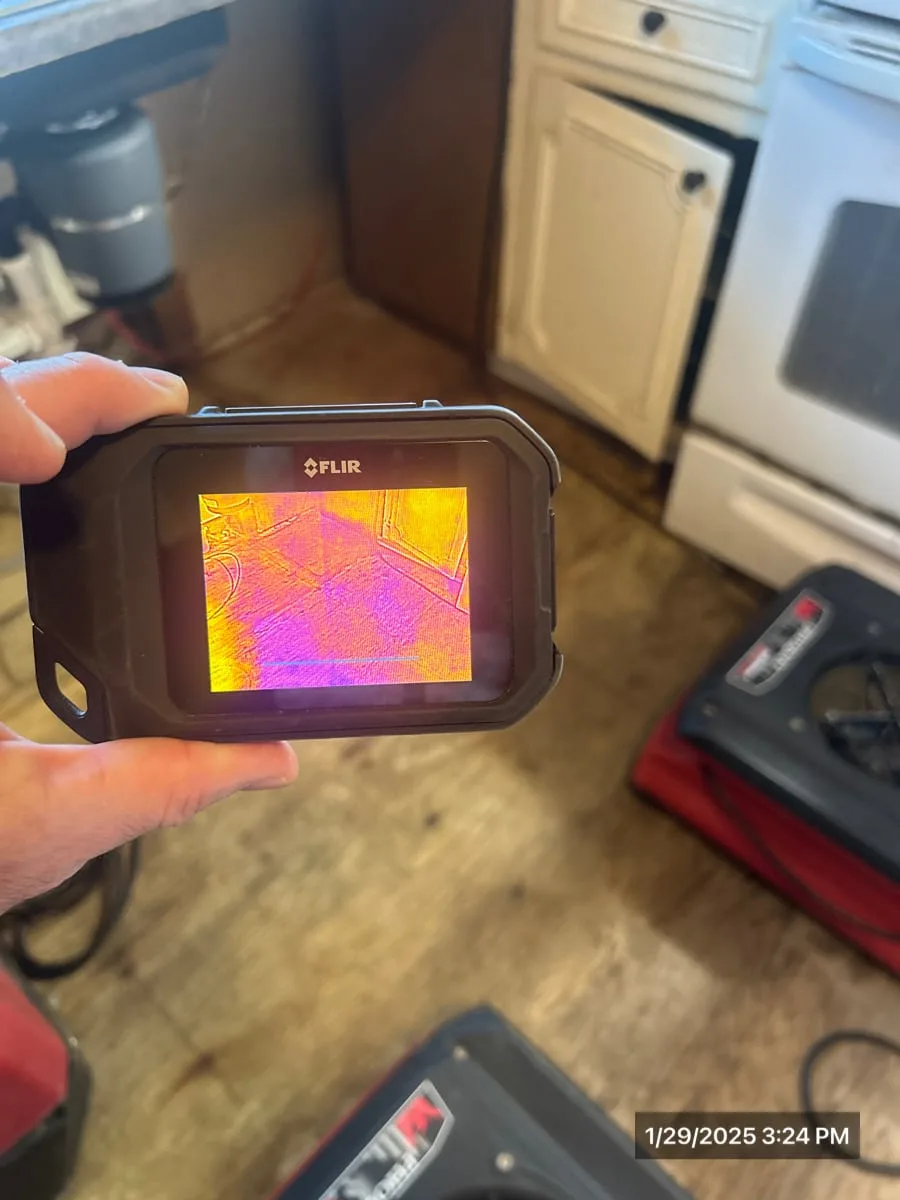
A single expanding ceiling mark or damp beside plumbing deserves a source check even if the ventilation system is uncertain. A room-specific moisture investigation can compare the damage and accessible readings. Ask the findings to distinguish that patch from the broader condensation pattern. It may need a separate source check with its own access and evidence.
If water is fresh or damage is spreading, report it promptly to the appropriate repair contact. Investigation of possible concealed water may be relevant where the source cannot be seen. Further access can still be needed before hidden fittings are confirmed, and another contractor may need to carry out the actual repair.
The surface pattern helps frame the ventilation question
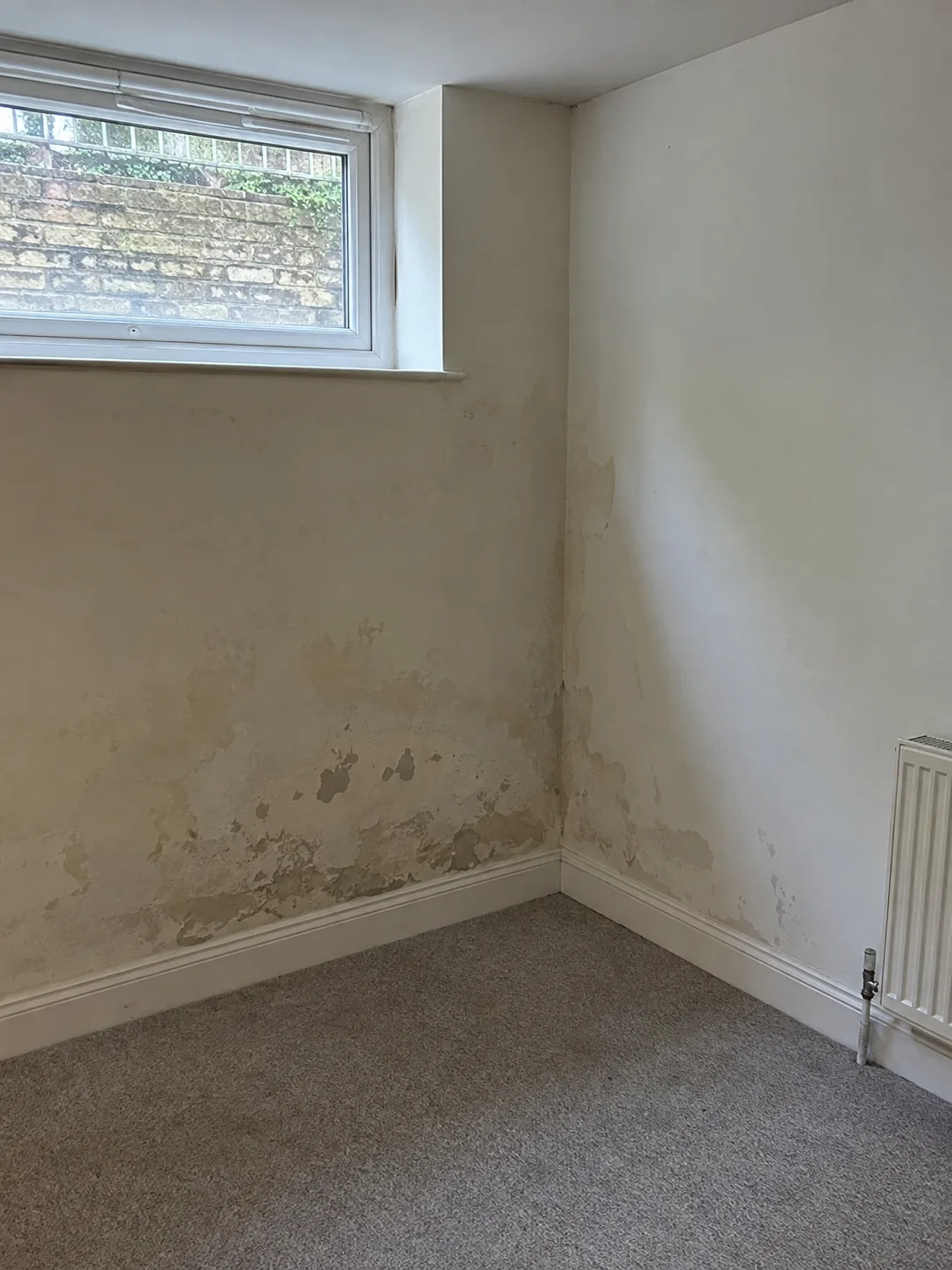
Growth around window reveals, behind curtains or at enclosed corners can direct attention to colder surfaces and local circulation. Describe where furniture normally stands and whether the room is heated consistently. A room can feel comfortable while one surface remains cooler. Current observations should be interpreted with those details and the periods when you notice wetting.
Keep notes of any changes to controls, room use or maintenance before the visit. If the flat has recently been aired or equipment altered, say so. A one-day observation may differ from the conditions that produced the photographs. This context helps avoid both dismissing the complaint because the room looks dry and diagnosing a concealed system from the original image alone.
Treatment and system checks need to connect
Mould treatment in the affected flat can address assessed surfaces within scope. It does not establish the performance of concealed ventilation or correct a hidden water route. Ask which preparation is needed, what damaged materials require separate attention and which source or system checks should accompany the surface work.
Keep the findings and maintenance records together and share relevant questions with the person arranging further checks. Before decorating, review the affected material condition and remaining uncertainty. If mould returns, note the precise surface and any changes since work was completed. The next decision can then build on a record of what was actually examined and addressed.
PROPERTY & MOISTURE CHECKS
QUESTIONS BEFORE A VISIT
Useful questions
Can a visible grille confirm the whole ventilation system works?
No. It shows an accessible part of the arrangement. Performance and concealed components may need further assessment, with the scope and limitations made clear.
What maintenance information should I ask for about concealed ventilation?
Request the arrangement relevant to your flat, the scope of recent work and any actual observations or outstanding checks. A general building statement may not answer the room-specific concern.
Can the damp inspection replace a specialist ventilation test?
Confirm the scope when booking. Room moisture and accessible provision can be assessed, while particular system-performance questions may require another contractor or further access.
Does mould in one room prove a system-wide fault?
No. Local surfaces, use and other water sources may differ. The inspection should connect the proposed explanation to that room’s pattern.
Should I change hidden-system controls myself?
Use the appropriate information and contact for the installed arrangement. Tell us about existing settings and any changes so the moisture assessment can interpret current conditions.
Nearby areas
Connect the room findings with the ventilation records
Call with the Canary Wharf flat details, visible symptoms and available maintenance information. We can discuss the accessible assessment and the concealed questions that may need another check.