DAMP & MOULD SPECIALIST
Damp and Mould Specialist Perivale
Removing wallpaper has revealed marks the room did not show before. Use the exposed area to investigate the wall before the next covering hides it again.
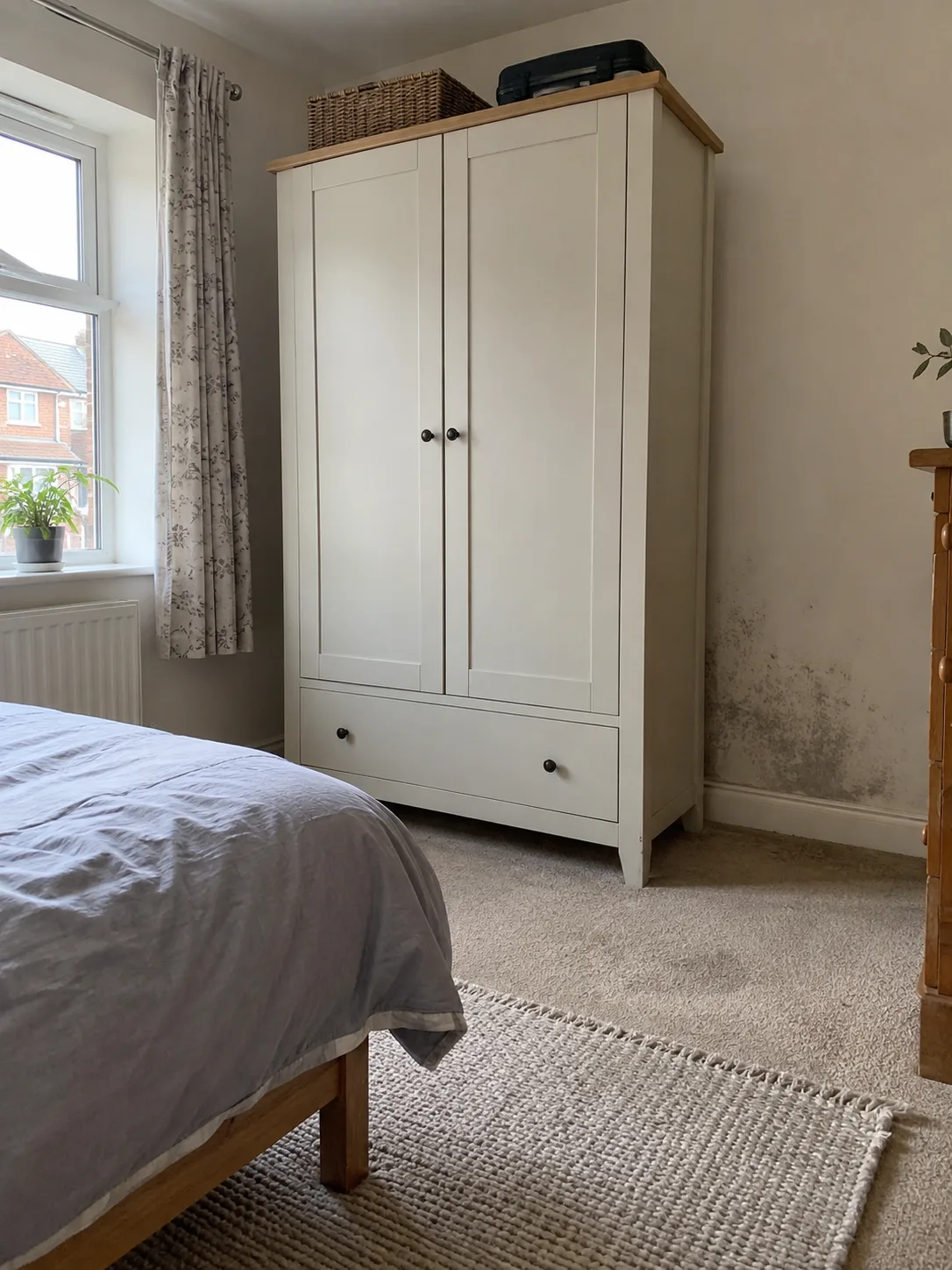
The stripping work has changed what you can see
If damp staining or mould appears beneath wallpaper at your Perivale home, take photographs of the exposed area and the surrounding wall before more preparation begins. Show where the covering remained sound and where it lifted or concealed damage. The discovery date is not necessarily the start of the problem. Earlier decoration may have hidden the wall’s condition for some time.
Tell us how much covering has been removed and what remains in place. Keep any earlier room photographs and note previous repair work in that area. The aim is to assess the evidence now available and decide what needs checking before repapering. An isolated mark beneath a covering does not identify the moisture route on its own.
Separate the covering from the surface underneath
Wallpaper, backing and the wall finish are different materials. Describe which one is marked, loose or damaged, and whether the exposed plaster shows staining beyond the paper’s outline. Do not assume that removing the visible covering completes the treatment. Its condition can guide the assessment, while the underlying wall still needs its moisture and repair questions considered.
If several decorative layers exist, record the order visible at the exposed edge where practical. You do not need to date each layer precisely. Product information, previous decoration dates or photographs can help explain what has been covered. Avoid scraping or sanding damaged areas simply to produce a clean appearance for the visit; agree any preparation that matters to the inspection.
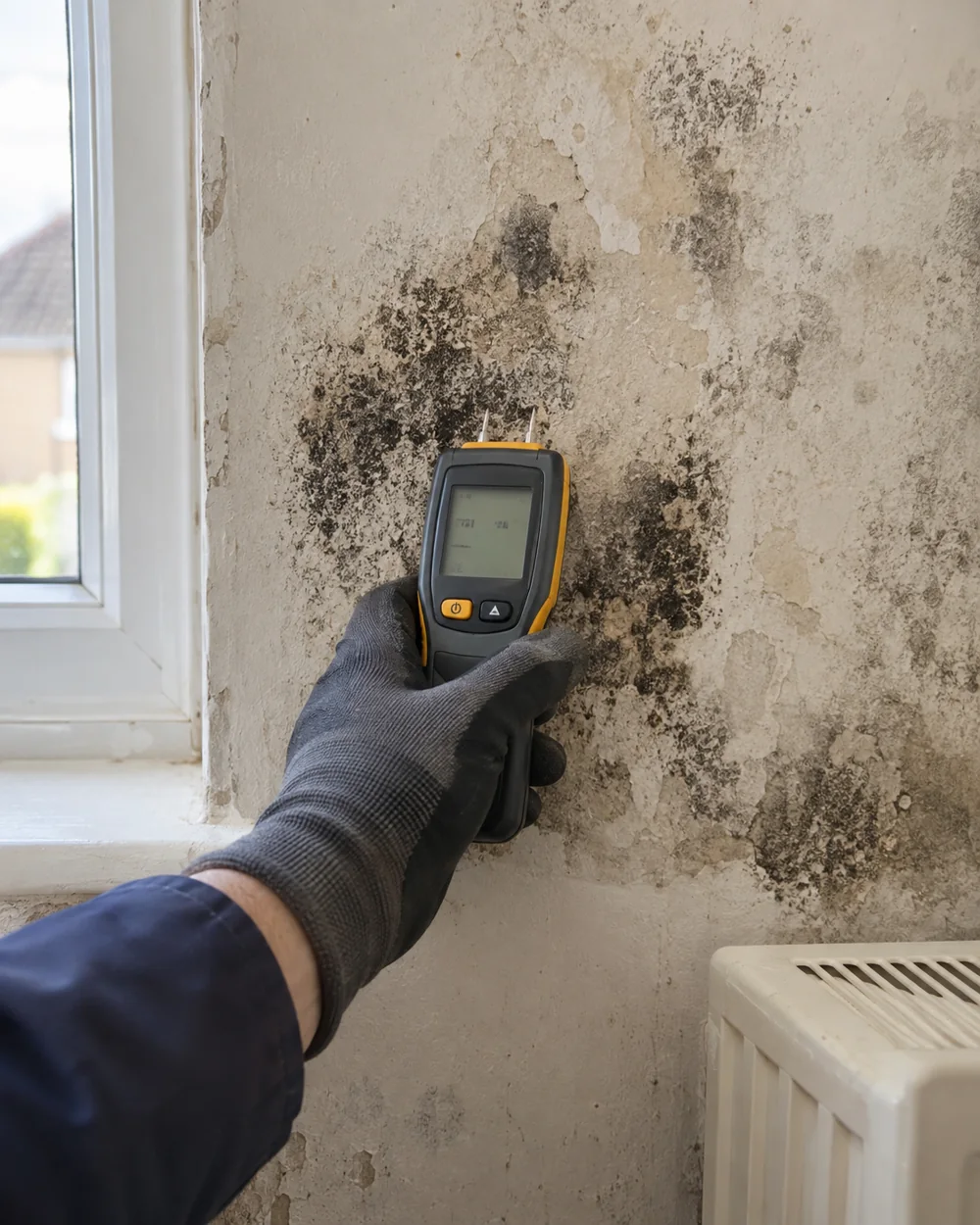
Check the exposed wall and the areas beside it
A moisture investigation before repapering can compare the exposed material with accessible adjoining surfaces. Readings need interpretation with the finish, damage pattern and history. The inspection should explain which observations support current wetting and which may be evidence left from an older incident. Covering still in place or a fixed unit can limit that comparison.
Show the whole wall’s relationship to windows, plumbing and neighbouring rooms. A mark discovered near a radiator or bathroom is a clue to explore, not proof of a leaking connection. If the evidence suggests a concealed source, checks of the relevant hidden water route can help direct further access. Ask which specific question an opening would answer.
Follow the wetting pattern beyond the paper
Record whether the exposed wall changes after rain or during normal use of a nearby fitting. Where weather-related change is relevant, assessment of accessible external entry points can compare the indoor damage with visible building details. A stain may be some distance from the entry point. Any inaccessible outside feature should be identified clearly in the findings.
The room’s moisture conditions can also affect cooler surfaces. A review of ventilation and cold-wall conditions may be useful where growth concentrates in a sheltered corner. Explain the furniture layout before decorating started, since the cleared room may now have more air movement. Keep this room context alongside any separate water-source evidence.
Choose the new finish after the wall decision
Where growth is present, discuss treatment of the exposed mould with the affected material and extent in mind. Damaged plaster or another surface may need a separate repair decision. Confirm the treatment scope, preparation and relevant source work. Removing paper or applying a new covering does not establish that repeated wetting has stopped.
Before the decorator proceeds, clarify what was found, what repair or moisture measure is needed and what remains uncertain. Keep photographs of the uncovered condition and completed work. Ask how the wall should be reviewed before finishing. If marks later return, those records help the next investigation distinguish the original hidden damage from new changes beneath the replacement covering.
PROPERTY & MOISTURE CHECKS
QUESTIONS BEFORE A VISIT
Useful questions
Does mould beneath wallpaper prove the wallpaper caused it?
No. The covering can hide the evidence, but the wall’s moisture source and surrounding conditions need assessment. Describe where the growth sits and the condition of the paper and underlying finish separately.
Should I strip the rest of the wall before inspection?
Discuss the exposed concern first. Photographs and the accessible material can guide the scope; any further removal should have a useful purpose and preserve information about the original pattern.
Can the marks be older than the current decoration?
They may be. Earlier work, photographs and the visible layers help establish the history, with uncertainty retained where dates or concealed conditions are unknown.
What should I tell the decorator after the assessment?
Share the source findings, material observations and work needed before finishing. Clarify any further check so preparation and a new covering do not conceal an unresolved wall question.
Will removing the wallpaper count as mould treatment?
Do not assume that. The affected wall and any other materials need their own assessment and treatment scope, alongside the work required to address continuing moisture.
Nearby areas
Use the exposed wall before covering it again
Call about the Perivale room with photographs from the wallpaper removal and any earlier repair details. We can discuss the moisture assessment that should inform the next decorating decision.