DAMP & MOULD SPECIALIST
Damp and Mould Specialist Muswell Hill
Roof work reduced the sloping-ceiling stain, but part of it remains or changes again. Review what the repair addressed and what the remaining pattern supports before repeating the task.
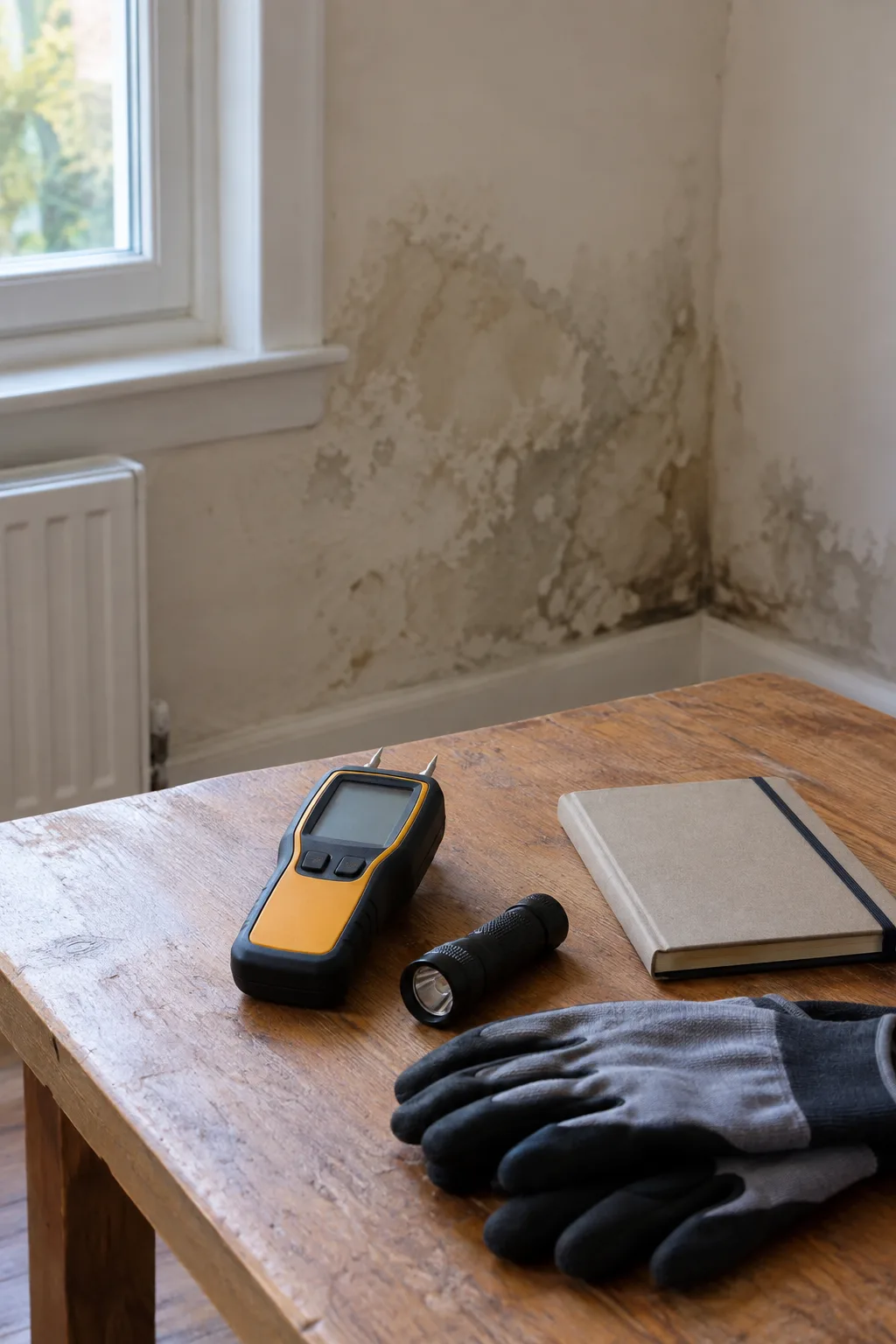
A stain on the slope is not a complete diagnosis
If a sloping-ceiling stain at your Muswell Hill home partly improved after roof work, record which area changed and which remains affected. Find the earlier photographs and the contractor’s actual scope. A smaller patch may reflect drying, incomplete source control or another contribution. The inspection needs to compare those possibilities against present evidence before the same repair is commissioned again.
Photograph the whole slope and the adjacent wall before cleaning or painting. Note whether the patch expands after rain, appears during colder periods or changes with room use. Tell us about roof, insulation, window or lining work completed before the damage began. If the timing is unknown, record the last occasion the surface was seen clear and the date the damage was discovered, keeping that gap explicit.
Start with the surfaces that can be reached
A moisture investigation of the affected room follows the stain across the slope, checking readings at safe reach and relating them to the adjacent ceiling finish. Readings must be interpreted against finishes and construction. A room-side assessment cannot automatically establish the condition of a concealed roof space. We explain what has been inspected, what the evidence supports and what additional access may be useful.
If access beyond the ceiling exists, describe it when arranging the visit. A restricted void or high exterior feature may require a different access method or another person. A finding about visible plaster should not be presented as a conclusion about every concealed layer. Existing plans and photographs may help explain the intended construction, but they do not confirm its current condition by themselves.
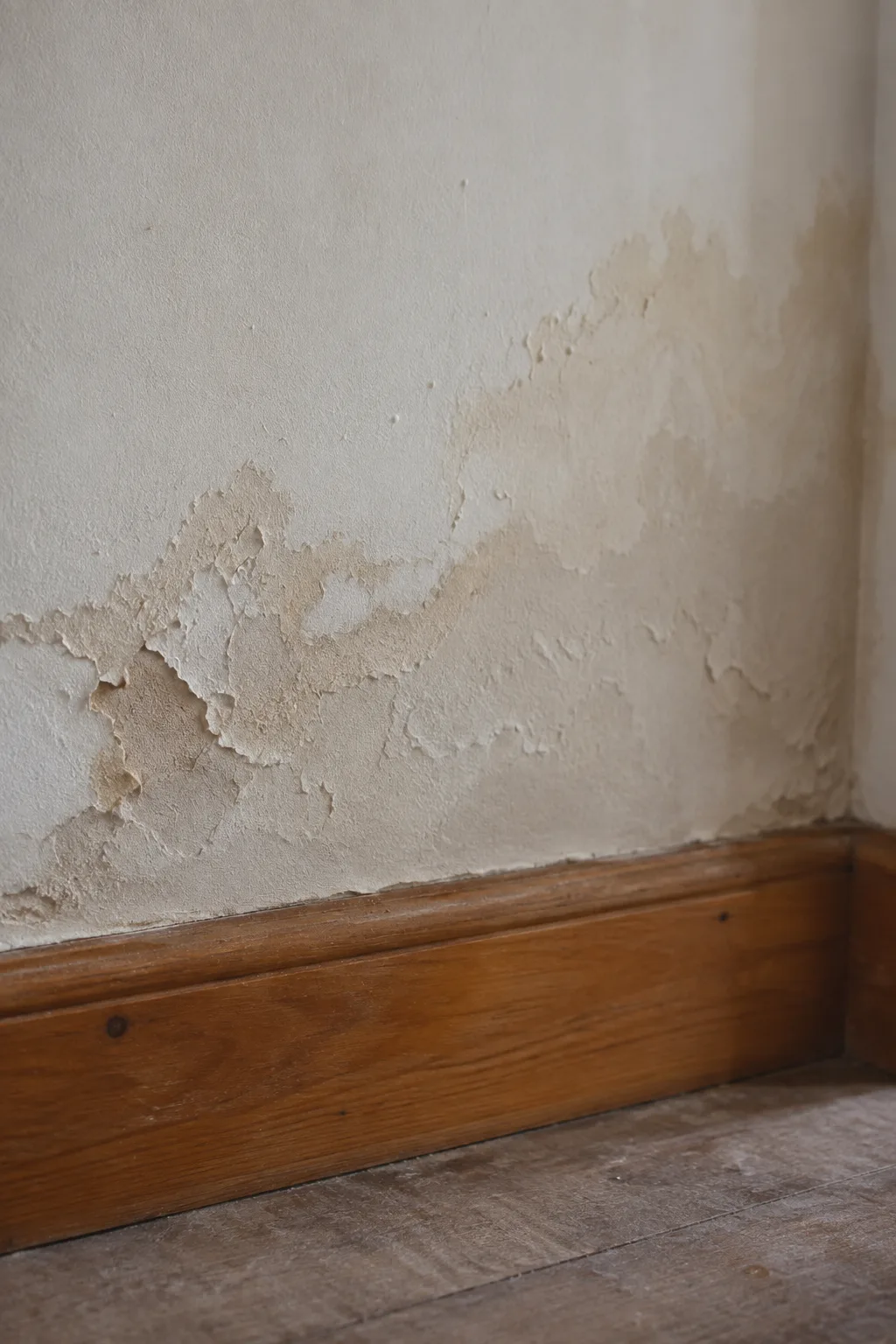
Follow a weather connection through the accessible evidence
For a stain changing after rainfall, checks for outside water entry connect its reported timing with the visible opening or roof detail that can be examined from available positions. Water can travel before appearing on the slope. The entry point need not be directly above the visible patch. Inspection limits at roof level should be clear before repair decisions are based on an apparent absence of visible defects.
Share the scope of any earlier roof visit or repair. A description saying a joint was repaired is more useful than a broad assurance that the roof was checked. If the patch partly improved, note what changed and when. Retained moisture, an incomplete source assessment and a second route should be distinguished instead of repeating the same task automatically.
A sloping surface may also collect indoor moisture
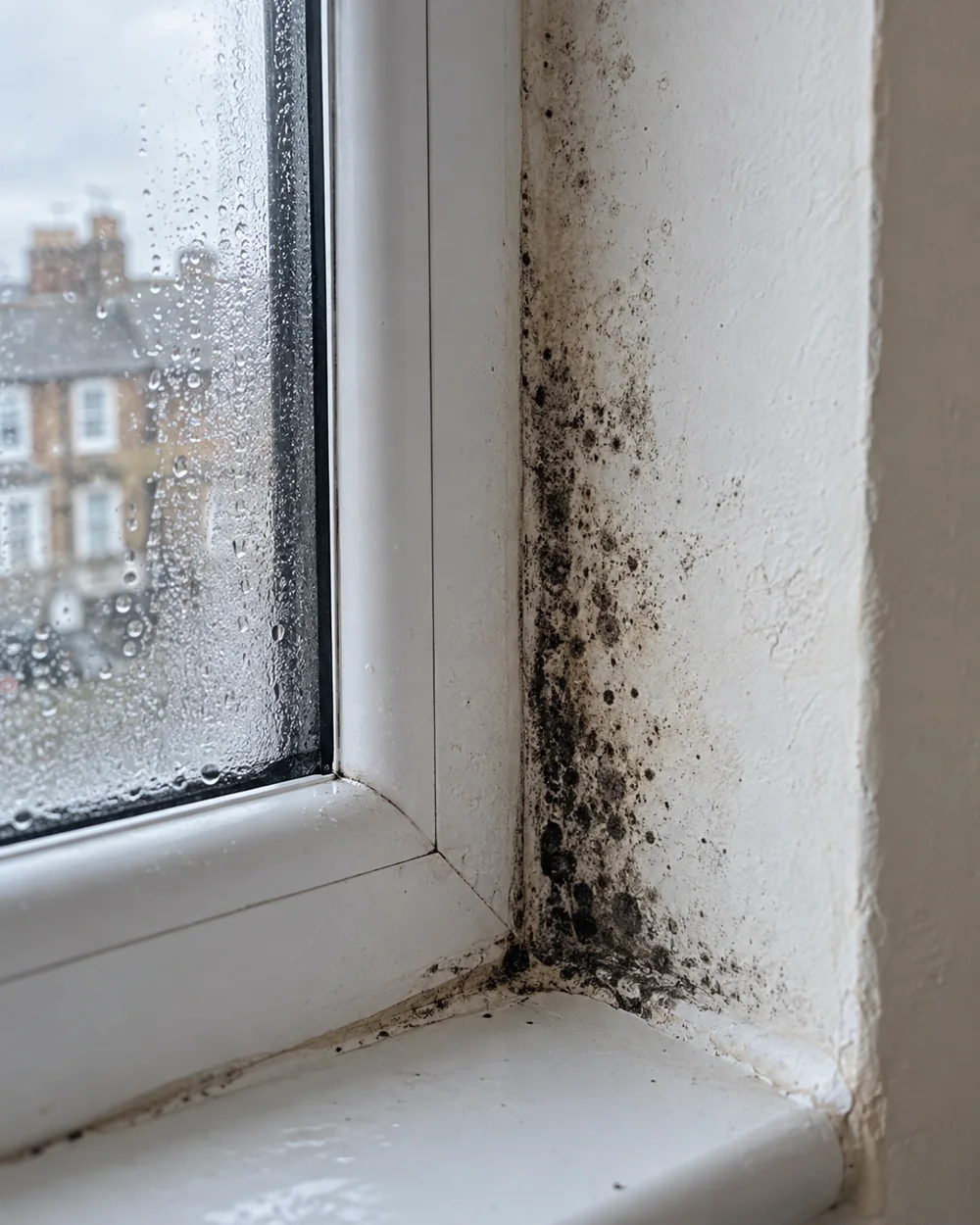
Where mould is scattered or linked to colder conditions, a condensation and ventilation review considers room heating, moisture production and air movement. Recent alterations can change the room’s balance. We do not infer hidden insulation details from surface appearance. A practical recommendation should explain the accessible evidence and identify any construction question still requiring closer assessment.
If nearby window reveals or sheltered corners are affected too, checks of mould on cold surfaces can help compare the wider pattern. Several affected places do not prove one cause, but they provide useful context. Describe the normal room routine and any temporary equipment introduced after the marks were noticed, as that may change the conditions during inspection.
Agree what treatment can and cannot address
Discuss mould removal and treatment with the surface condition and moisture findings in mind. Treatment deals with affected growth; it does not repair a roof route or confirm concealed construction. Ask which tasks depend on further checks and which can proceed. Agree the source checks and material assessment before decorating, preserving the current stain where it provides evidence for an outstanding question.
Review the slope through comparable conditions
After agreed work, take photographs of the same area during normal use and relevant weather. Note new staining separately from old discolouration. A repaired source can leave a visible mark, while an expanding patch raises a different concern. Readiness for decoration should be considered against actual drying and surface condition instead of a universal timetable counted from the repair date.
Tell us about safe access to the upper room before booking, including narrow stairs or high internal surfaces. Do not remove linings merely as preparation. A clear scope and room history help identify a useful next task if part of the ceiling must be opened, including the question and relevant location.
PROPERTY & MOISTURE CHECKS
QUESTIONS BEFORE A VISIT
Useful questions
Does a damp sloping ceiling automatically mean the roof leaks?
No. External water is one possibility, but indoor moisture and other routes also need consideration. The pattern and timing help decide which checks are relevant.
Can you establish insulation details from the room surface?
Not in every case. Keep specifications and work photographs available. If the answer depends on a concealed layer, we identify that question and the check needed to investigate the relevant part.
What if the patch becomes smaller after a roof repair?
Record that change and the work completed. Compare the remaining patch with the work performed so the next assessment can consider retained moisture and any separate source still requiring attention.
Why inspect nearby windows as well?
Their condition can provide context for a wider cold-surface pattern. That comparison supports investigation while retaining separate checks for a defined wet stain.
Should I strip the ceiling before the appointment?
Discuss the construction question and useful location for an opening first, keeping the original condition documented before any material is removed. Preserve photographs and the current finish so any opening up can be directed towards a useful question.
Nearby areas
Clarify the stain beneath the slope
Call about the Muswell Hill top-floor room, weather changes and previous work. We can discuss accessible checks and inspection limits.