DAMP & MOULD SPECIALIST
Damp and Mould Specialist Archway
If a fitted seat beneath the bay window smells musty or has mould inside, start with the enclosed space. The condition behind the seat matters as much as the visible room wall.
What is enclosed beneath the seat?
A fitted bay seat in your Archway home may contain storage compartments, removable cushions and a fixed timber back. Each affects what can be seen. If the first marks appeared inside one compartment, identify that section before clearing everything out. A mould patch on the rear board, damage to the wall behind it and a wet item stored there are separate observations. They may be connected, but need their own assessment.
Tell us how the seat was built and whether its lid, drawers or backing can be opened normally. Installation photographs may show an original wall now out of sight. Describe any service or pipe routed through the base. Do not ask a joiner to strip the whole unit before the inspection question is clear; existing openings may provide a useful first view.
Preserve the storage layout in photographs
Photograph the compartments before moving loose contents, then the exposed surfaces. Include the corners, bottom board and rear face. Note which compartment has the strongest smell and whether the mark is concentrated beside one joint. The original arrangement helps explain what stayed enclosed, while the cleared view helps assess the damage. Check the room-side edge too, so a small accessible patch is not mistaken for the full extent.
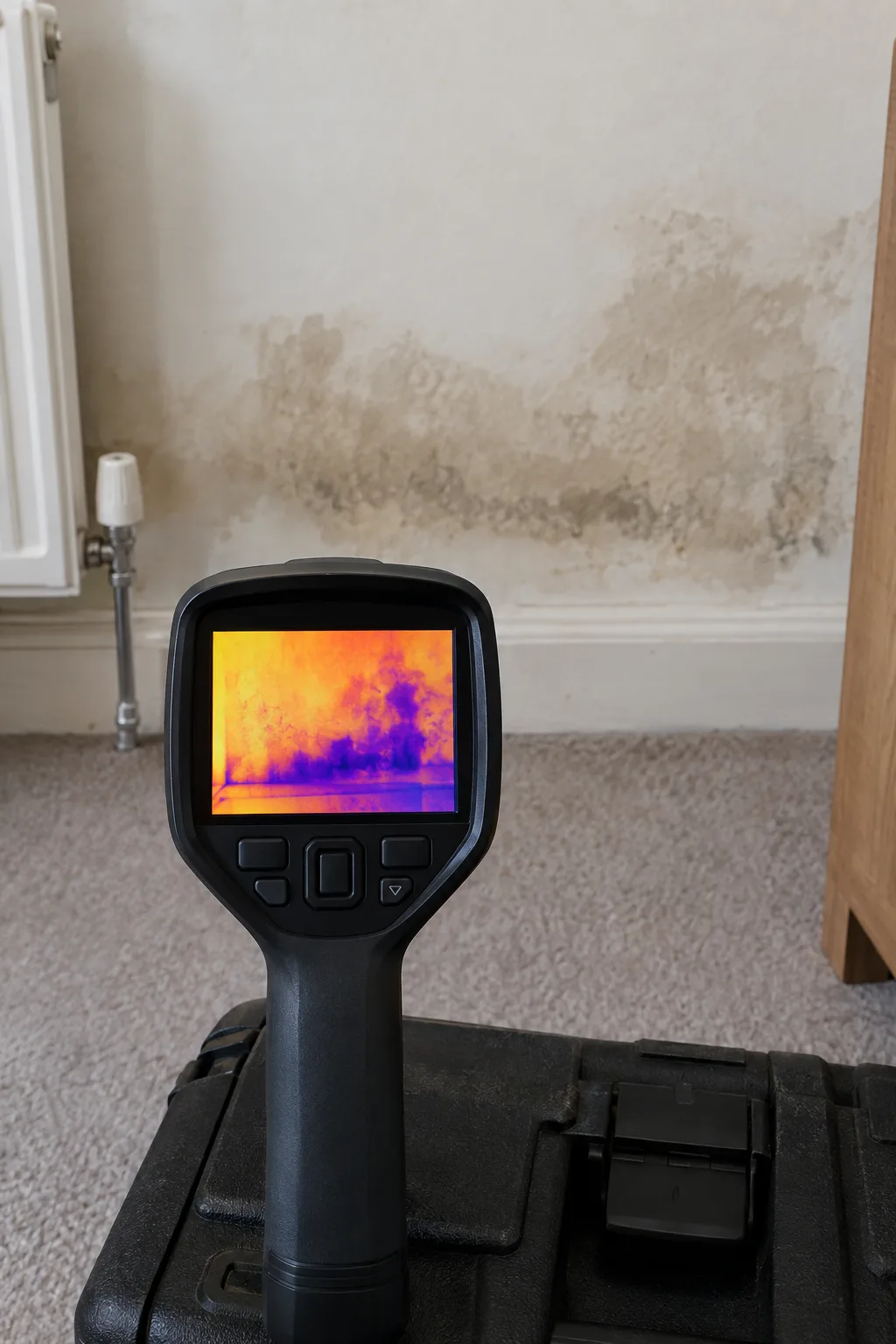
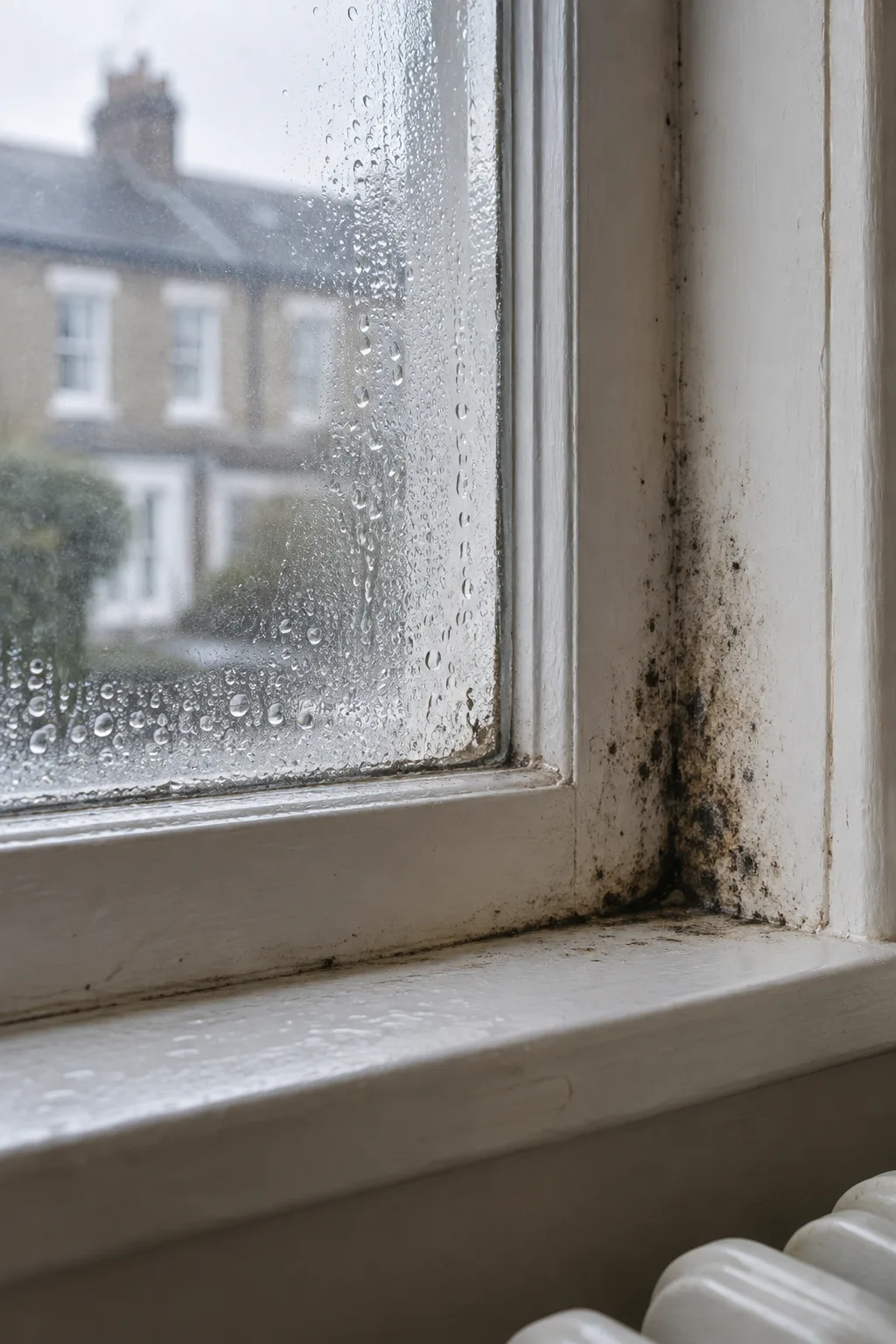
For comparison with the surrounding wall, checks of the bay’s colder wall surfaces can be useful. This enquiry is about the seat’s concealed backing; ordinary droplets on the glass elsewhere in the bay should be recorded separately.
Agree a small, useful opening before major removal
A lift-up lid can provide a view without giving access to the wall behind a fixed back. A removable drawer may reveal the base but leave another compartment unseen. Describe those differences when arranging the visit. If an existing opening is insufficient, agree which board needs examining, who will remove it and how the seat will be reinstated. The purpose is to answer a particular question about the enclosed material.
If a contractor opens the backing later, photograph the exposed wall before treatment or replacement. Keep its position clear. One compartment may look different from another, so the report needs to distinguish the viewed section from parts still enclosed. That record also helps a joiner understand what remains to be checked before a replacement panel closes the space again.
Find out what is wet behind the furniture
We examine accessible materials and compare the moisture pattern with the seat layout. A damp board can indicate a concern without identifying the source. The original wall, any lining and the joinery have different roles. Investigating the enclosed wall and seat base helps organise those observations and identify whether another source check is needed.
The history matters: was the wall marked before the seat was installed, and does wetting change after rain or independently of weather? Mention plumbing near the base and earlier repairs. A thermal observation at the seat front cannot describe every hidden layer. If access leaves the original wall unseen, that uncertainty belongs in the findings.
The storage cavity and the bedroom behave differently
A room can feel warm while a shut compartment receives little of its air movement. Closely packed contents can further enclose the backing. We consider this arrangement alongside the home’s moisture removal and other possible sources. A review of moisture conditions around the fitted seat may help where repeated condensation is supported by the evidence.
Explain how you need to use the storage. Recommendations should be practical for that installation. Replacing a lid or adding an opening is a joinery decision to discuss after the relevant condition is understood; neither should be prescribed solely from a musty smell.
Decide what to retain before the new backing goes in
Treatment of the affected seat and wall surfaces needs access to the relevant materials and consideration of their condition. Cleaning the visible compartment face does not assess a wall hidden behind it. The findings should identify which surfaces were examined and whether more of the backing needs attention.
Source work, treatment and joinery reinstatement should be coordinated. Keep photographs and notes of what each contractor actually did. Before closing the seat, review the original affected positions and the materials that will be concealed. That provides a better basis for retaining or replacing the installation than changing the entire bay window because growth was found in storage.
PROPERTY & MOISTURE CHECKS
QUESTIONS BEFORE A VISIT
Useful questions
Should I empty the bay seat before booking?
Photograph the ordinary contents and layout first. Clearing movable items may provide useful access, but discuss fixed boards, drawers and heavy parts before disturbing them.
Can the seat lid give enough inspection access?
It depends on what it reveals. A view into storage may still leave the original wall hidden behind a fixed backing, so describe the construction beforehand.
Does one affected compartment mean the whole seat needs replacement?
No. The extent and materials need assessing. Findings from one accessible section should not be applied automatically to every enclosed part.
Would new backing board solve the problem?
Replacing a finish does not explain why it became wet. The wall condition and moisture source should inform the reinstatement decision.
Should I replace the bay window too?
Growth inside the seat does not automatically justify window replacement. The investigation should focus on the affected enclosure and any supported moisture route.
Nearby areas
Check inside the seat before replacing it
Call about your Archway fitted bay seat with the compartment layout and first visible signs. We can discuss suitable inspection access.