DAMP & MOULD SPECIALIST
Damp and Mould Specialist Kentish Town
A repaired wall may still show staining or deposits. We assess what is old evidence, what is changing and which questions need answering before another coating covers the surface.
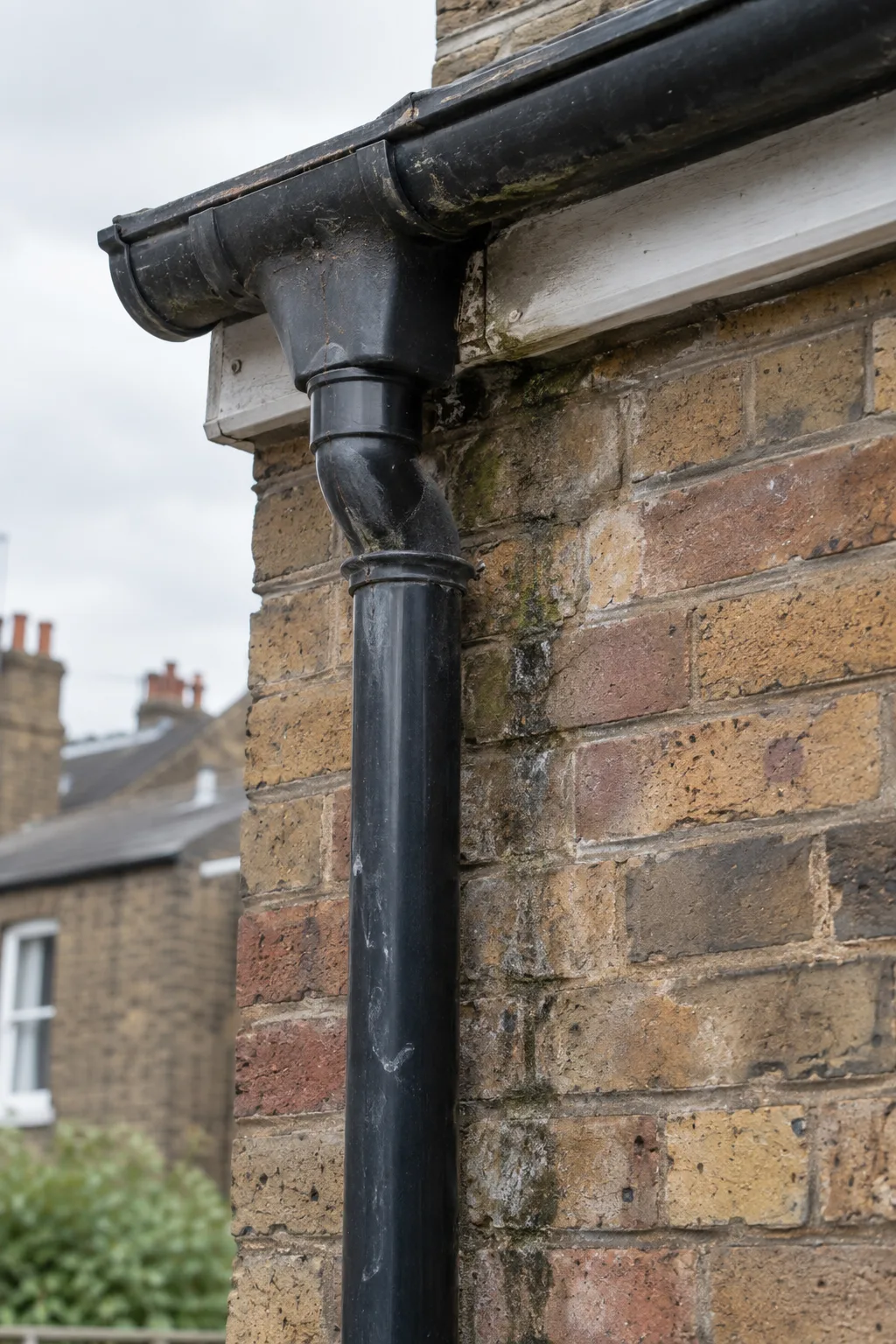
The mark survived the repair
If a wall in your Kentish Town home still looks stained after a moisture repair, separate appearance from activity. Discolouration or deposits may remain from earlier wetting, while a new or expanding mark raises another question. Neither outcome should be assumed from a photograph alone. The decision you need is whether further source investigation is required or the remaining concern is assessment of the damaged finish.
Where the mark is around an old chimney breast or another previously affected feature, its familiar location can encourage the same diagnosis to be repeated. Start instead with the evidence for the current condition. A historic source, a completed repair and visible damage are three different pieces of information. They need connecting before a further repair or surface coating is recommended.
Establish what was actually repaired
Gather the date, description and any photographs of the earlier work. Was an entry route confirmed and addressed, or was the wall simply cleaned and redecorated? Did the task cover the feature implicated in the original assessment? An invoice heading such as ‘damp repairs’ is too broad to answer those questions. Ask for the scope if the record does not explain it.
Put the first visible damage, inspection, repair and later changes in order. If a contractor could not access part of the construction, retain that limitation. Note the question left open at that visit and whether a later contractor obtained the missing access or supplied a relevant finding. A moisture investigation of the remaining marks is more useful when it starts with that sequence instead of reconstructing it from recollection during the visit.
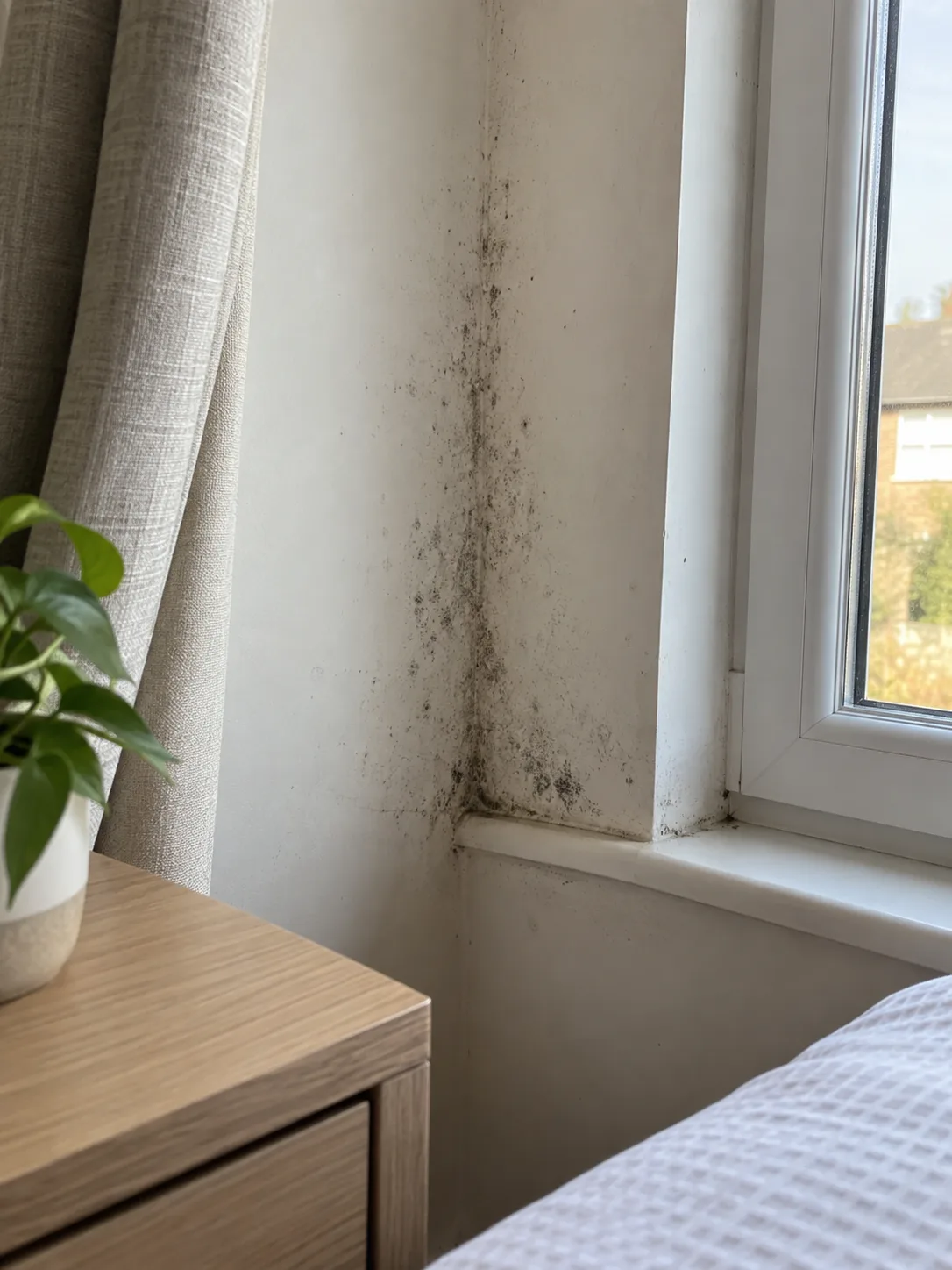
Deposits and meter results need context
Visible deposits can be part of the history left on a material. They do not, by themselves, establish that a particular water route remains active. Materials, salts and finishes can affect the interpretation of readings. One high meter result should therefore not become a complete diagnosis or an automatic instruction to repeat the old treatment. Ask how the reading fits the surface condition and surrounding observations.
Keep photographs before brushing away deposits or applying a coating. Note if they reappear, if the stain boundary changes or if the surface is visibly wet on particular occasions. These observations help frame the assessment; they are not a home test that conclusively identifies the source. If a finish conceals the material beneath, the inspection should explain that limitation.
Look for change, not just the presence of a mark
Photograph the same wall from the same position on relevant occasions, with dates. Include the full boundary, adjoining clear material and the darkest part, keeping the same view so a change in spread is visible. Record conditions such as rainfall or use of an adjoining fitting without deciding in advance that they caused a change. Repeat observations can help show whether the mark is stable, varies or expands. A short visit may not reproduce an intermittent event.
Tell us about cleaning, portable equipment or heating changes introduced between photographs. They may alter the surface or room conditions and make comparisons less direct. Do not cover the evidence simply to make it look tidy before inspection. The useful record distinguishes ordinary observations from temporary measures and keeps uncertain dates clearly identified.
Reopen a source question when the evidence warrants it
If new damage follows rain, checking the relevant external water route may be appropriate, with access limits stated. If wetting changes around a service, concealed-source investigation may guide further checks. Neither should be commissioned automatically because an old mark remains. The new task needs a specific question supported by present evidence.
Choose the next surface task for its actual purpose
Where mould is present, assessment and treatment of the growth is a separate decision from interpretation of staining or deposits. A coating may address a finish without repairing renewed wetting. Ask what needs confirming, what material assessment is required and which work can proceed. A cleaner-looking wall should not be used as proof that a source question has been answered.
Leave a record that the next person can use
If the property is rented, an agreed report of condition and findings can organise the history, present evidence and recommendations. Discuss the purpose before booking. The record should retain distinctions between reported changes, inspected features and uncertainties. It should not turn a persistent stain into an automatic judgment about responsibility or describe inaccessible construction as checked.
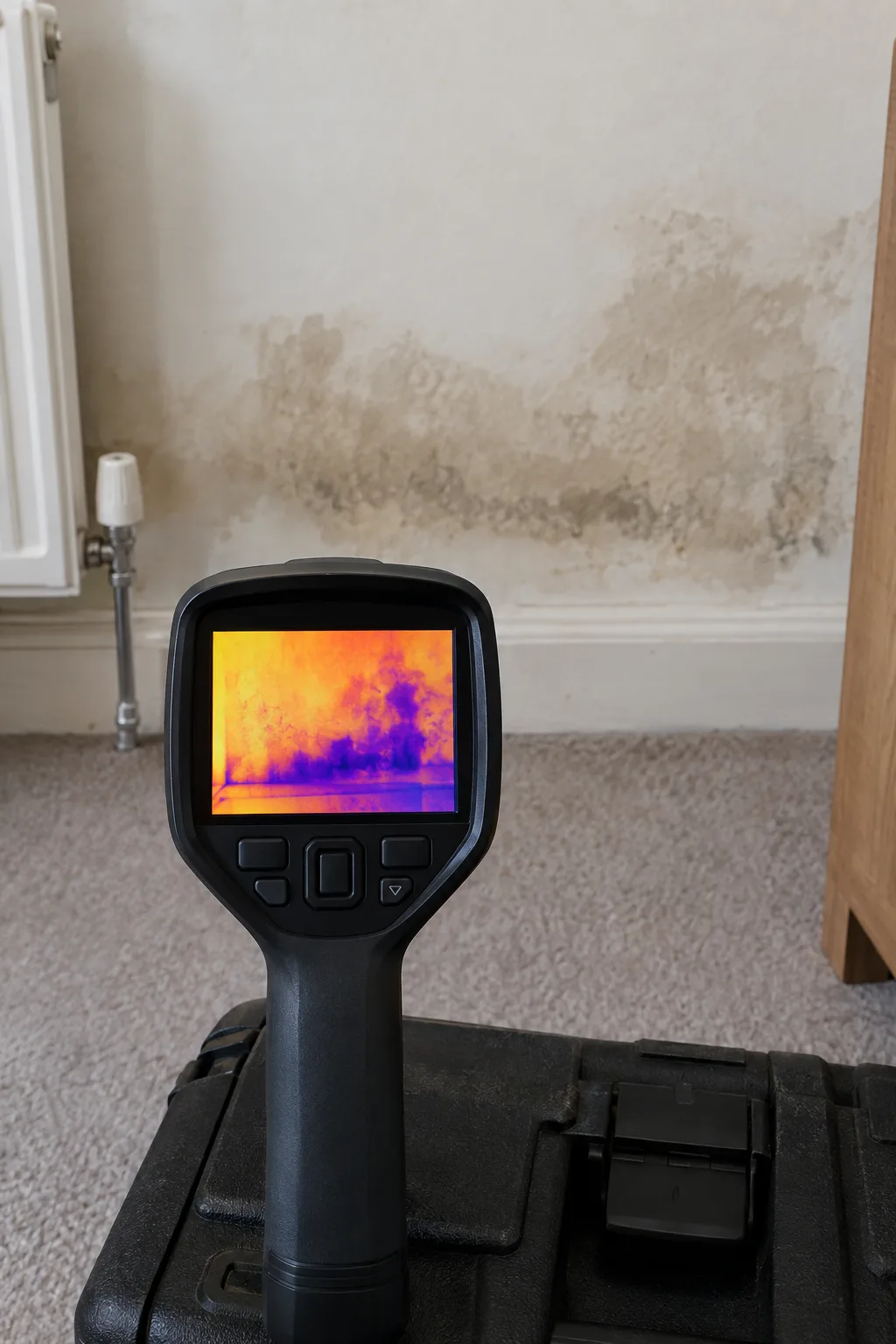
PROPERTY & MOISTURE CHECKS
QUESTIONS BEFORE A VISIT
Useful questions
Does a stain remaining after repair prove water still enters?
No. Earlier wetting can leave visible damage. New changes and accessible evidence need assessment before deciding that the old route remains active or another source has developed.
Can deposits alone identify the present damp source?
They cannot establish the complete current route on their own. Their position, material, repair history and any changes need considering together during the assessment.
Why might a meter result need more explanation on a previously damaged wall?
Materials, salts and finishes can influence interpretation. Ask how the reading fits the material, finish and dated changes across the wall, including the evidence needed to identify a current source.
Which repair record is most useful before the visit?
A description showing the source investigated, area accessed, work carried out and date helps. Broad labels without scope can leave important questions about the earlier task unanswered.
Should I coat the wall if the mark looks unchanged?
Discuss the evidence and finish condition first. Stability is useful history, but it does not on its own certify every concealed layer or decide which surface preparation is appropriate.
Nearby areas
Find out what the old marks mean now
Call about the Kentish Town wall with the repair record and any dated changes. We can discuss assessment before another coating or source repair is chosen.