DAMP & MOULD SPECIALIST
Damp and Mould Specialist Highgate
A landing can collect moisture produced in other rooms. We investigate the affected wall and the routes that may leave it damp, including sources beyond condensation.
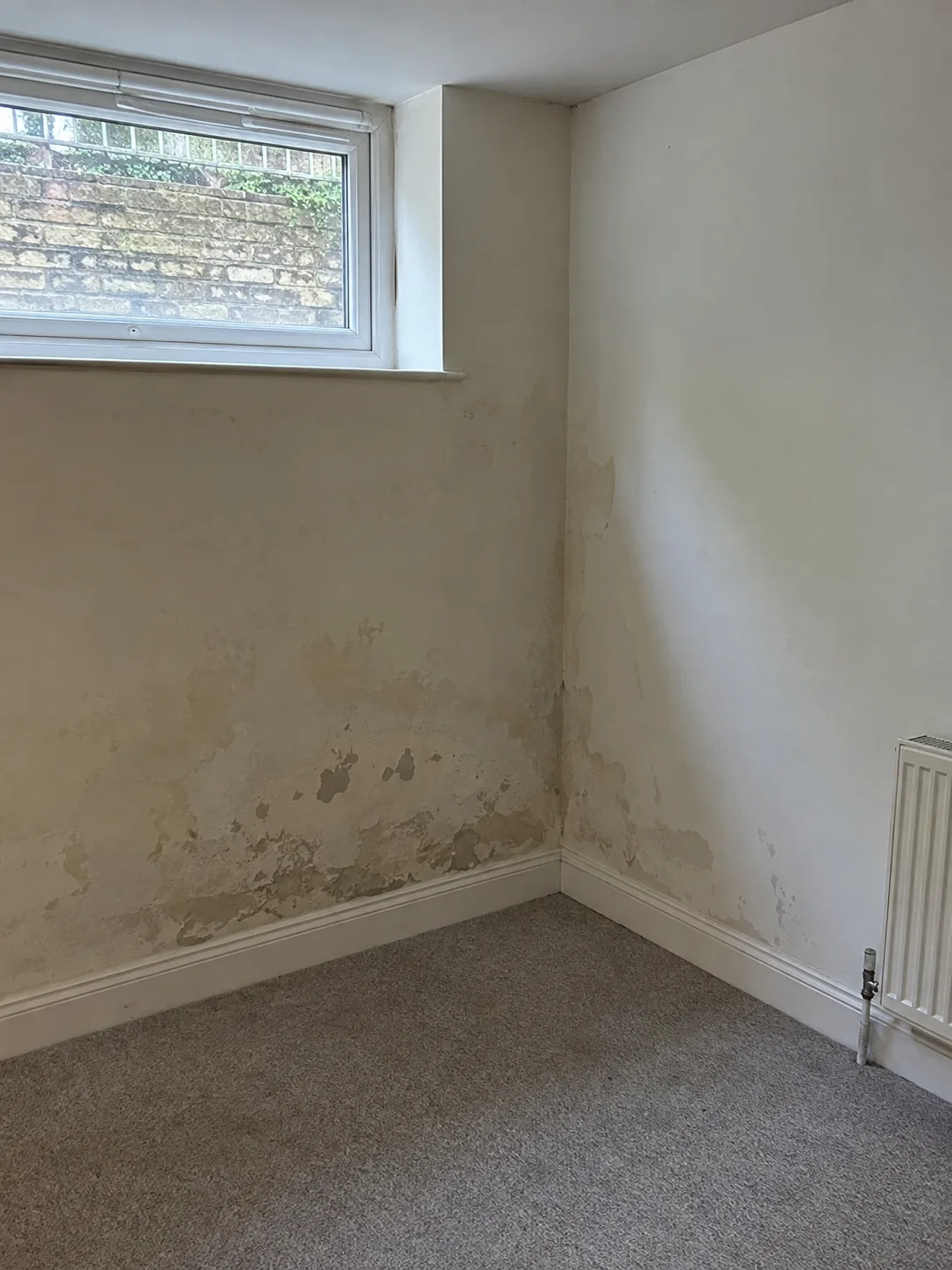
The marks are outside the rooms you use most
If mould appears on a landing or stairwell in your Highgate home, describe the height and spread before choosing a treatment. A wall beside a staircase may be cooler than occupied rooms, while warm moist air can move between floors. That is one possible explanation. Include rain-related changes and any known concealed service in the enquiry too, so the landing assessment can investigate the moisture route alongside room airflow.
Photograph the whole affected wall, showing nearby doors, windows and ceiling edges. Note which rooms open onto the landing and whether marks appear after bathing or overnight. Include changes after rainfall separately. A close-up shows the growth but loses the relationship to the building layout, which may be particularly useful when moisture seems to have travelled away from the room where it was produced.
Follow the routes between the occupied spaces
A review of condensation and ventilation connects landing symptoms with the neighbouring rooms, their door positions and the installed moisture-removal arrangement. Doors, extraction arrangements and the temperature of surfaces all matter. We ask about the normal routine because a landing on the inspection day may not reflect overnight conditions. The ordinary routine helps us compare moisture movement with the affected landing surfaces and choose checks relevant to the reported timing.
A bathroom opening onto the landing may be relevant if steam escapes and remains on adjacent surfaces. Checks of bathroom moisture removal can help assess that contribution where it is within the agreed scope. An extractor that switches on is only one observation; the wider arrangement and replacement-air route need consideration. Explain any recent fan or door changes.
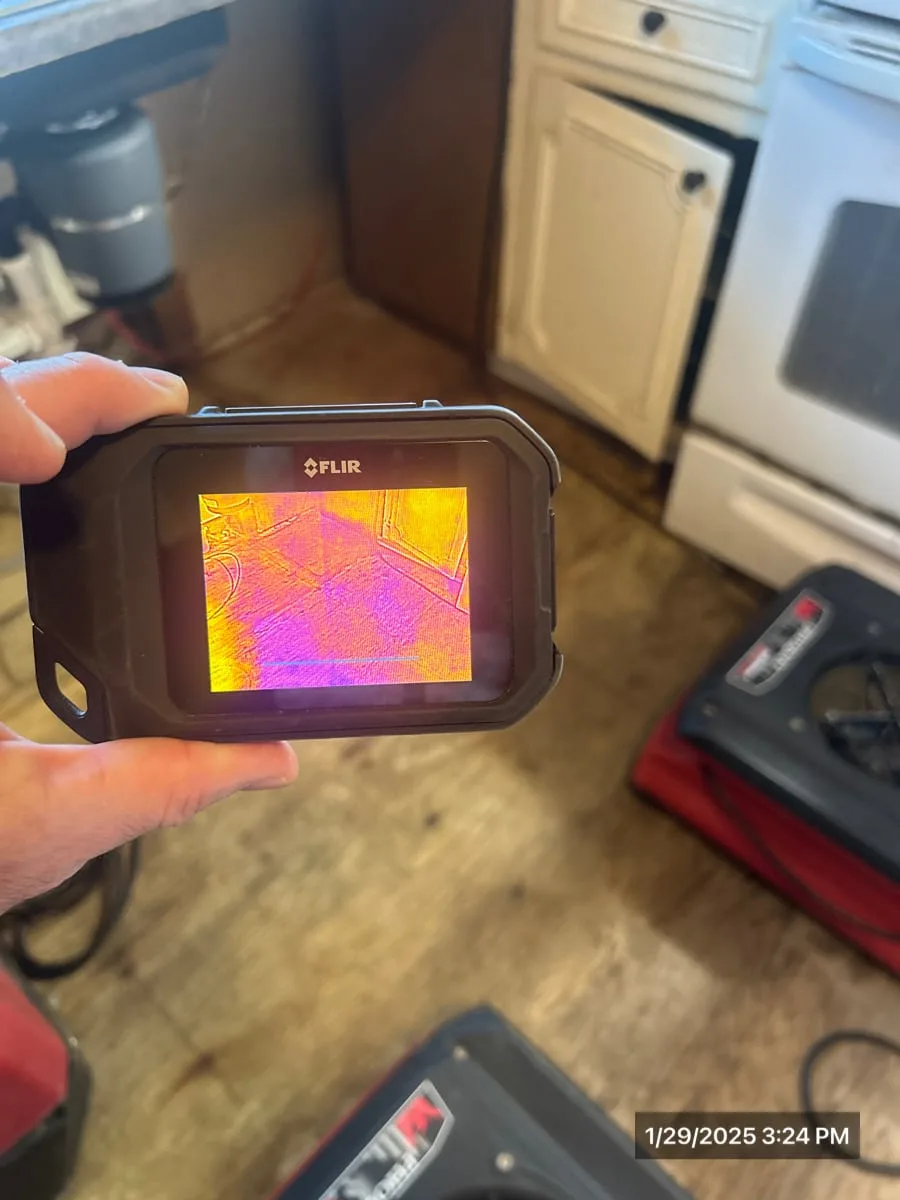
Distinguish scattered growth from a defined wet patch
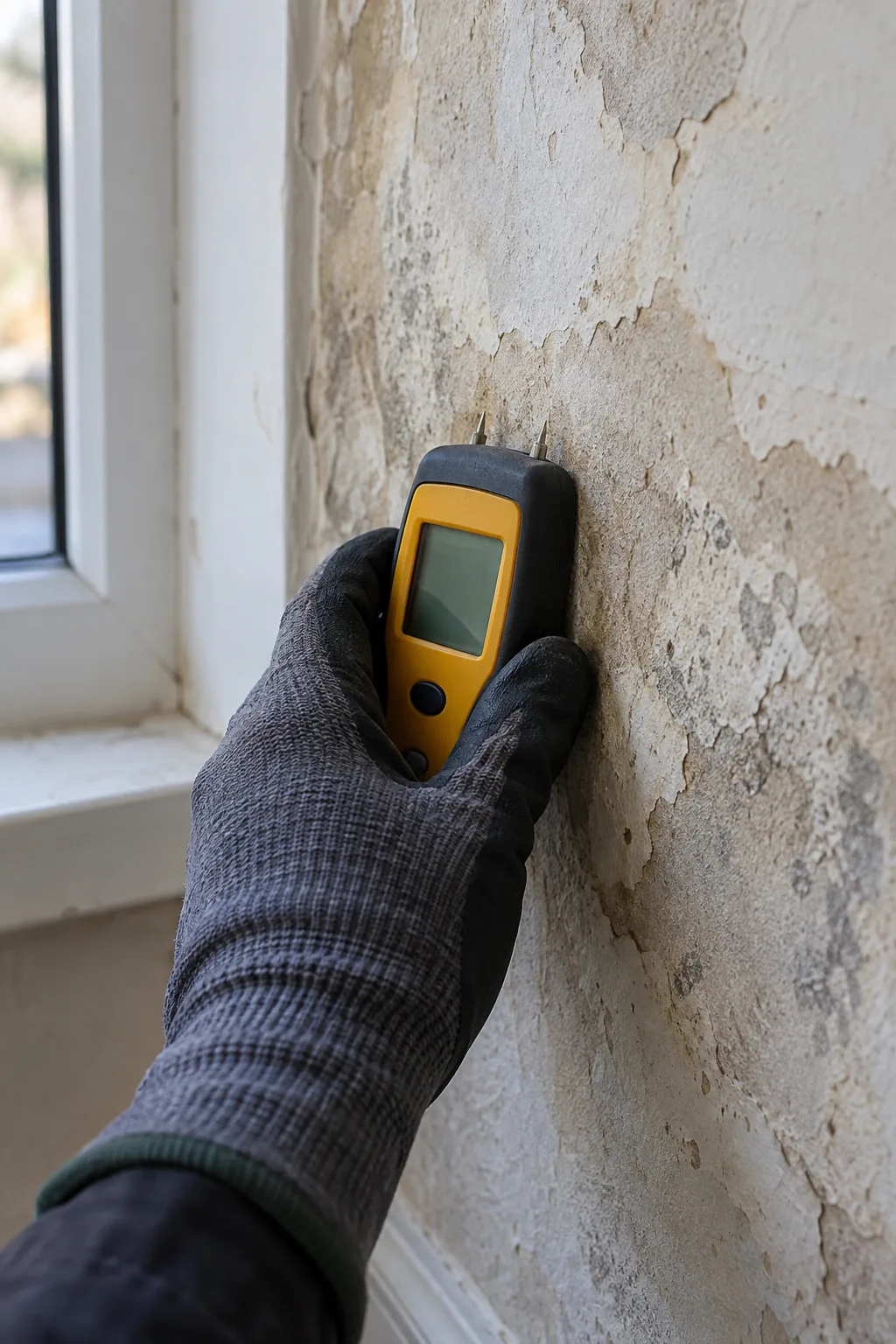
For a damp assessment of the landing wall, we follow the height and spread of the marks and take readings at surfaces that can be reached safely. Fine spots across a cool surface may raise different questions from a single stain beneath a ceiling junction. A reading needs interpretation with the finish and material. It should not be used as a standalone diagnosis or proof about concealed construction.
Tell us about plumbing routes if known and any work carried out before the damage began. If the affected wall adjoins a fixed cupboard or is covered by a lining, access may limit the findings. If a lining or cupboard hides an important part, the findings should identify that concealed question and the specific check needed to answer it.
Do not overlook the accessible exterior
Where a mark changes after rain, investigation of external water entry may compare the inside symptoms with accessible building details. An upstairs window, visible drainage concern or adjoining joint can be relevant where present. High-level details may need another access method. Record what earlier repair contractors actually examined instead of relying on a general assurance that the outside was checked.
Choose the surface work with its supporting measures
Discuss treatment of the affected mould once the contributing conditions are sufficiently clear. The finish may need assessment if repeated wetting has damaged paint or plaster. Cleaning the landing does not repair a water route or improve the whole home’s ventilation. Ask which task addresses the growth, which reduces renewed moisture and which depends on further confirmation.
Make the staircase visit practical
Tell us about narrow access, high surfaces or furniture stored on the landing before booking. The inspection needs a safe route and a realistic scope; it should not imply that every high wall can be reached without suitable arrangements. Avoid stripping the wall as preparation. Dated photographs and the current finish help connect the original complaint to the findings.
Watch the landing through its usual routine
After agreed work, observe the same surfaces during normal room use and relevant weather. Note if marks recur at a different height or only beside one doorway. A temporary change such as leaving every door open may affect the result and should be recorded. Fresh decoration belongs after the moisture plan and surface condition have been considered, not as the test that the cause has gone.
PROPERTY & MOISTURE CHECKS
QUESTIONS BEFORE A VISIT
Useful questions
Can bathroom moisture affect a landing wall?
It can move beyond the room where it was produced. Describe the bathroom’s clearance pattern and the landing marks separately so the assessment can compare moisture movement with any signs of another water source.
Why check the doorway positions on a stairwell?
They help show air routes between rooms and floors. Their normal arrangement provides useful context, although it does not by itself establish the source of damp.
Does mould high on the wall mean water comes from above?
No. Cooler surfaces and indoor moisture can produce high-level growth too. A defined stain and a rainfall connection may justify separate checks of water entry.
Can the visit reach every high part of the staircase?
Access and safety determine what can be assessed. Tell us about the layout beforehand so the scope and any limitations are clear.
What if the landing looks better when all doors stay open?
Record that change, but do not treat it as proof that no other source exists. Improvements need interpreting alongside the inspection and any remaining wet patches.
Nearby areas
Get the landing moisture explained
Call about the Highgate staircase or landing, the surrounding rooms and the marks you can see. We can discuss a useful inspection scope.