DAMP & MOULD SPECIALIST
Damp and Mould Specialist Mayfair
A fitted wardrobe can hide the first signs of damp. The investigation needs to consider the wall behind it, the room conditions and the limits of access.
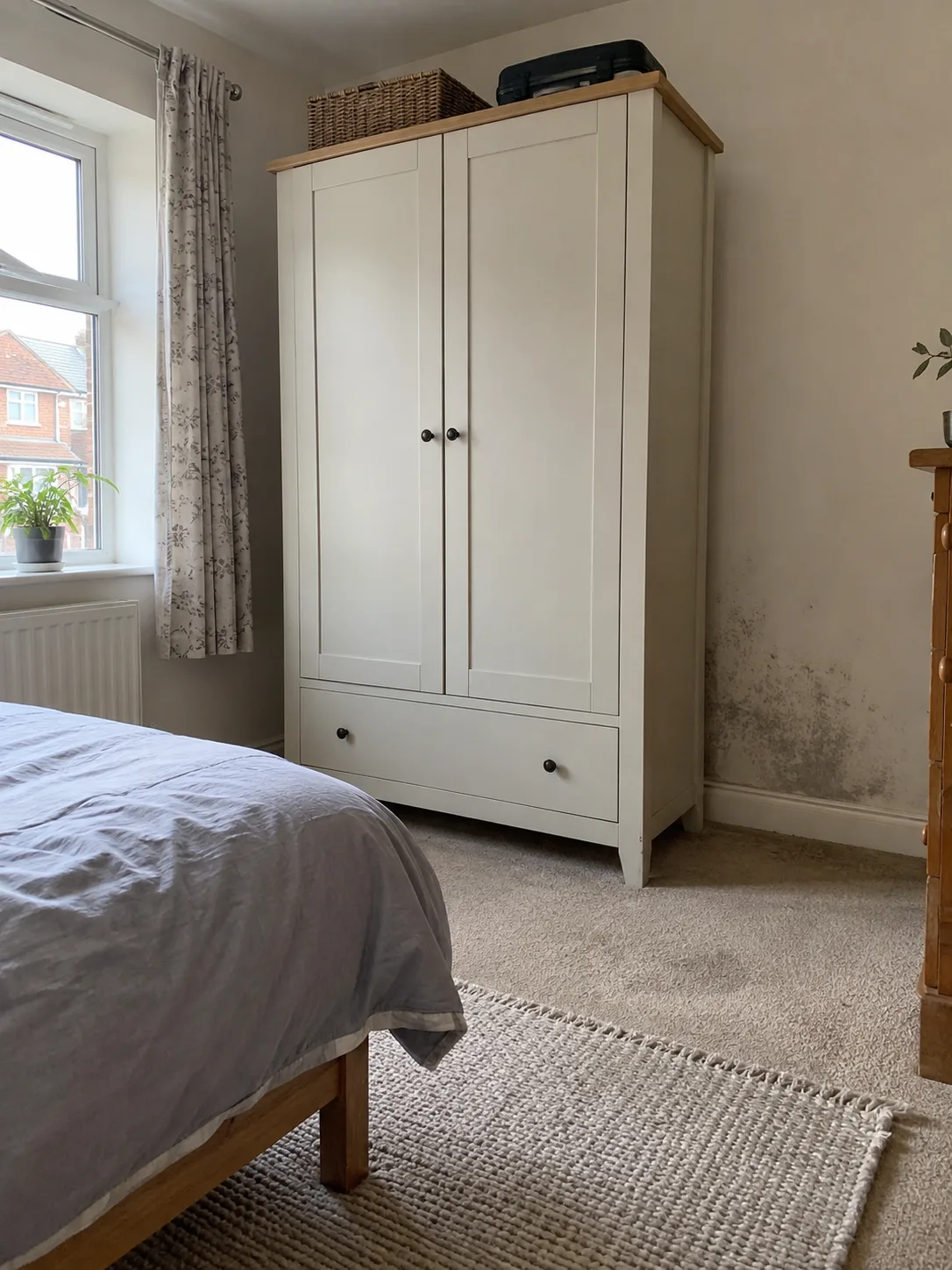
When the problem is behind fitted furniture
If a bedroom in your Mayfair property has full-height wardrobes against an outside wall, the room may look dry while the enclosed space behind them tells a different story. Restricted air movement can leave a cool surface damp. A leak or rainwater entry can also remain out of sight. A musty smell inside the wardrobe warrants a look at the enclosed wall and backing. Note where the smell is strongest and whether any stored item is visibly damp.
The date the joinery was installed matters. Growth noticed soon afterwards may relate to a changed air gap, although timing alone is not proof. Tell us about the wall construction if known, previous staining and any repairs nearby. Drawings or installation photographs can help show what sits behind panels without taking the furniture apart unnecessarily.
Ask if a narrow gap was intentionally left behind the wardrobe and whether that gap remains open or has been sealed by later trims. Use the installation information to plan access, then assess the current backing condition within the view obtained. A drawing that shows a dry cavity is design information; a view of the actual backing, when appropriately obtained, is evidence about its present state.
Look at the pattern around the edges
Check the visible wall at the wardrobe ends, the skirting beside it and the ceiling line above. Small dark marks around an edge may be the accessible part of a larger affected area. Peeling finishes or a tide-like stain need consideration alongside mould. A smell that intensifies after rain suggests a different line of enquiry from droplets that appear during cold mornings.
Avoid pushing belongings tightly against damp backs or covering evidence with a new lining. If items need moving to provide access, photograph the original layout first. A check of cold walls and nearby window reveals can show whether the wardrobe issue is part of a broader condensation pattern in the room.
Separate a cold cavity from a wet wall
Accessible readings and observations help compare the wall beside the fitted unit with other parts of the bedroom. We consider heating, ventilation and where moisture is produced, but do not treat room use as the whole explanation. External details, plumbing routes and signs in neighbouring spaces also matter. The aim is to establish which moisture mechanism is supported by the evidence, and which remains possible but unconfirmed.
Thermal observations can identify temperature differences around the unit. They cannot see through joinery and prove a hidden leak. When the evidence points to concealed moisture, investigating the hidden water route may be appropriate, with the limits of non-invasive access made clear.
Plan access without damaging the installation
We begin with what can reasonably be examined. Removable shelves or an existing access panel may give a useful view; fixed backboards may prevent one. If opening the unit is needed, the work should be agreed with whoever owns and maintains it. Photographs taken through a small opening still have limits: they may show growth without revealing the entire surface or its source.

A treatment plan for the wall and the enclosure
The extent of contamination and the condition of the underlying material affect the proposed mould treatment. The plan may also need to consider the fitted unit itself and whether it can be accessed properly. A surface spray applied only to the visible edge is unlikely to answer questions about growth behind a sealed backboard.
Where repeated condensation is supported by the findings, improving moisture removal and airflow should be considered alongside treatment. If the wall is wet from ingress, repairs take priority. Reinstalling the same enclosure against a damp surface without dealing with that source can recreate the conditions that caused the problem.
Use the findings before changing the furniture
Replacing expensive joinery is a substantial decision. The inspection should explain what has been observed, what access was missing and what needs confirming before that decision is made. Keep records of any repair and check the accessible margins afterwards. Check the enclosed wall itself before redecoration or reinstatement, including the accessible margins normally hidden by the unit.
PROPERTY & MOISTURE CHECKS
QUESTIONS BEFORE A VISIT
Useful questions
Can fitted wardrobes cause mould by themselves?
They can restrict airflow against a cold wall, but a separate water source may also be present. The installation and wall need assessing together.
Does a musty wardrobe mean the whole wall is affected?
The accessible edges show only part of the wall. Fixed panels may conceal a different condition, so the extent needs checking within the available view.
Should a carpenter remove the back first?
Discuss access before arranging removal. Existing openings may be enough for an initial assessment, with further access agreed if the findings justify it.
Would a thermal image settle the cause?
No. It shows temperature patterns that must be interpreted with other observations. Joinery and concealed layers limit what those patterns can tell us.
Can the wardrobes stay after treatment?
That depends on their condition, the wall behind them and whether the moisture problem can be addressed. The decision should follow the inspection findings.
Nearby areas
Get the hidden wall checked
Tell us about your Mayfair bedroom, the fitted furniture and where the first signs appeared. Call to discuss a suitable assessment.