DAMP & MOULD SPECIALIST
Damp and Mould Specialist Fitzrovia
In an open-plan home, moisture does not respect the edge of the kitchen. We check the affected surfaces and the way the space works before recommending treatment.
One space can contain several moisture conditions
An open-plan conversion in Fitzrovia may have a warm kitchen at one end and a cooler external wall at the other. If that describes your home, the location of mould deserves a careful explanation. Steam can move across the space, but a damp patch by a pipe or window may have an entirely separate cause. Treating the whole room as one uniform environment can miss those differences.
The useful property details are practical: where the cooker sits, which windows open, the position of extraction and whether an alcove is screened by furniture. Tell us about any alterations that changed the original room layout. A new partition or sleeping platform may alter airflow even when the rest of the space feels airy.
Record where water settles
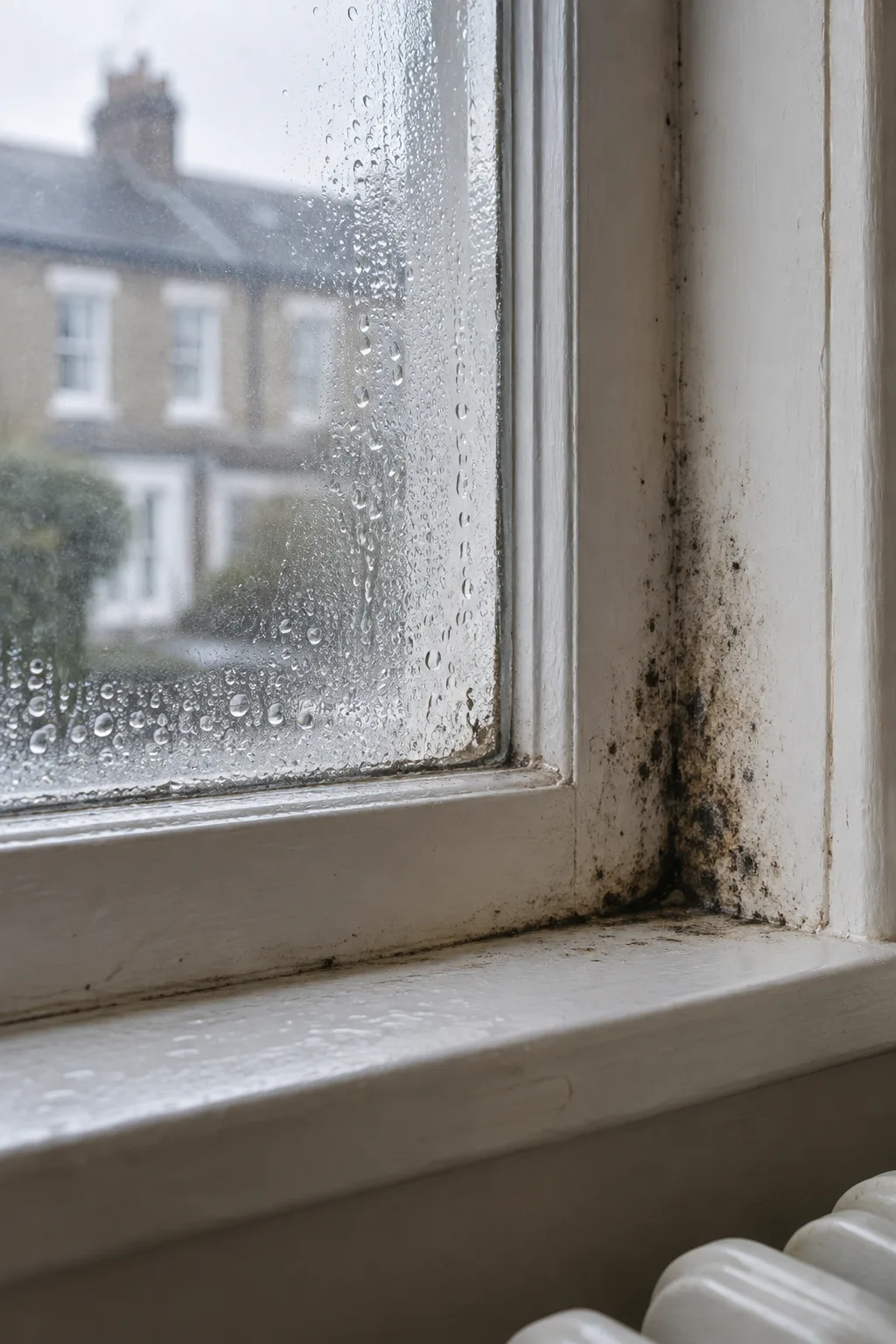
Record repeated wetting as well as visible mould, including when each surface dries. Water on an external window, dark specks behind a sofa and peeling paint near a sink each deserve their own note. Describe when you see them and how quickly surfaces dry. If a patch remains wet after several days without cooking, that history is useful; it does not prove a leak, but it changes what needs checking.
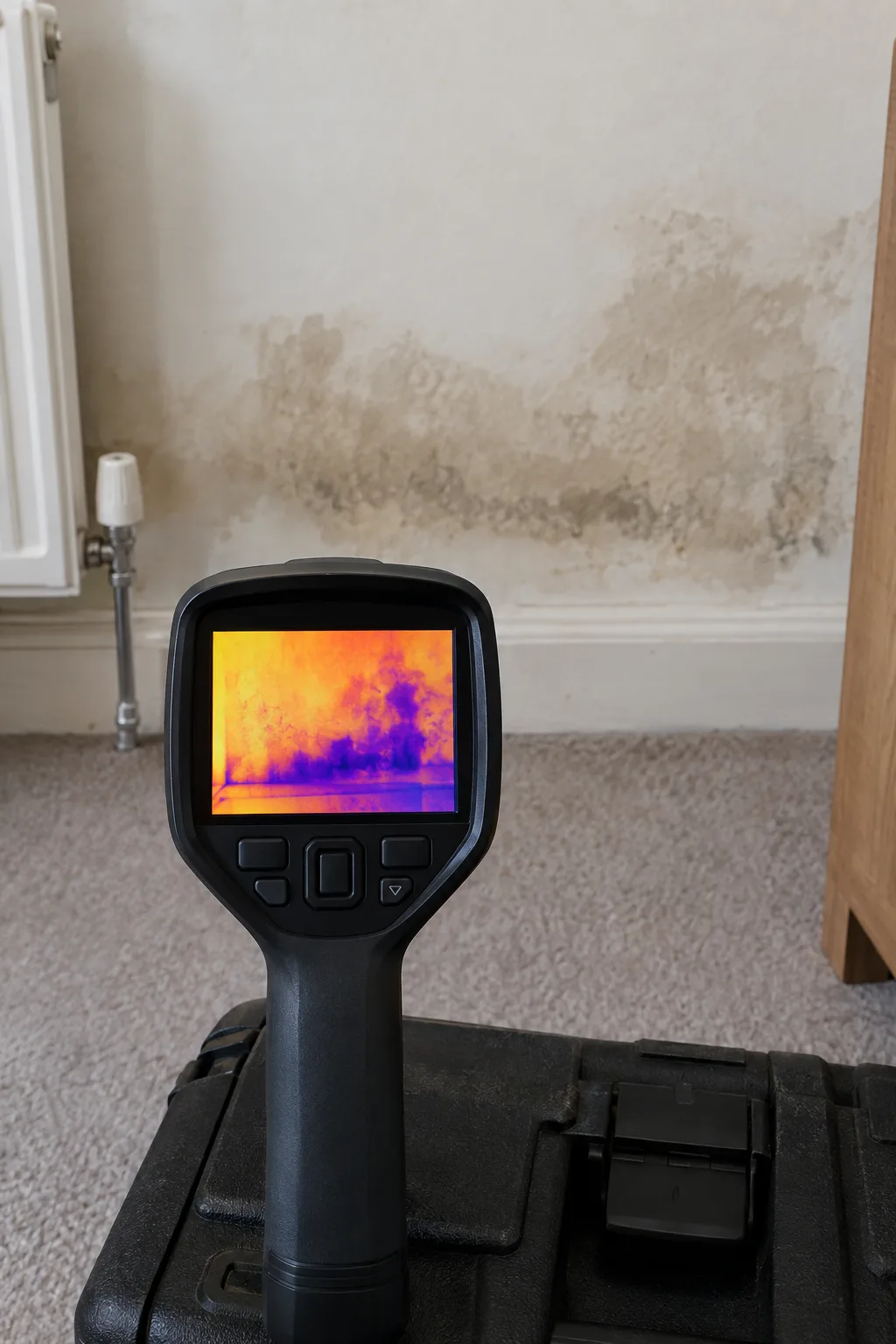
A kitchen moisture assessment considers steam and accessible fittings together. In an open room, we can follow the moisture pattern into the living or sleeping space and compare it with the kitchen surfaces.
Condensation and ingress can overlap
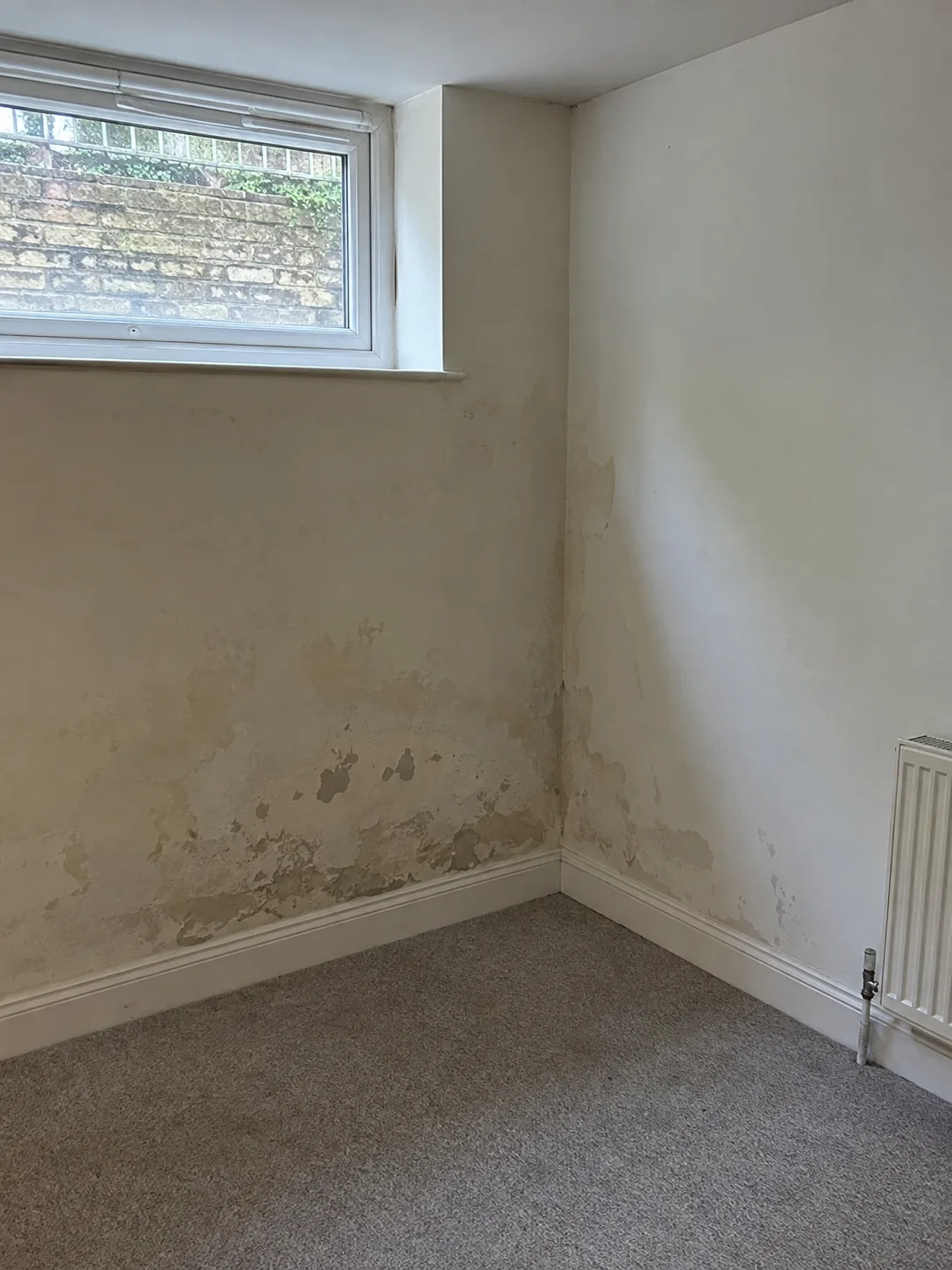
Condensation is linked to moisture in the air meeting a colder surface. Water ingress involves moisture reaching the building through a defect or opening. A hidden fitting can release water even when no obvious drip is visible. More than one may be contributing, and the shape or colour of a mark is not enough to select the treatment.
If damage lies near an outside opening and changes with the weather, checking the external water route is relevant. We consider accessible details and explain any parts that need closer access, instead of claiming an indoor inspection can assess every external feature.
Measurements need the room’s history
We compare accessible moisture readings with the condition of the surfaces, asking about use, heating and previous repairs. Spot readings have limits. A room photographed after cooking may look different during the visit, and a wall recently heated may show a different temperature pattern. Your account of what happens during normal use helps place the observations in context.
Where condensation appears likely, assessing extraction across the open-plan layout helps explain why moisture remains. That may involve the available air path as well as the fan or vent itself. Ask how the extractor arrangement relates to the wet surfaces at the far end of the open room, including any unexamined part of its route.
An example of two problems in one room
Consider a hypothetical flat with mould behind a sofa and a stain below the sink. The sofa backs onto a cool wall with little air movement; the sink stain stays damp independently of cooking. Those observations would justify two lines of enquiry. Moving the sofa might help the enclosed space, but would not answer the plumbing concern. Keep the two locations separate in the room plan, so the airflow recommendation and fitting enquiry each address the relevant surface.
Agree the sequence before redecorating
The findings should identify what can be addressed directly and what needs further investigation. Removing growth from affected finishes is part of that plan, alongside the work needed to reduce wetting. If a water source is still active, decorating can hide its progress and make later assessment harder.
After treatment or repairs, review the particular spots that were affected. A general feeling that the room is warmer is not a substitute for checking the wall behind furniture or the cupboard below a fitting. Keep access to those locations while the condition is being assessed, and ask which findings would warrant another look.
PROPERTY & MOISTURE CHECKS
QUESTIONS BEFORE A VISIT
Useful questions
Does an open-plan room automatically have enough ventilation?
No. A large space can still have inadequate moisture removal or poorly ventilated corners. The relevant question is how air enters, moves and leaves.
Could steam reach the sleeping end of the flat?
Yes. Moist air can move through an open space and settle where surfaces are cooler. Other water sources still need consideration.
Why inspect both the sofa wall and the kitchen cupboard?
They may be affected by different mechanisms. Checking both avoids assuming every damp mark in one room has the same cause.
Would opening a window resolve a leak-related patch?
It would not repair the source. Ventilation changes should be recommended for the conditions they can actually address.
What information helps before the appointment?
A simple layout, dated photographs and notes on cooking, wet surfaces and previous alterations help define which parts of the property need checking.
Nearby areas
Make sense of the damp across your space
Call about your Fitzrovia property and describe where the marks appear. We can discuss the inspection before you alter the layout or decorate.