DAMP & MOULD SPECIALIST
Damp and Mould Specialist Herne Hill
For marks at the top of a wall, record the pattern and timing. We assess the ceiling edge and identify the moisture checks needed before treatment or decoration.
Mould follows the ceiling line
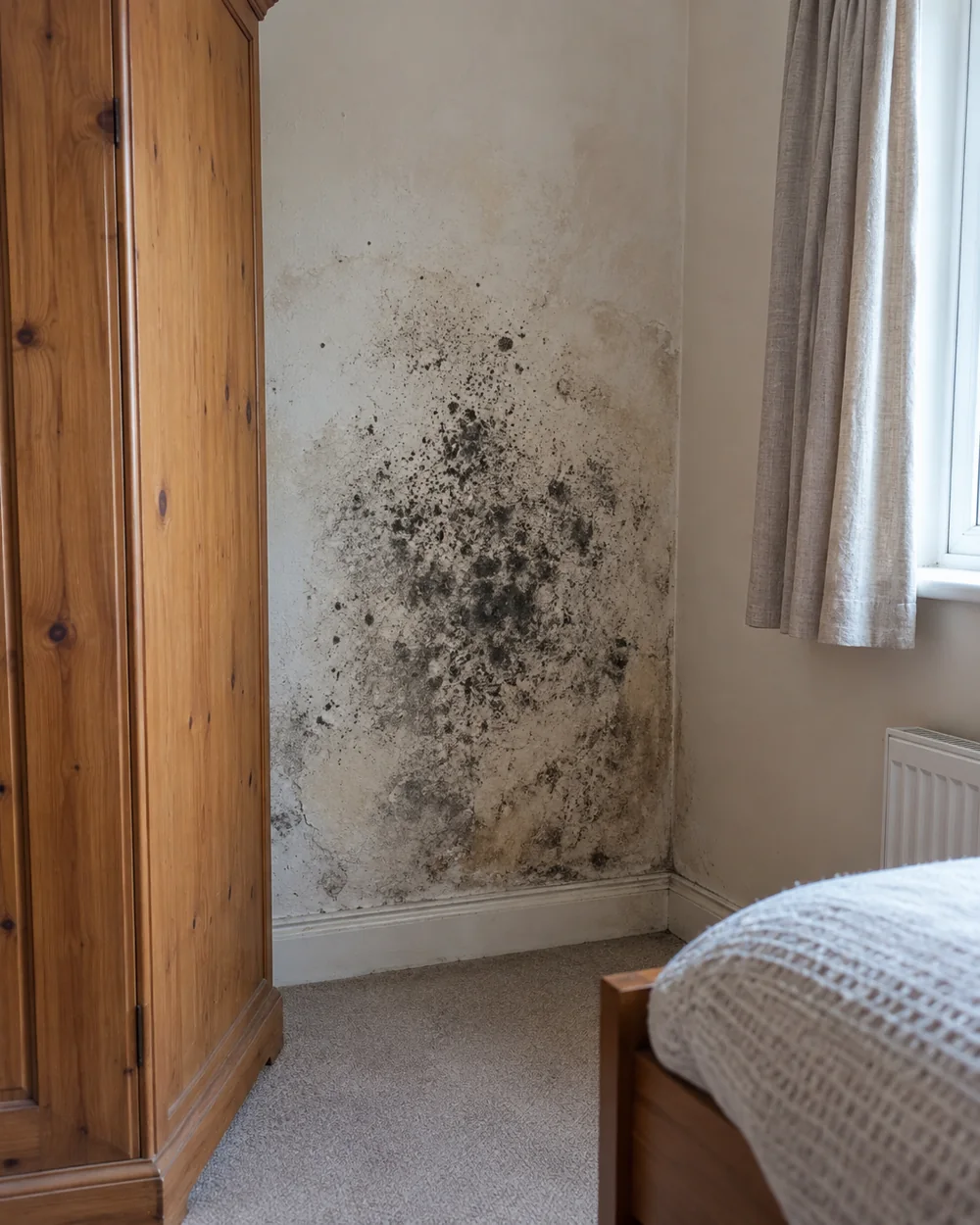
If mould develops along a ceiling edge in your Herne Hill home, record whether it is fine scattered growth, a dark band or part of a larger stain. The pattern may guide checks of cool surfaces and indoor moisture, but damage at high level can also involve water from above. Location is the starting point, not the diagnosis. A treatment should follow investigation of what keeps that area wet.
Photograph the whole wall and ceiling, including any nearby window or loft access. Note when the marks are worst and whether they change after rain. Tell us about recent insulation, roof or decoration work if known. Existing drawings or work photographs may explain concealed construction, but they do not automatically establish its current condition.
Compare the edge with surrounding finishes
A moisture investigation at ceiling level follows the marked edge and takes readings where it can be reached safely, comparing that condition with the nearby finish. Materials and finishes influence interpretation. A meter cannot establish every condition in an inaccessible roof space from one room-side point. We explain the limits and distinguish visible evidence from possible explanations that still need checking.
Describe any space above the ceiling when booking, including its entry point, so the inspection scope and safe access arrangements can be agreed. Some areas need a different form of access or another contractor. The inspection should be clear about which spaces were examined. An inaccessible construction detail should not be treated as unaffected simply because the room below was assessed.
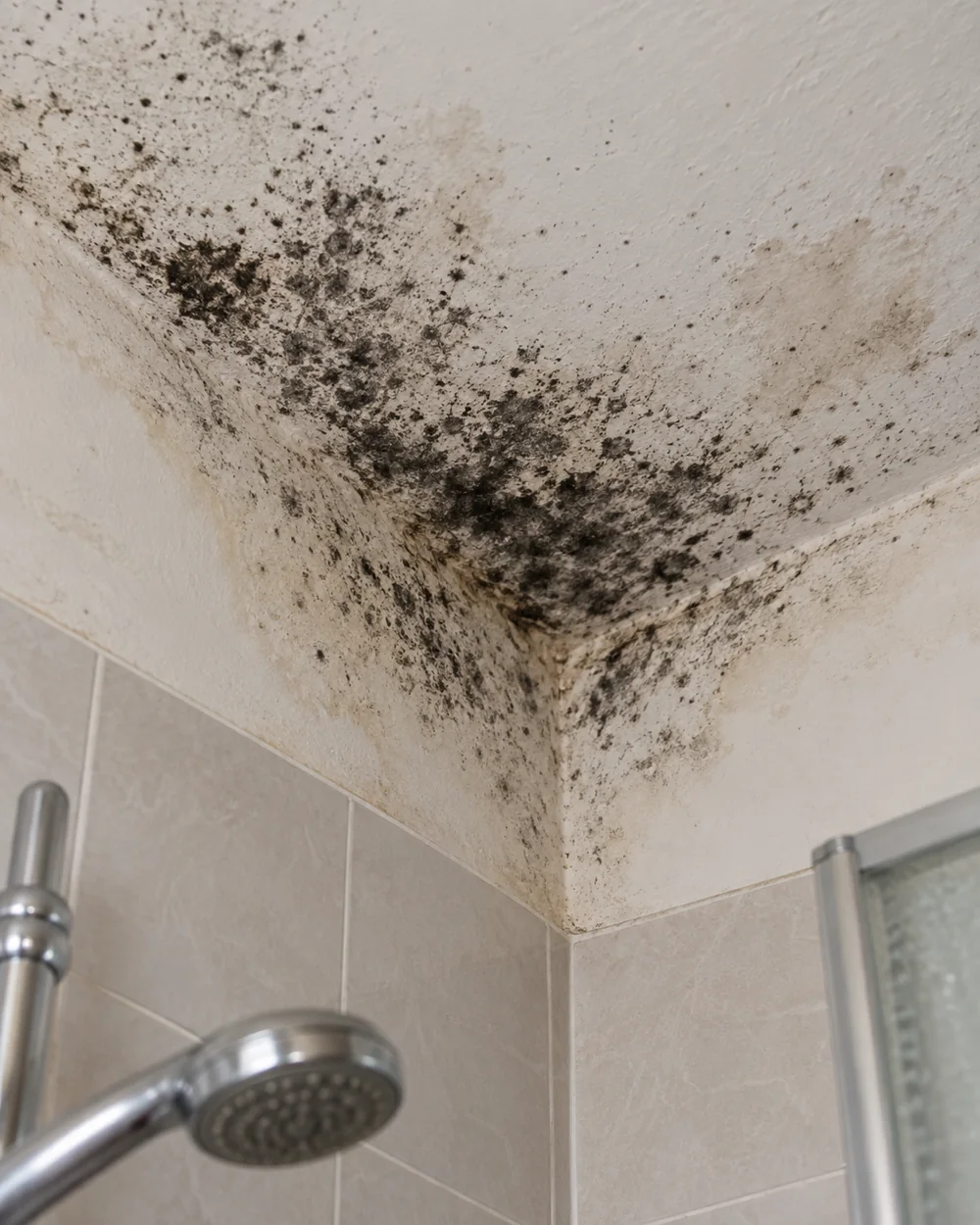
The corner can behave differently from the room
A condensation and ventilation review considers humidity, moisture production and cooler surfaces. A ceiling corner can collect moisture even when the room feels comfortable. Describe overnight conditions and nearby bathing or laundry. These details explain normal use; they should not replace consideration of the building or turn every high-level mark into a household moisture issue.
Changes to insulation or room heating may be relevant to surface conditions, but concealed layers cannot be assumed from appearance. Our assessment of cold surfaces and adjoining mould can consider nearby reveals and corners where accessible. A broader pattern may support the investigation, while an isolated wet patch may need closer attention to another route.
Rain-related staining needs a different line of enquiry
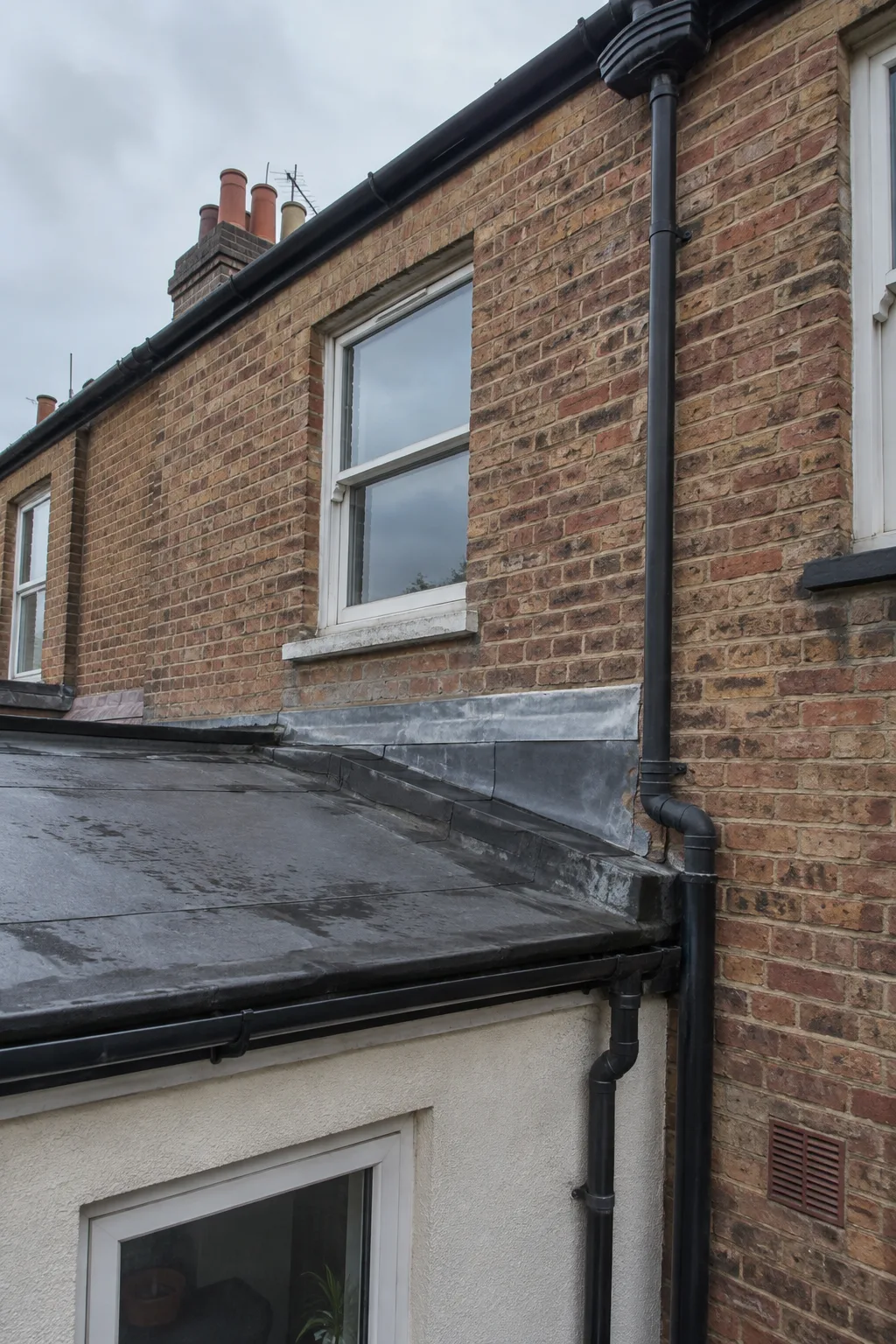
If the damage changes after wet weather, checks for external water entry may compare internal symptoms with accessible building details. Roof and high-level features impose practical access limits. Share the visit date, details examined and repair performed, with any photograph showing the high-level feature relevant to the indoor stain. It matters what was examined, what was found and whether the affected area changed afterwards.
Treat growth without hiding the unresolved question
Discuss mould treatment at the ceiling edge with the finish condition and moisture findings in mind. Sound paint, damaged plaster and a repeatedly wet substrate may need different handling. Cleaning cannot repair an outside route or establish that a concealed detail is correct. Ask what supports the proposed treatment and which checks remain before decoration.
Watch the same boundary after agreed work
Compare the ceiling edge through ordinary room use and the weather that previously produced the marks. Photograph the same view and note any new stain or change in spread. A clear surface just after cleaning is not a review of the conditions that caused recurrence. Keep the dates of repairs and ventilation changes so later assessment can distinguish their effects.
Tell us about temporary measures introduced since the mould was noticed, including portable equipment or changes to heating. They may alter the room on the day of inspection. If the home was unoccupied for a period, include that history too. Interpreting the present surface against its normal use is more useful than assuming one visit captures every condition in which moisture develops.
If growth follows only part of the ceiling edge, label that section in the photographs and include adjacent clear material. A distinct stain elsewhere should have its own location and timing record. This helps the assessment compare the edge pattern with any separate source evidence and identify which accessible surface or concealed detail needs attention.
PROPERTY & MOISTURE CHECKS
QUESTIONS BEFORE A VISIT
Useful questions
Does mould near the ceiling prove a roof leak?
No. Cool surfaces and indoor moisture may also contribute. The pattern, weather connection and accessible evidence help decide which checks are relevant.
Can room-side measurements assess the whole loft?
No. They have limits, and concealed areas may require separate access. The findings should identify what was actually inspected and what remains uncertain.
Should I mention recent insulation work?
Yes. Dates, specifications and work photographs may help explain changes or hidden construction. Keep them with the dates of the first marks so the inspection can compare the altered construction with the current pattern and any unanswered hidden detail.
Why look at nearby window reveals?
Their condition can help show whether a wider cold-surface pattern exists. That comparison is useful alongside checks for local water entry or another source.
Can I repaint the ceiling edge after cleaning?
Discuss the moisture findings and surface condition first. An unresolved source can affect the new finish, and decoration can conceal evidence needed for further assessment.
Nearby areas
Get the high-level marks explained
Call about the Herne Hill ceiling edge and any known work above it. We can discuss inspection and relevant access.