DAMP & MOULD SPECIALIST
Damp and Mould Specialist Camberwell
Similar marks on two chimney breasts deserve a comparison, not an assumed shared source. Record each room and level so the inspection can examine the relationship properly.
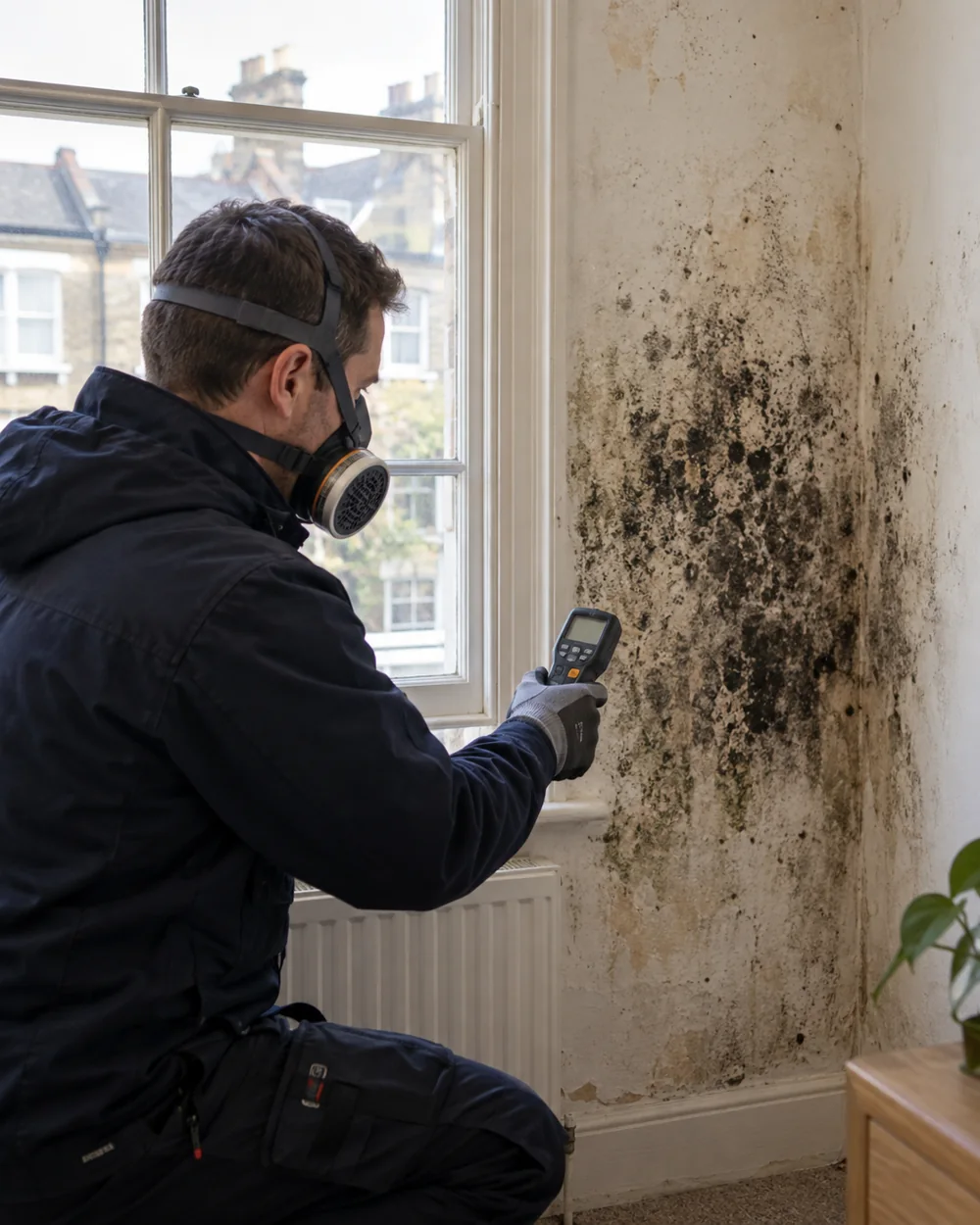
Give every marked breast its own location
If more than one accessible chimney breast is marked in your Camberwell property, label photographs by room and floor. Include the full width, adjoining ceiling and neighbouring wall. Note which surface first showed damage and whether the others changed at the same time. Similar appearance alone cannot establish one continuous moisture route.
A comparison of chimney-breast moisture across the relevant floors can assess those observations with the available construction information. Tell us whether any breast or opening has been removed, enclosed or lined. Describe only what is known; the visible features do not reveal every concealed connection.
Include an accessible area without the same marks
A neighbouring surface or another accessible room can provide useful comparison evidence. Record where it sits relative to the affected breast. An apparently clear area may help frame the pattern without proving hidden construction is dry. The material, finish and room conditions still matter when observations or readings are compared.
Tell us about recent decoration on any floor. New paint can conceal an earlier outline, making two rooms look different for reasons unrelated to current moisture. Keep older photographs where available, with the dates of cleaning or finishing. The comparison needs to account for those changes before conclusions are drawn from appearance.
Establish the relationship between the features
Plans or earlier work photographs may clarify how the visible breasts relate. They can guide the scope and identify a useful view, while current concealed condition remains a separate question. Do not assume that a wall feature on one floor continues unchanged through another space simply because their positions appear similar.
If another room or flat needs examination, coordinate authorised access through its responsible contact. The first visit can record the views obtained and identify the precise missing area. Keep any conclusion tied to that scope. Findings from two accessible faces should not be presented as a complete inspection of the whole chimney structure.
Compare changes after the same relevant weather
Where marks seem rain-related, photograph the affected floors after the same weather event if practical. Note fresh water or expanding damage separately from old discolouration. A difference between floors can direct the next enquiry, but water may travel through construction before appearing on a visible face.
Checks of relevant external water routes can compare the indoor evidence with reachable details. High-level or concealed parts may require another contractor’s closer examination. Ask which detail needs that view and how it relates to the floor-labelled observations, rather than arrange an undefined inspection of everything above.
Room conditions can explain part of the difference
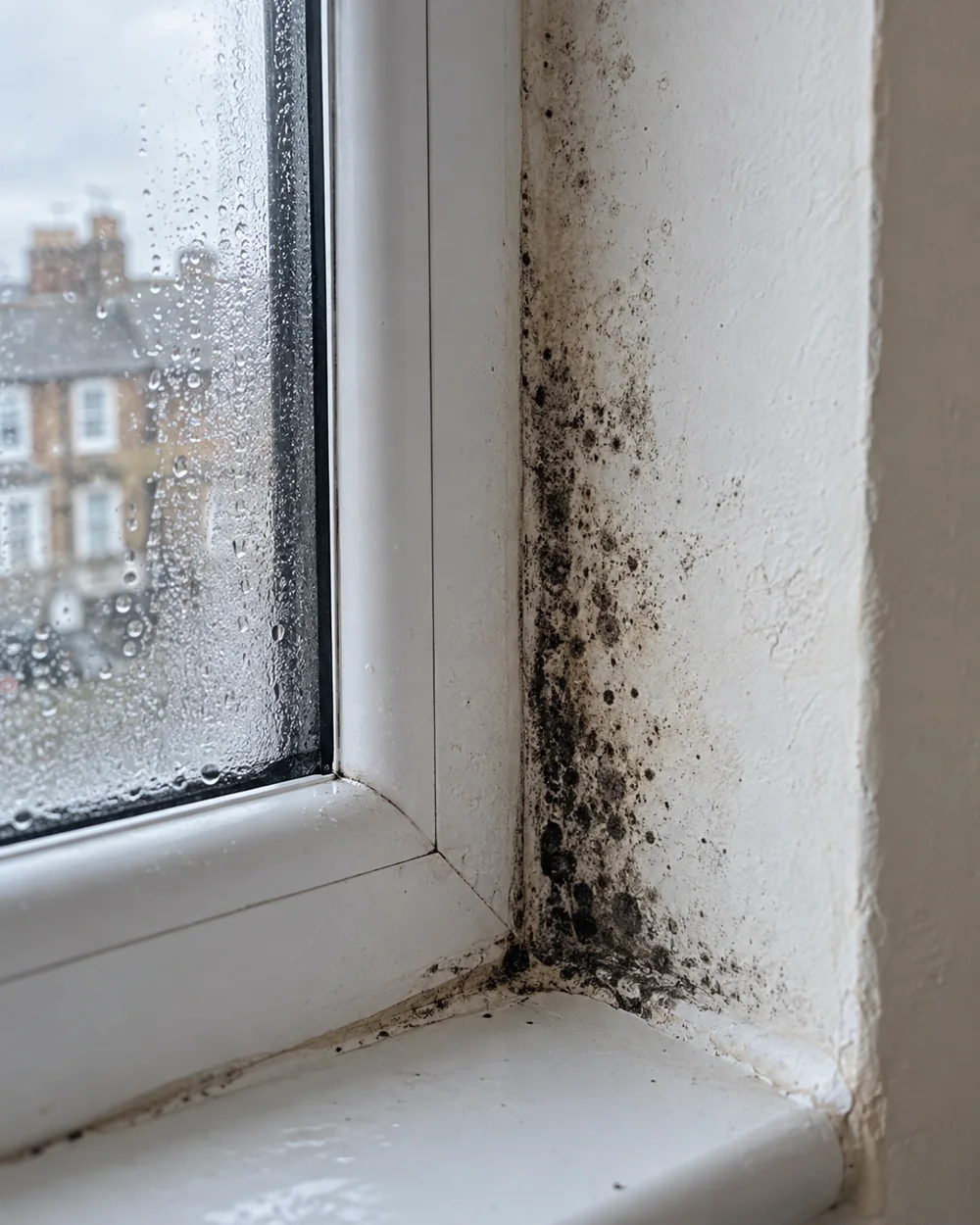
The rooms may have different heating, ventilation and furniture arrangements. Mould in a sheltered corner can coexist with a distinct stain elsewhere on a breast. A review of the affected rooms’ moisture conditions helps assess that contribution alongside the construction and weather evidence.
Describe normal use on each floor and any change since the marks began. The findings should explain which signs support which mechanism. If a property report is needed for repair planning, recording the locations, observations and inspection limits can organise the next tasks without automatically deciding responsibility between people or properties.
Plan repairs and treatment by affected location
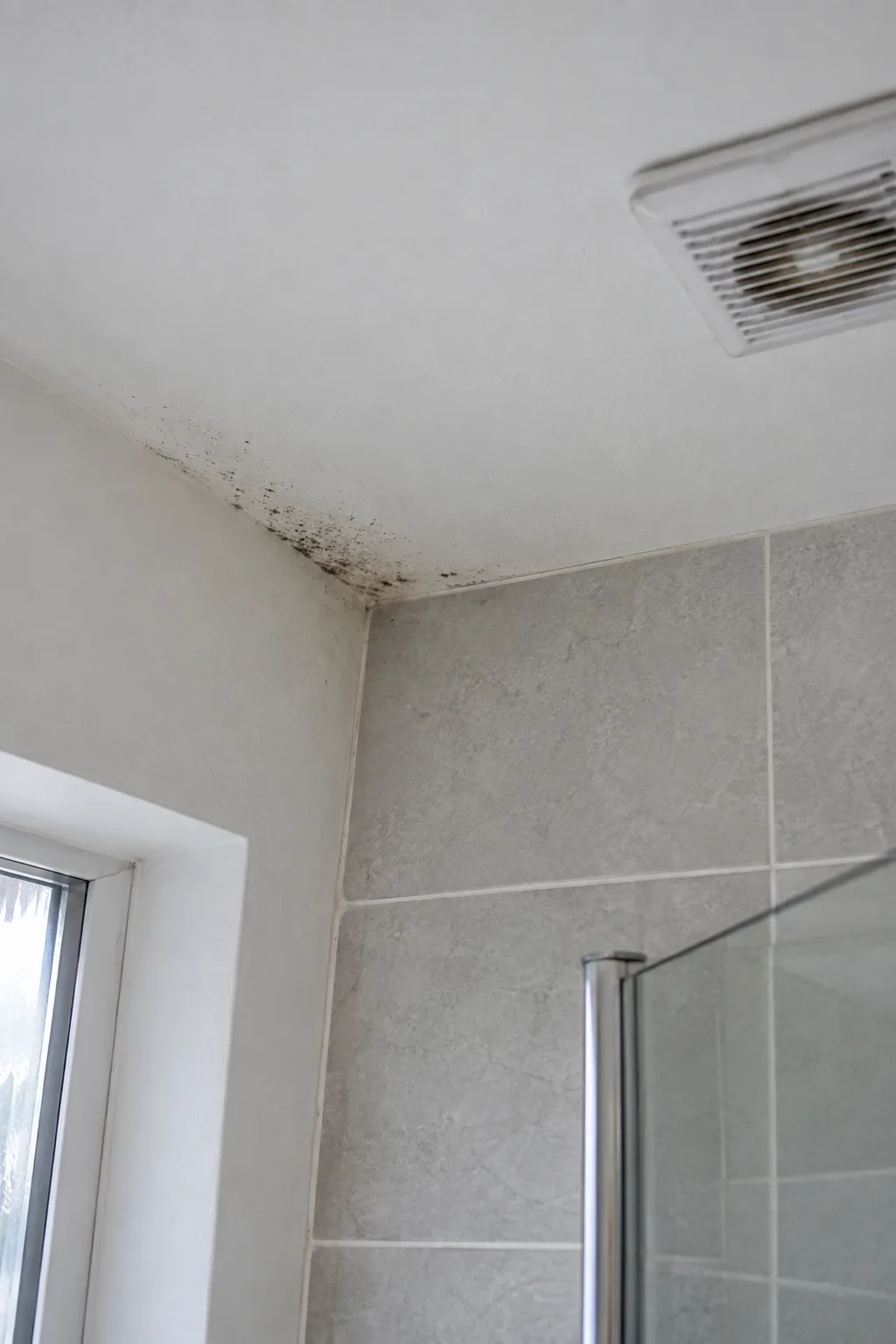
Treatment of growth on the chimney-breast surfaces should identify the materials and extent included. Paint, plaster and fixed lining may need different consideration. A source check at one floor or outside detail has its own purpose and should remain distinct from cleaning the other rooms.
Keep photographs of any opened area and records of what each contractor examined or repaired. Before finishing, review the material condition and the questions still outstanding at each location. A floor-labelled record gives later investigation a clearer starting point if one mark returns while another remains unchanged.
PROPERTY & MOISTURE CHECKS
QUESTIONS BEFORE A VISIT
Useful questions
Do similar marks on two floors prove the same chimney source?
No. They provide a pattern to compare. Construction, materials, timing and room conditions need assessing before a shared route can be established.
Why include a breast or wall that looks unaffected?
An accessible comparison area can help interpret the distribution, with its material and decoration history recorded. A clear appearance does not certify hidden layers.
Can plans show the current state inside the chimney structure?
They may clarify the intended arrangement and guide access. The present condition of concealed components still needs appropriate examination where relevant.
What if a room on another floor cannot be inspected?
State that limit when agreeing the scope. The findings should identify the unavailable location and the particular question another authorised view could answer.
Which record helps after different contractors attend?
Label the floor, room and detail each person examined, with photographs and repair scope. This keeps source work and surface treatment traceable by location.
Nearby areas
Compare the marked floors before choosing the next repair
Call about your Camberwell property with the affected room levels and repair history. We can discuss the scope of a focused chimney-breast moisture assessment.