DAMP & MOULD SPECIALIST
Damp and Mould Specialist Hendon
The balcony doors have been replaced, yet the surrounding damp concern remains. Compare what changed at the opening and what was outside the installation scope before choosing the next repair.
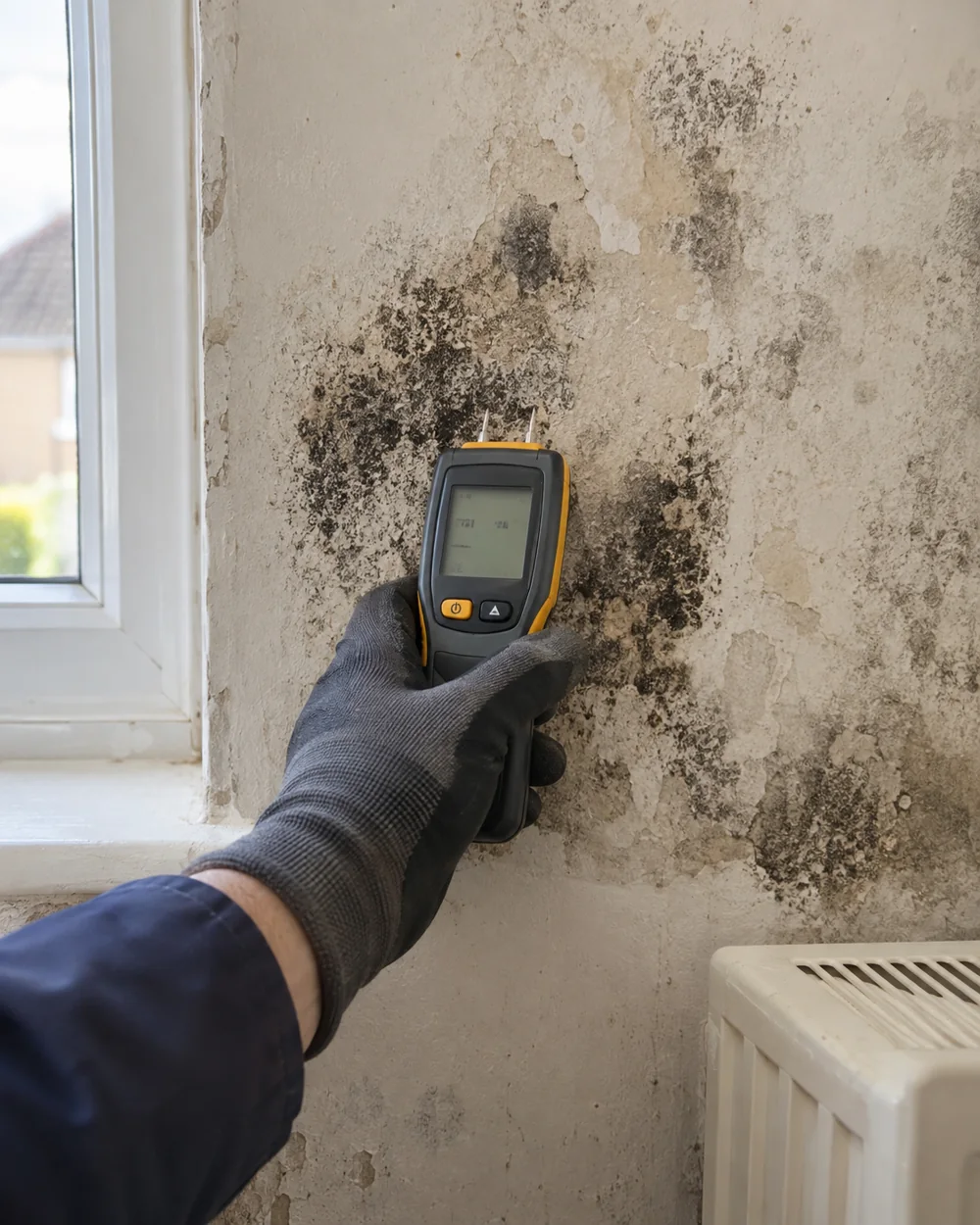
Locate the old damage and the current marks
If damp persists after balcony-door replacement in your Hendon flat, photograph the present opening and find earlier images if available. Note whether the mark is in the same position, has moved or affects a different material. A remaining stain can reflect old damage, while fresh wetting raises another question. Keep those outcomes separate.
A moisture review after the door installation can compare accessible surfaces and the history. Explain why replacement was arranged and which concern it was expected to address. That gives the inspection the actual unresolved question, without assuming either installation failure or a successful source repair from appearance alone.
Read the installation scope before asking for another replacement
Keep the fitting description, handover information and any photographs taken while the opening was exposed. Which components were replaced, and which surrounding wall or balcony details remained? The records may clarify the work without establishing the current condition of every concealed junction.
If the installer has revisited, ask what was examined and observed. A check of an accessible frame detail may leave another entry route or damaged backing unanswered. Keep the scope precise, so a later request identifies the particular remaining question instead of broadly asking for the door to be done again.
Separate rainfall changes from new glazing droplets
Record where water appears after rain and where it collects under normal indoor conditions. Wet glass and a stained reveal can have different contributions. Dates and wider photographs help relate each mark to the replacement opening. The timing guides checks, but should not be treated as proof of a particular failed component.
Assessment of the relevant outside water routes may be useful where the evidence points beyond the new frame. Some details may need closer external access. The findings should identify the route or junction requiring that view and explain its relationship to the current indoor damage.
Consider the room conditions that also changed
New doors can change the room’s air exchange or the surfaces on which moisture collects. Describe any ventilation provision, control information and furniture changes introduced with the work. A review of moisture conditions around the replacement opening can help assess repeated condensation independently of a rain-related stain.
Curtains or blinds may now fit differently around the new reveal. Photograph their usual position before clearing access. Checks of the remaining cold-surface growth can compare that screened space with the open wall. Keep the room’s normal arrangement in the record so the inspection reflects daily use.
The surrounding finish may still need its own decision
Paint, plaster and floor-edge materials affected before replacement may remain damaged afterwards. Note what the installation contractor renewed and what was retained. An invoice for new doors may leave the material-condition question separate. Accessible readings and observations need interpreting with that history and each tested surface.
If backing is hidden by new trim, state which area cannot be examined. Any targeted opening should have a defined purpose, permission and reinstatement arrangement. Keep photographs of the exposed surface if later work provides a view. One accessible section should not be generalised to every concealed part of the opening.
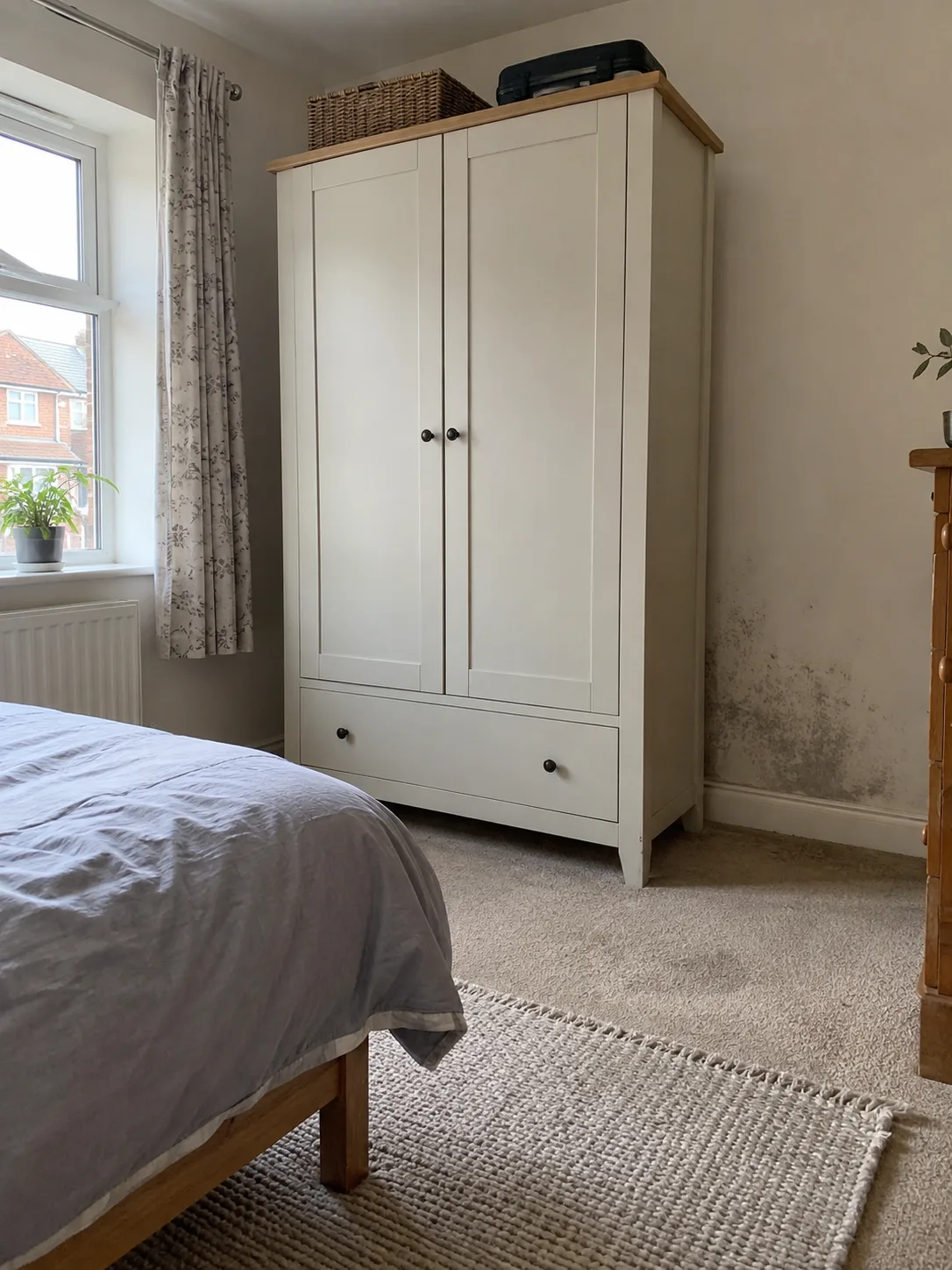
Make the next repair answer the evidence still missing
Treatment of mould remaining beside the balcony doors should account for the extent and affected materials. It has a different role from checking the installation, repairing another water route or assessing old damage. Ask what each proposed task is intended to change.
Share relevant findings with the installer or person coordinating building access. Keep old and new photographs with actual repair records. Before decoration, review what was confirmed and what still needs a check. A supported next step can address the remaining concern without automatically choosing another replacement or repeating a cosmetic repair.
PROPERTY & MOISTURE CHECKS
QUESTIONS BEFORE A VISIT
Useful questions
Does damp remaining after new doors prove the fitting work failed?
No. The installation scope, old damage and current wetting need comparison. Another route or room-moisture condition may contribute alongside the replacement opening.
Which old photographs help the review?
Views showing the original mark positions, wider opening and any exposed junctions are useful. Compare them with current images labelled by the same location.
What should I ask after the installer revisits?
Which component was checked, what was observed and what remained unexamined. Keep those details with the current wetting record to define a useful next enquiry.
Could new glass droplets have a different explanation from the old wall stain?
Yes. Changed indoor conditions can affect condensation while old damage or another source remains. Record those observations separately for assessment.
Should I arrange another door replacement now?
First clarify the remaining source or material question and what evidence supports the proposed work. A further replacement may not address an outside detail or room condition.
Nearby areas
Review what remains after the replacement
Call about your Hendon balcony opening with the installation scope and old and current photographs. We can discuss a focused damp assessment before further work.