DAMP & MOULD SPECIALIST
Damp and Mould Specialist Golders Green
An en-suite can leave signs in the bedroom as well as the bathroom. We look at the room connection and the moisture route, including sources beyond shower steam.
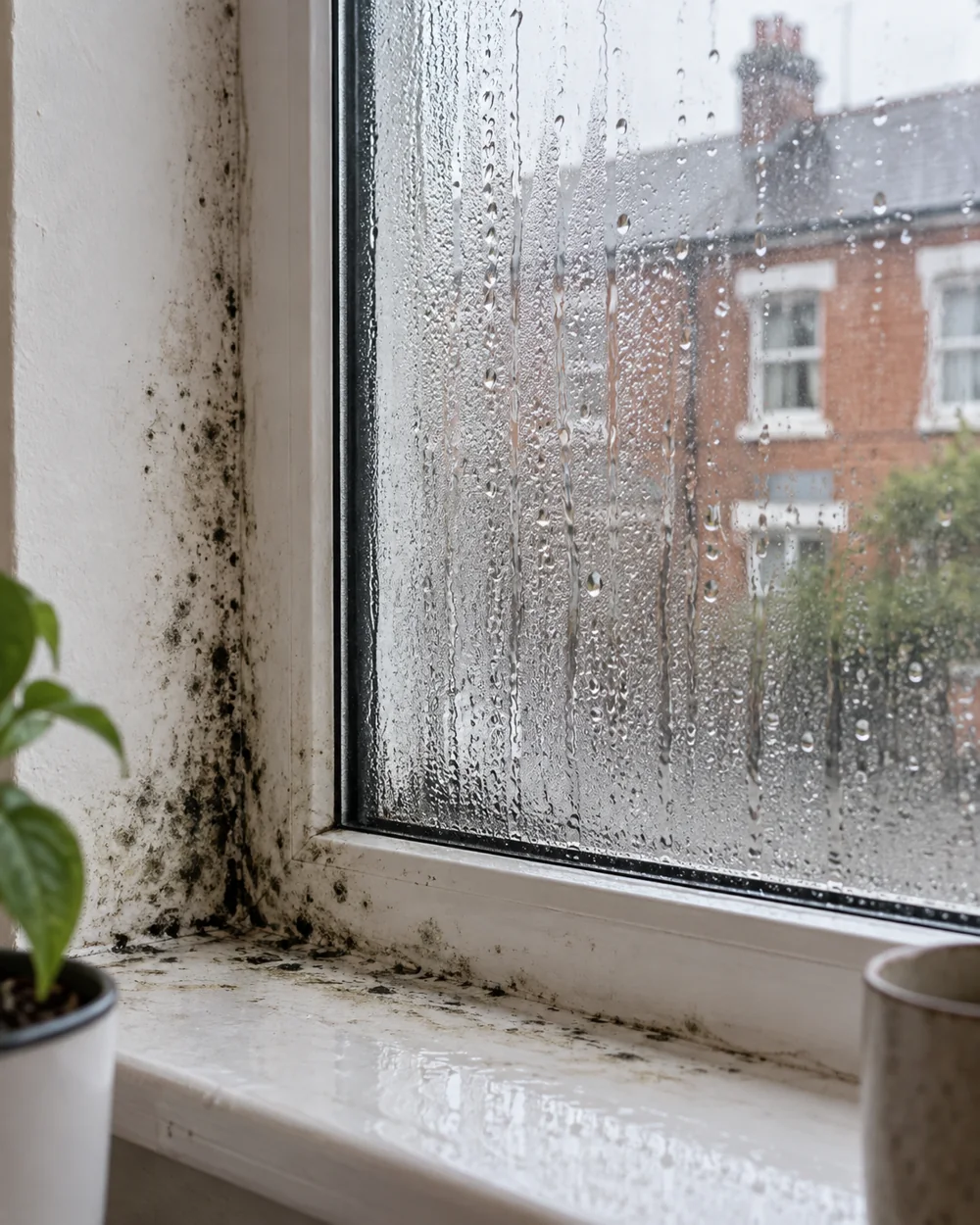
The bedroom wall beside the en-suite is affected
If mould develops near an existing en-suite doorway in your Golders Green home, record the pattern across both rooms. Note wet bedroom glass after bathing separately from a defined wall patch that remains wet after steam clears. Moisture movement and a concealed water source are different questions. The comparison should give each affected surface its timing and location before treatment is planned.
Photograph the doorway, bedroom wall and affected bathroom surfaces in their normal arrangement. Note whether the bedroom window becomes wet after bathing or overnight and whether a defined stain stays damp during non-use. Include furniture or curtains near the marks. A close-up alone cannot show how the rooms connect or where air movement may be restricted.
Examine removal at the point moisture is produced
Our bathroom moisture assessment checks the visible extraction arrangement and exposed fitting areas, then connects those findings with the surfaces reported wet after use. A fan can operate without the whole arrangement clearing moisture effectively. Replacement air, ordinary door position and timing of use provide practical context. List changes to the fan, door and shower since the first marks, with dates and any difference noticed in the bedroom afterwards.
A review of condensation between the rooms considers how moisture moves and where it can settle. Recommendations should fit normal occupation and the accessible provision. Opening every door specially for the visit may change the conditions, so preserve an accurate description of the usual routine. These questions should inform the inspection without replacing checks of the building.
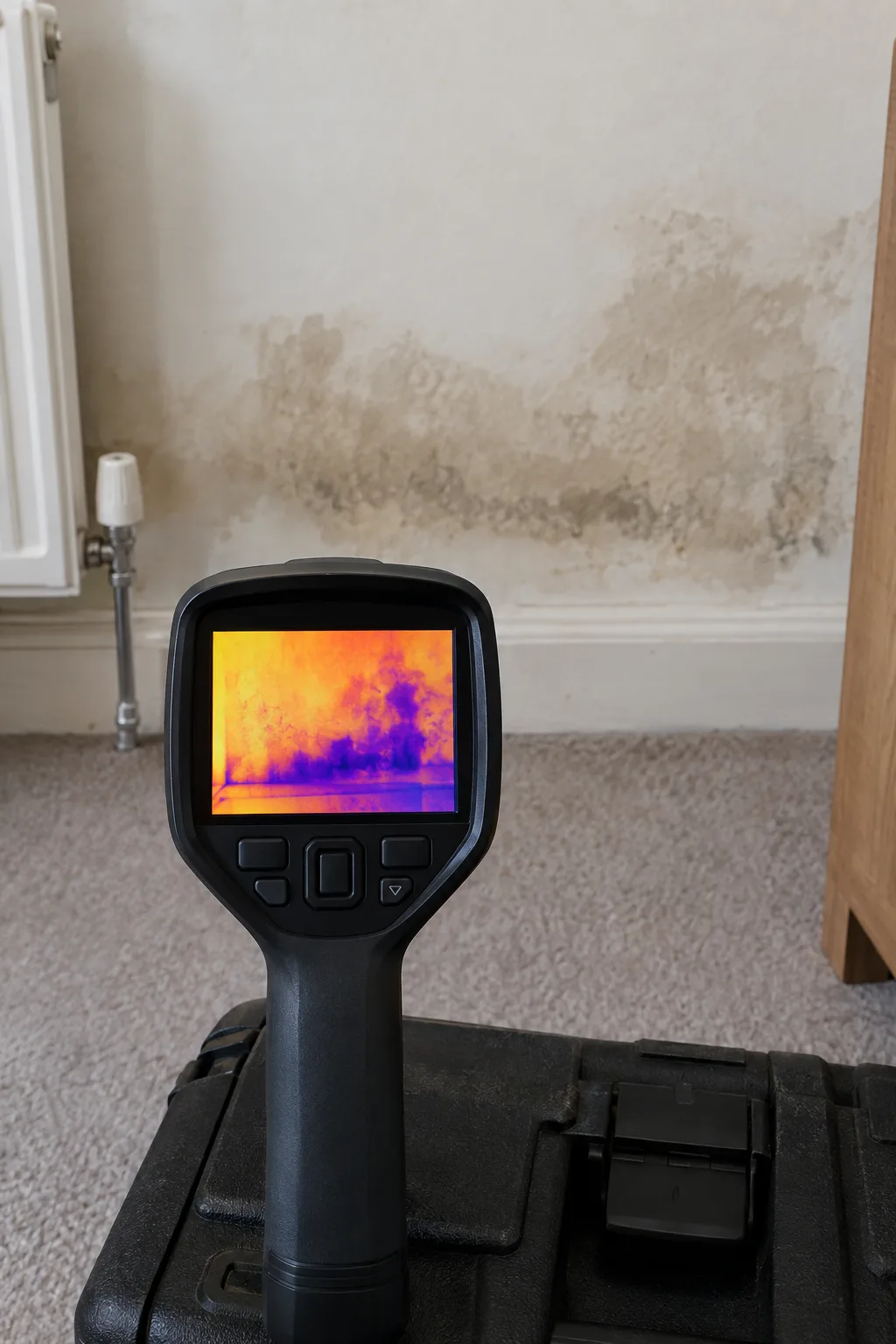
A damp shared wall may need source checks
If the shared wall has a persistent patch, checks for a concealed water source may be relevant. Pipework or fittings can lie behind finishes, and the visible stain may not sit directly beside the source. Observations and measurements guide the checks. If confirming the source depends on a hidden connection, we explain which fitting and access need closer attention.
A moisture assessment on both accessible sides can compare the wall pattern and materials. Measurements need interpretation with finish and condition. A tiled bathroom face and a painted bedroom face do not provide identical evidence. Tell us about recent lining, tiling or decoration, with earlier photographs where available to show what has since been covered.
Include the sheltered bedroom surfaces
Mould may be more extensive behind a bed or wardrobe than beside the doorway. Record those areas before furniture is moved. They can indicate a local airflow issue or conceal damp that needs separate investigation. Include all affected bedroom surfaces in the enquiry and describe any fixed furniture, so the agreed scope identifies the corners that can be reached and those still concealed.
Plan work across the room boundary
Discuss mould removal and treatment with the affected material and moisture findings in mind. Cleaning only the bedroom may leave bathroom conditions unchanged, while improving extraction does not repair a concealed fitting. Ask which tasks address which signs and whether further confirmation is needed before the bedroom is redecorated. A joined-up sequence is more useful than separate cosmetic responses to each room.
Make the access arrangements clear
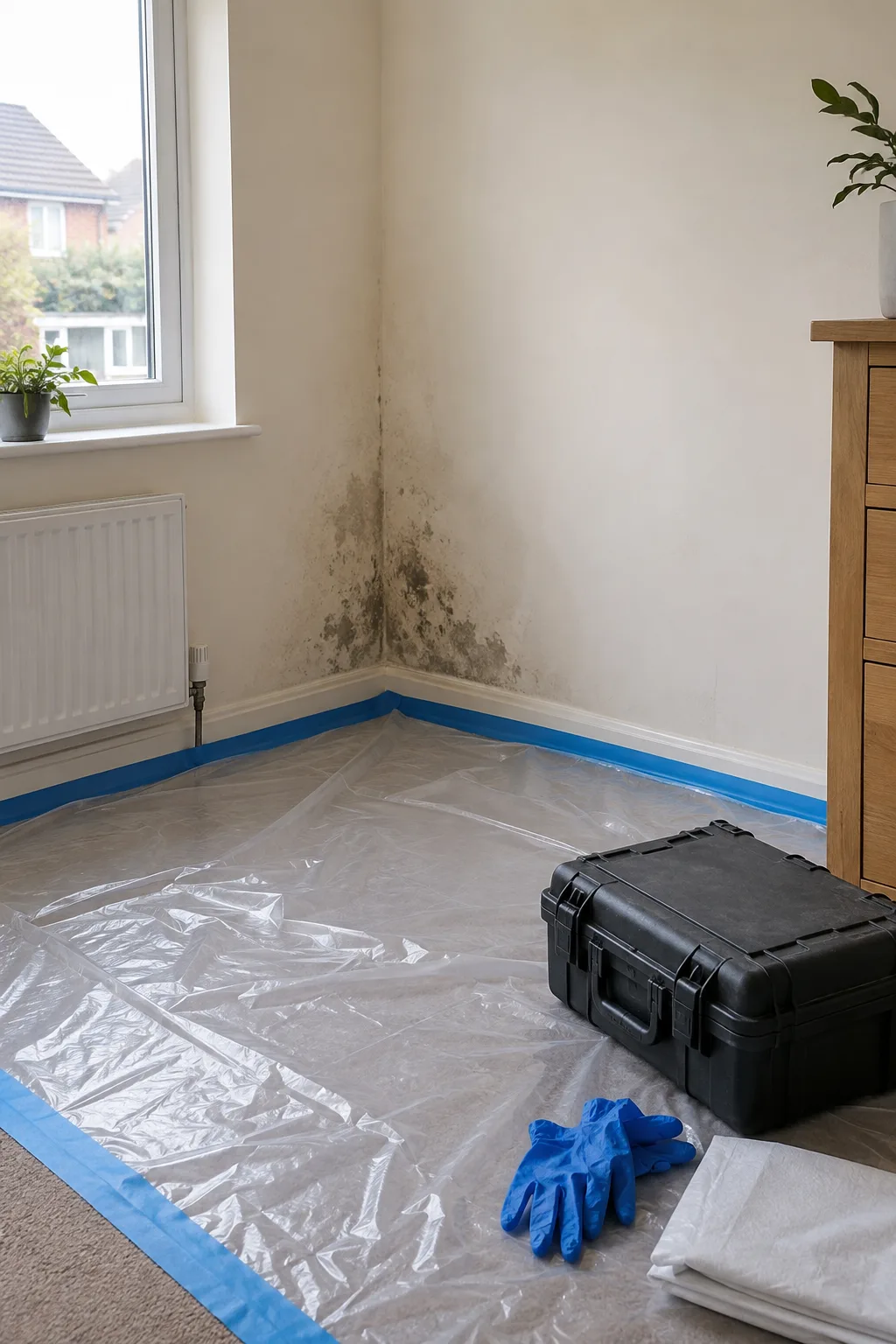
Clear a safe route to the affected wall and window if practical, keeping photographs of the original layout. Tell us about fixed cabinetry, tiled surfaces and panels that cannot be reached. Do not remove a sealed installation simply to prepare. If initial findings point behind a sealed surface, identify the fitting or material question and arrange an appropriate opening specifically for that check.
Compare bedroom and bathroom changes separately
After agreed work, observe steam clearance and the original bedroom marks through normal use. Note whether one improves while a defined patch remains. Those differences can help with a further discussion. Preserve any renewed staining before paint or cleaning changes its appearance, and keep the work dates so the sequence remains understandable.
If the bedroom is rented, ensure the person arranging work hears the occupant’s account of timing as well as the repair history. Conditions after an evening shower may not be visible during a daytime appointment. Any written findings should identify reported observations, inspected features and limits without turning the presence of an en-suite into an automatic judgment about responsibility.
PROPERTY & MOISTURE CHECKS
QUESTIONS BEFORE A VISIT
Useful questions
Can an en-suite contribute to mould in the bedroom?
Moist air can move into the adjoining room and collect on cooler surfaces. The assessment also considers leaks and other routes where the damage suggests they may be relevant.
Why assess the painted side of a tiled wall?
It may provide useful accessible evidence of the moisture pattern. Describe the finishes on both sides when arranging the visit; the assessor can explain how each material affects the comparison and what remains concealed.
Does improving the fan repair a wet shared wall?
It can improve condensation conditions, but it will not repair a fitting leak. The findings should distinguish those tasks when more than one source is possible.
Should I move the bed before the appointment?
Photograph its normal position first and clear safe access where practical. Tell us about heavy or fixed items so the inspection scope reflects what can actually be reached.
What if mould improves near the door but a stain remains?
Record that difference. Keep the timing and condition of the remaining patch in the record so the next assessment can focus on its source alongside the improved doorway symptoms.
Nearby areas
Assess the en-suite and bedroom together
Call about the Golders Green rooms, the marks and their timing. We can discuss the relevant moisture checks before treatment is planned.