DAMP & MOULD SPECIALIST
Damp and Mould Specialist Cricklewood
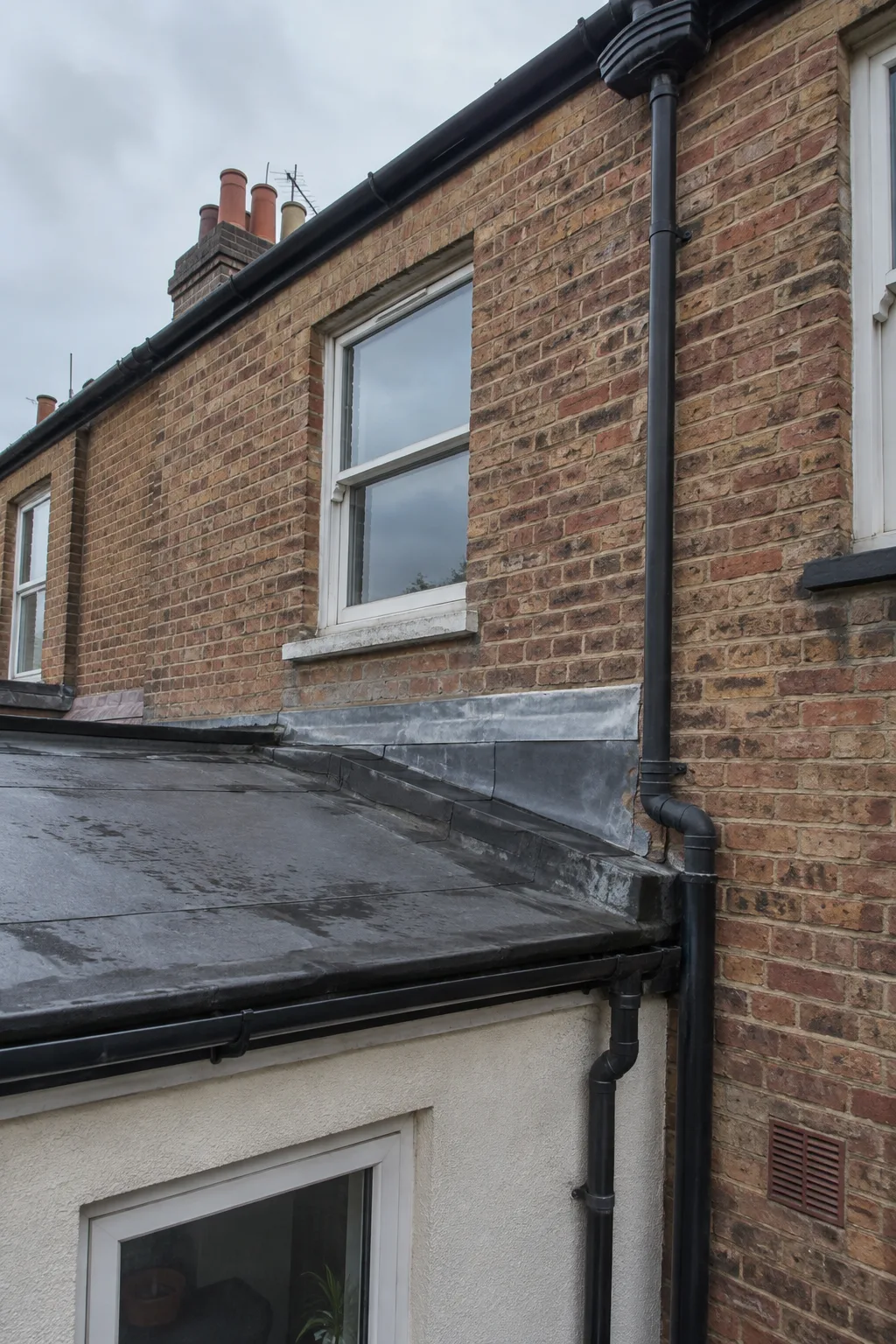
You have seen the gutter overflow and there is damp indoors nearby. That connection deserves checking, but the visible fault does not explain every part of the wall’s condition.
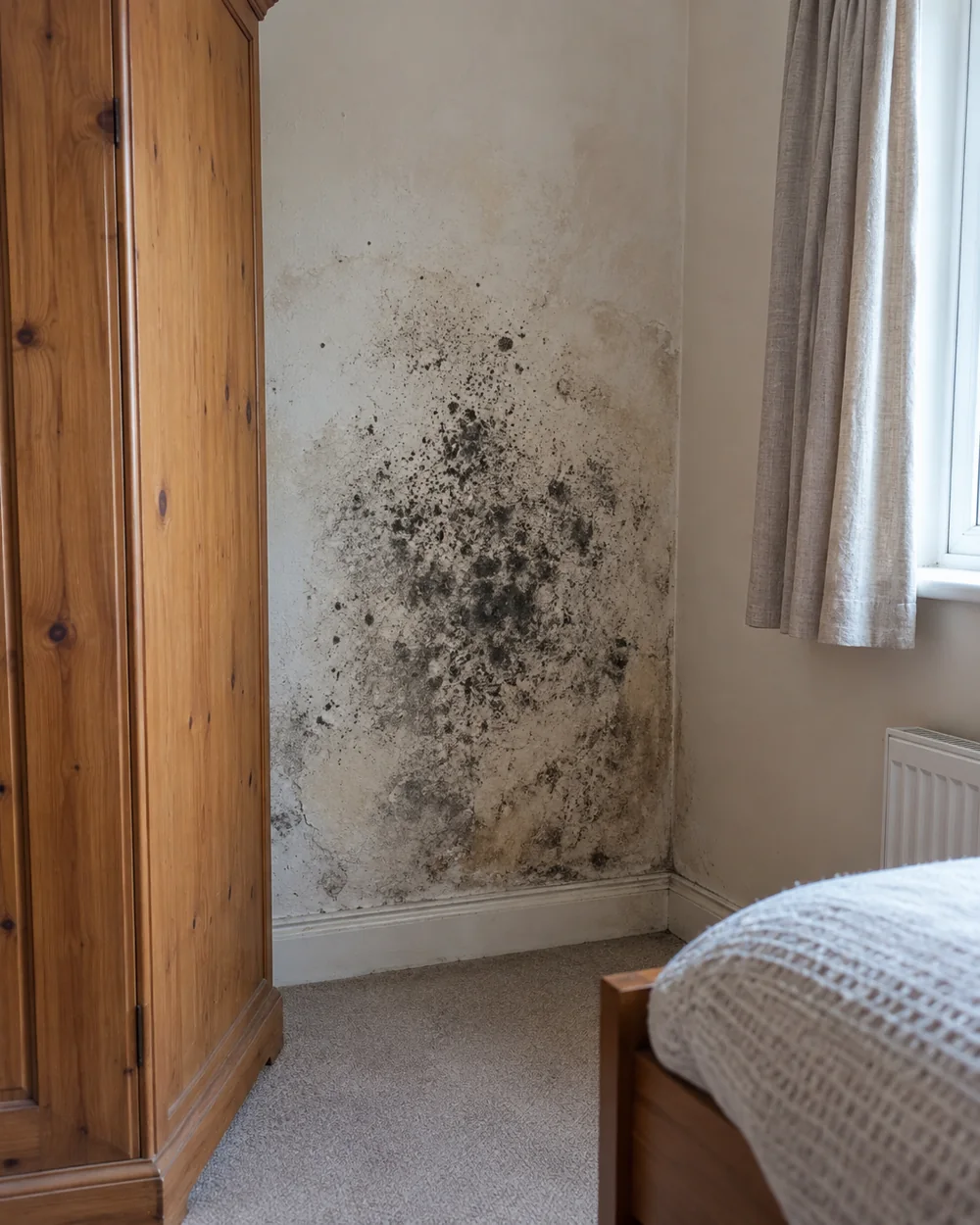
Describe the overflow and the inside stain separately
If a wall at your Cricklewood home is damp near a gutter or downpipe, record what you have actually observed outside and where the indoor mark appears. Include dates or approximate weather changes. A photograph of overflowing water can be useful, but the inspection still needs to consider how that route could relate to the materials and damage inside.
Assessment of accessible external water routes can compare those observations. Tell us about any completed gutter repair and what the contractor found. An outside fault may need attention without being the sole source of a particular stain. Ask the findings to explain the possible route and supporting observations. The indoor and outdoor positions help frame that investigation.
After the repair, look for new changes
If the gutter has already been repaired, keep the work details and photographs where available. Staining can remain after water entry stops, while fresh damage can justify another source check. Record whether the outline expands, paint lifts or material becomes newly wet. Those changes provide more useful information than simply noting the wall is still discoloured.
A follow-up investigation of the affected wall can consider accessible readings and material condition with the repair history. Describe the decision you need to make: further outside work, surface treatment or decoration. Any conclusion about a concealed route should state the limit if construction cannot be seen directly.
Safe outside access defines what can be confirmed
Visible wall details can offer clues, but high-level joints and hidden sections may need a closer inspection by an appropriate contractor. Do not climb or dismantle drainage to gather evidence yourself. Ask what extra access would answer the remaining question. A proposed closer check should be distinguished from confirmation that a specific inaccessible component has failed.
Tell us if the outside wall or drainage serves another part of the building or needs a separate contact for entry. In a flat, repair coordination can be as important as the indoor assessment. Available plans or old photographs may clarify the arrangement. They cannot substitute for examining the present condition of a hidden or unreachable detail.
Ask an outside repair contractor to record any detail they could not reach as well as the work completed. That matters when indoor damp continues: the next enquiry can distinguish a repaired component from a route that was never checked. Keep the scope and photographs with the wall assessment instead of relying on a brief note that the gutters were attended to.
Indoor conditions may affect the visible growth
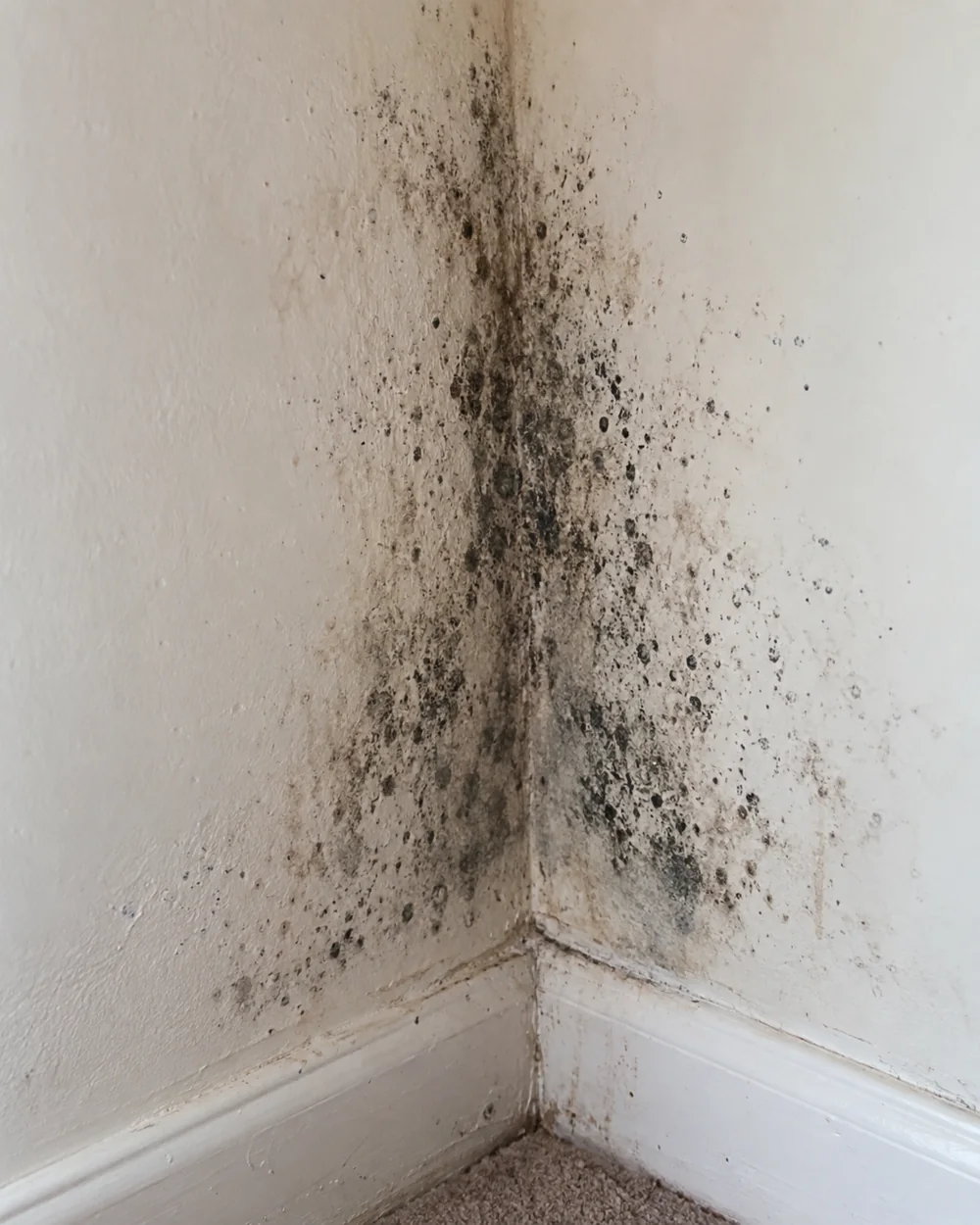
If mould appears on the damaged wall, local condensation can contribute alongside past or current outside water. Assessment of room moisture near the cold wall can consider heating, airflow and use. An external repair does not automatically address those conditions, while room adjustments do not prove the outside route has resolved.
Furniture may conceal part of the damage or reduce circulation. Photograph its original position before making the wall accessible. Report any plumbing or adjoining-room signs that do not fit the gutter explanation. Ask the assessment to explain each possible contribution against the observed pattern. An outside fault and indoor conditions may both require attention.
Do not finish the wall on the strength of a gutter invoice
Mould treatment for the affected wall can be discussed with the material condition and source findings. Surface cleaning does not restore loose plaster or test drainage. Ask what preparation and other repairs are needed, and which tasks should be completed before the finish is renewed.
Keep the inspection findings, outside repair record and wall photographs together. Review the affected materials before decorating and ask which observations support readiness. Keep any unresolved source question in the work plan. If the mark returns, report the precise change and weather relationship. A clear record of completed work makes the next investigation more useful than another round of repainting based on the same untested assumption.
PROPERTY & MOISTURE CHECKS
QUESTIONS BEFORE A VISIT
Useful questions
Does an overflowing gutter prove the indoor stain’s cause?
It is relevant evidence but not a complete diagnosis. The water route, construction and indoor damage need consideration, particularly if other moisture signs exist.
Why is the wall stained after the gutter was repaired?
Old discolouration or remaining material moisture may persist, while a continuing source is also possible. Changes and relevant observations help distinguish these questions.
Should I inspect the high gutter joint myself?
No. Describe what is visible from accessible positions and arrange appropriate closer checks if the findings show they are needed.
Can room ventilation still matter after outside repairs?
Yes. Surface condensation can coexist with water-entry damage. Ask the assessment to distinguish the outside repair from indoor moisture conditions. Each contribution needs its own evidence and relevant measures.
What evidence should I keep from the gutter contractor?
The repair scope, date, observations and photographs of relevant details. Those records help show what was addressed and which route or component may remain unconfirmed.
Nearby areas
Connect the outside repair with the indoor evidence
Call about the Cricklewood wall with your gutter observations and any repair details. We can discuss the moisture assessment needed before more external work or decoration.