DAMP & MOULD SPECIALIST
Damp and Mould Specialist Islington
A bath panel can hide the first signs of water escaping. We compare the accessible damage and its timing before recommending how the source should be checked.
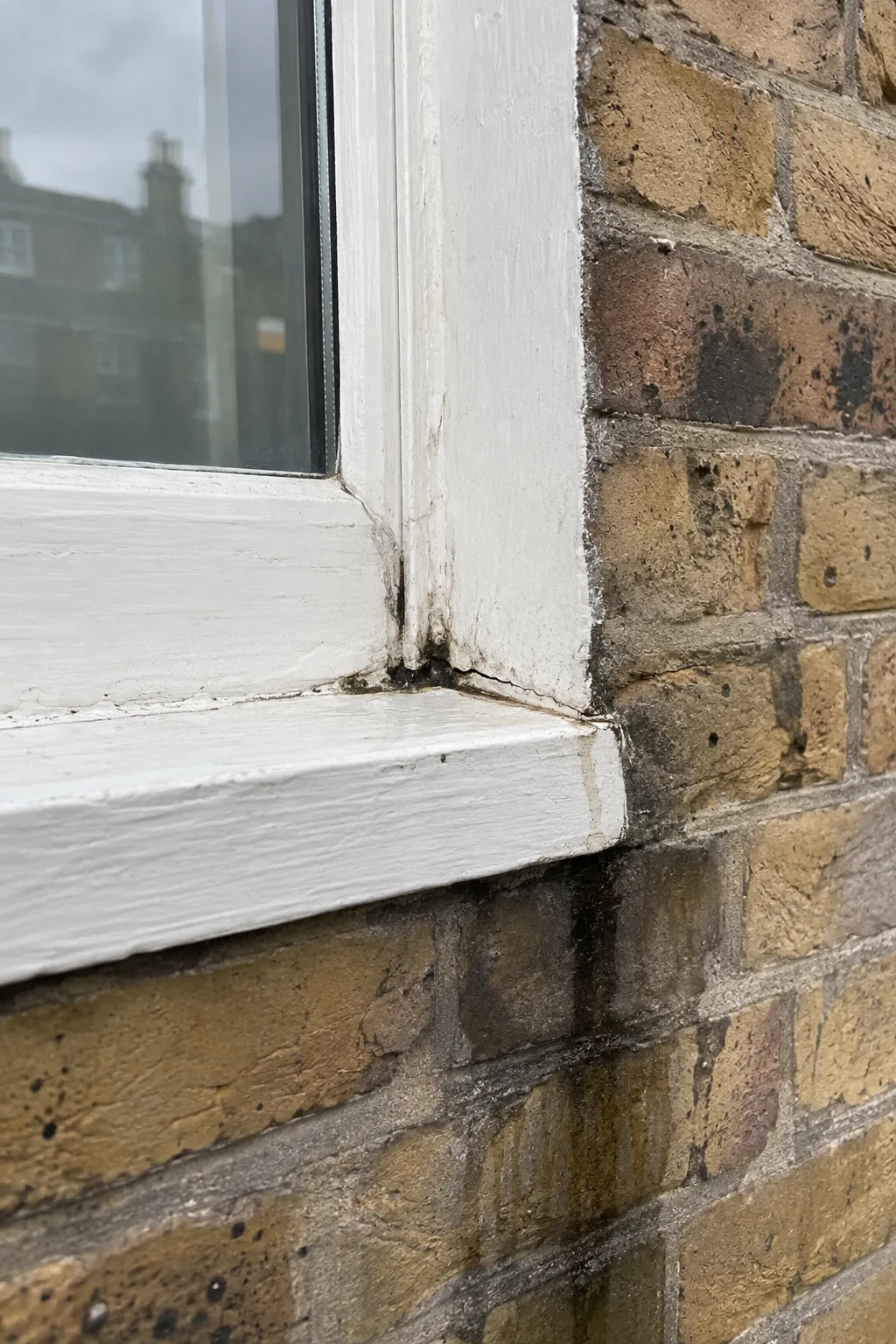
The damage appears outside the bath
If flooring or a wall beside a bath in your Islington home becomes damp, begin with the pattern. Record any water seen at the bath edge alongside damage that appears after filling, draining or shower use, and include damp continuing between those activities. Condensation can also affect nearby surfaces. The fact that the mark sits beside a panel provides a lead, but it does not identify the source or establish the condition beneath the bath.
Photograph the panel, wall and floor junction together. Note whether the damage changes after filling the bath, draining it or using an overhead shower. Avoid guessing which activity is responsible if the timing is unclear. A simple record of what was used and when the mark appeared is more helpful than repeatedly replacing finishes in the hope that one task will settle the problem.
Inspect the visible fittings and the surrounding surfaces
Our bathroom moisture assessment examines the exposed bath-edge and fitting areas, then compares the damaged wall with moisture clearance elsewhere in the room. Mention loose or previously repaired joints, but do not assume an untidy seal is the confirmed route. The assessment needs to compare the evidence and explain where a concealed part prevents a conclusion. A clean-looking bath surface says little about what is happening beneath it.
A moisture investigation around the bath can assess the extent visible from accessible areas. Material and finish affect readings, and the floor may conceal part of the water route. One measurement on a nearby wall cannot establish the condition of an entire concealed floor. The findings should state which floor and wall surfaces were examined and identify any important concealed part still needing a specific check.
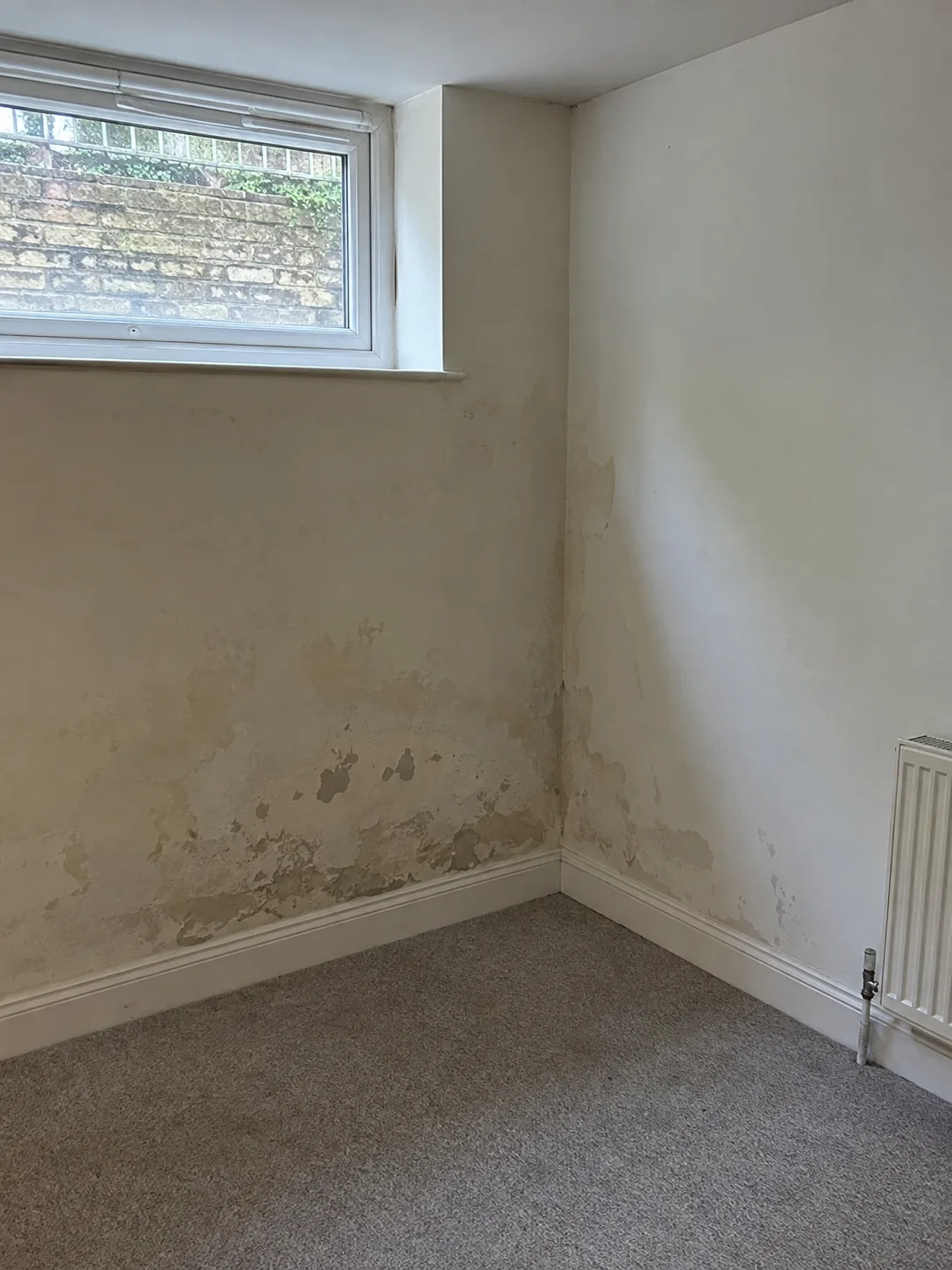
A hidden fitting may need a defined access plan
Where observations point to concealed pipework or waste fittings, checks for hidden water sources help guide the investigation. Confirming a fitting beneath the bath may require a suitable panel opening, which should be discussed once the relevant question is clear. Describe how the panel is fitted and what can be reached safely. Do not remove a sealed installation merely because an inspection has been booked; discuss the useful access first.
If a plumber has already attended, provide the actual repair description and date. A fitting seen dry during one visit does not automatically explain intermittent wetting during another activity. Likewise, a confirmed repair can leave damaged material that still needs assessment. The history should distinguish the repaired source from the surfaces that remain affected afterwards.
Steam may account for other marks in the room
A ceiling or window with scattered mould may have different moisture conditions from the defined patch beside the bath. A review of ventilation and condensation considers the room’s airflow, moisture removal and cooler surfaces. Those findings should remain separate from investigation of a fitting leak. Record the two results separately; a ceiling improvement with a continuing wall patch helps focus the next check on the symptom still unexplained.
Do not close the installation over an unanswered question
After the relevant source is confirmed or sufficiently understood, plan the repair and assess the affected materials. Mould removal and treatment may be needed where growth is present, with the condition of the substrate considered. A new panel or decorative finish should not conceal renewed wetting. Ask which checks must be complete before the area is closed again.
Keep the post-repair observations specific
Record the work completed and compare the area through ordinary use of the bath and shower. Note whether the defined patch changes separately from ceiling or window moisture. Preserve new marks before cleaning or painting. Drying and readiness for decoration depend on the materials and conditions; the date a fitting was repaired does not provide a universal finishing timetable.
If another room shares the affected wall, tell us whether its surface can be inspected. Its condition may help interpret the route, but permission and access need arranging. The visit record should identify an adjoining area that could not be inspected and explain any remaining source question that depends on it. A clear record makes a further investigation useful instead of requiring the entire sequence to be reconstructed later.
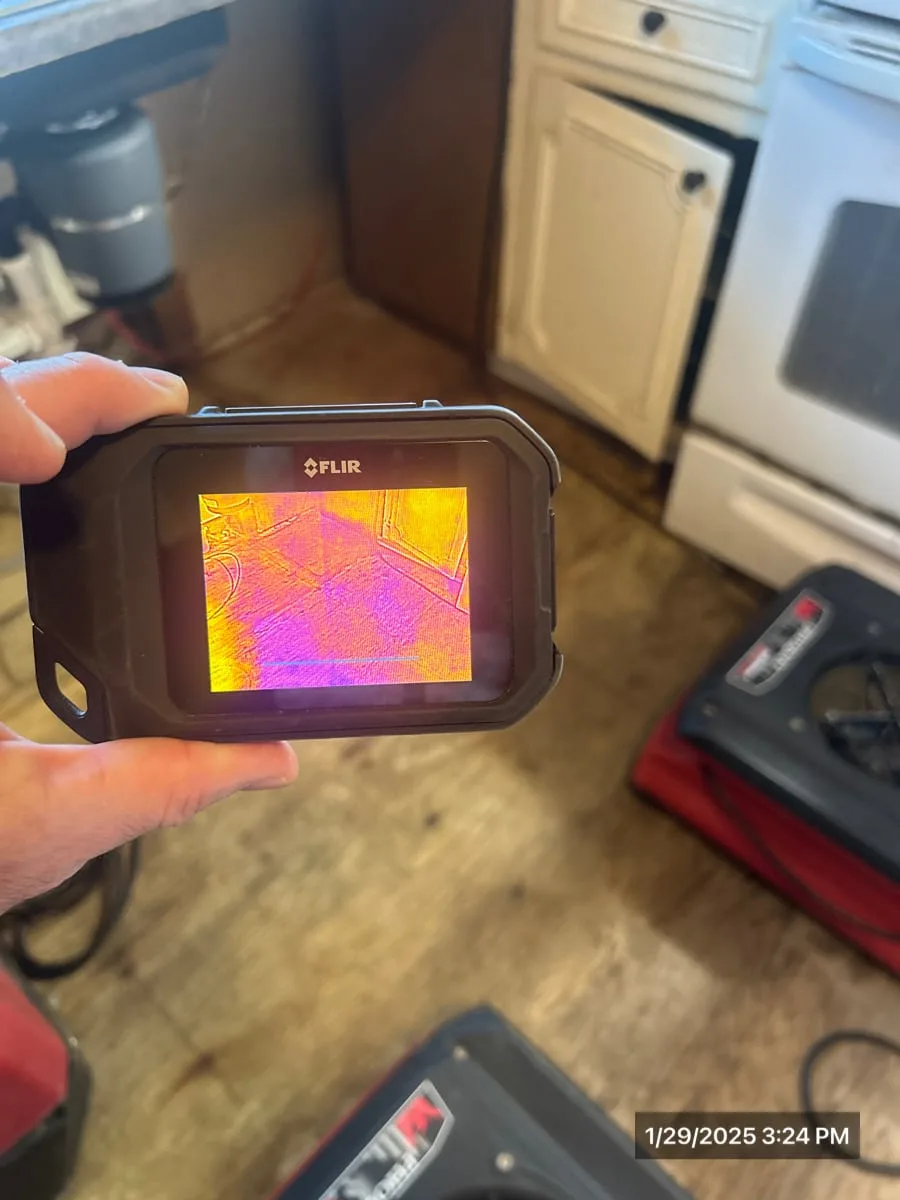
PROPERTY & MOISTURE CHECKS
QUESTIONS BEFORE A VISIT
Useful questions
Does wet flooring beside the bath prove the waste fitting leaks?
No. Several routes may be possible. Timing, accessible observations and the wider pattern help identify which fitting or construction needs closer checking.
Should I take the bath panel off in advance?
Discuss the access first. Some panels can be removed appropriately, while others form part of a sealed installation. Identify the fitting or material question to be answered before arranging removal, with the panel and safe access method agreed appropriately.
Why record filling and draining separately?
Different activities can expose different routes. A factual sequence may help guide checks without assuming the source before the evidence has been assessed.
Can extraction changes fix a concealed bath leak?
No. Ventilation may improve condensation, while a fitting leak requires its own repair. The inspection should distinguish the two where both signs occur.
What should I keep after a plumber has visited?
The source identified, work carried out, date and any photographs are useful. Also record changes in the remaining wall or floor damage after that repair.
Nearby areas
Find out what is wet beside the bath
Call about the Islington bathroom, the activities preceding wetting and the access available. We can discuss appropriate moisture checks.