DAMP & MOULD SPECIALIST
Damp and Mould Specialist City of London
A damp mark beside a shared service riser may involve more than your own flat. We assess the accessible evidence and explain where building-level checks may be needed.
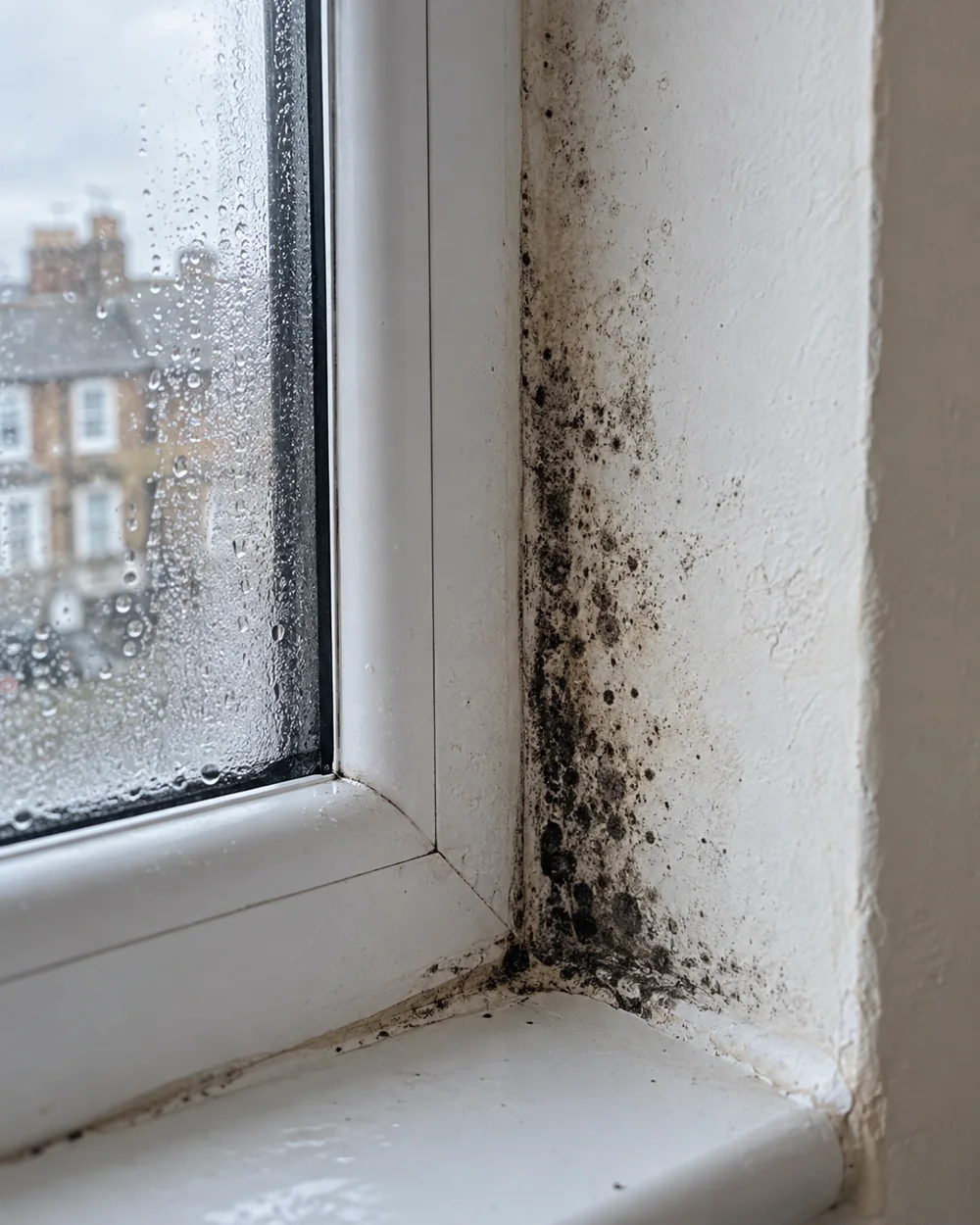
Where the flat meets the service riser
If the affected room in your City of London property backs onto a service riser, the route of shared pipework deserves attention. The stain may relate to a connection serving another part of the building, your own plumbing or an unrelated moisture condition. Its position identifies a service area worth checking; the relevant connection still needs to be traced. Establish where the riser sits and which surfaces are wet before deciding who should undertake repairs.
Access arrangements are especially useful here. Tell us if the riser has a panel inside the flat or can only be opened by the building manager. Previous maintenance records may identify the services within it. Do not interfere with shared equipment to investigate a stain; the assessment can first establish what is visible and what requires authorised access.
A service label or building drawing may clarify which pipes are intended to occupy the riser, but should not be treated as a current inspection of every connection. Ask the manager what maintenance actually took place and whether the affected section was accessed. That distinction helps a further enquiry focus on an unresolved route instead of repeating a check already documented elsewhere.
A patch that stays wet deserves tracing
Record whether the stain changes during ordinary use of your own bathroom or remains much the same when the flat is empty. Include the adjoining skirting, ceiling and cupboard floor in your photographs, so the extent is visible around the main mark. Water may move through concealed construction and emerge away from its source. A dry-looking pipe visible nearby does not rule out another hidden connection.
Investigating concealed water routes can help narrow the concern. Accessible plumbing, observations and moisture comparisons guide the next step, but a fully enclosed riser may prevent confirmation until appropriate access is arranged.
Do not overlook indoor condensation
A boxed-in corner can also have restricted air movement. Where the enclosure meets a colder surface, moisture from indoor air may settle. Dark specks without a distinct stain raise a different question from bubbling paint over a persistently wet area. The two can overlap, so appearance should be related to the construction and history.
If there are wet windows or mould at other cold points, checking the flat’s ventilation conditions helps establish whether condensation contributes. Consider the ventilation findings alongside the riser checks. This keeps both indoor condensation and a possible plumbing source within the investigation.
Build a useful record of what is accessible
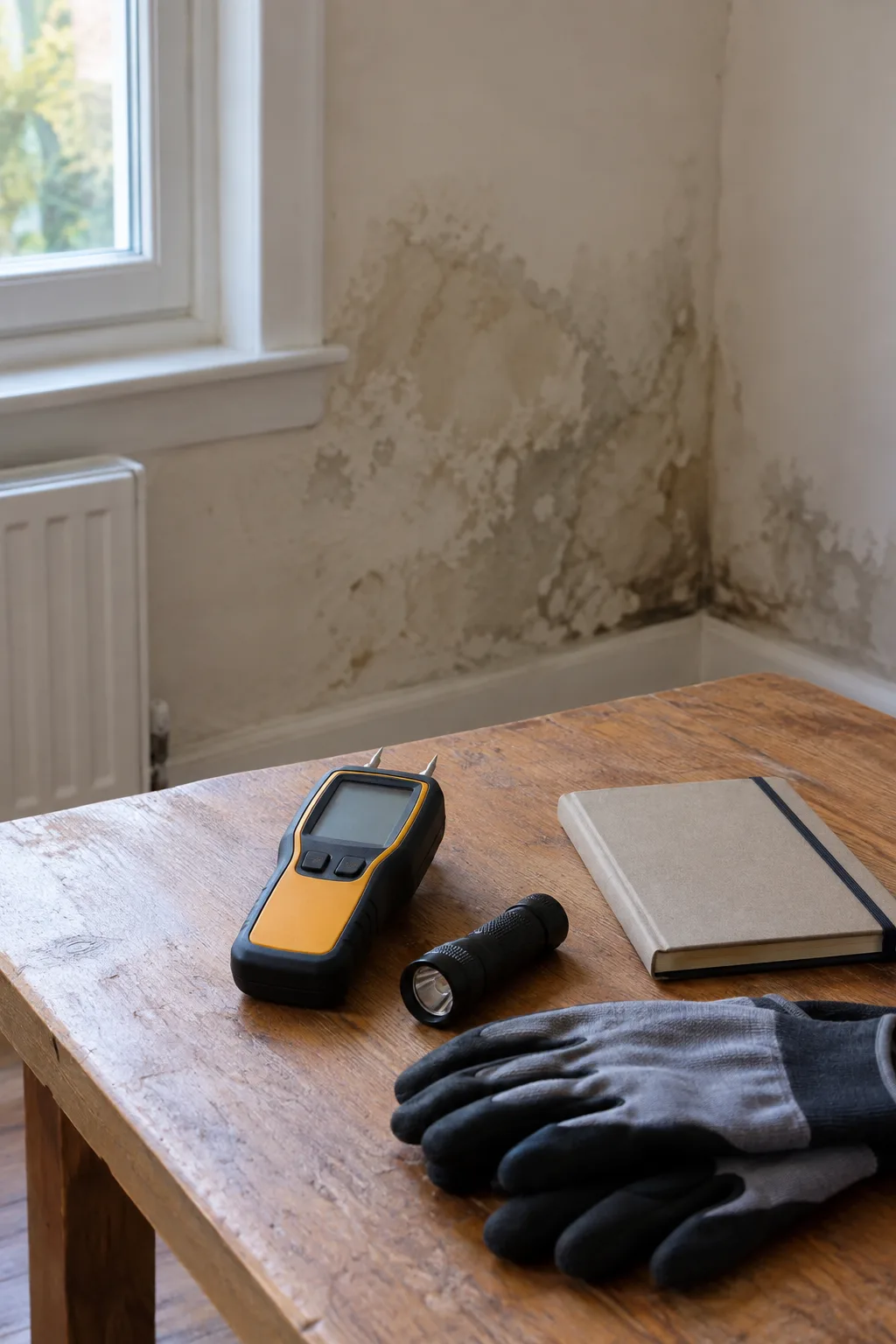
We inspect the visible finishes and compare readings with nearby surfaces, interpreting them in the context of the materials. We compare a high measurement with adjacent points and the pipe routes, then identify which connection or area needs a closer check. We ask about earlier repairs and whether the stain was painted over, because new finishes can hide the outline that first appeared.
A focused moisture diagnosis should distinguish observations from assumptions. It can identify what further riser access, plumbing checks or building records would help. If another flat needs checking, the owner or manager must coordinate access there. An agreed visit to the relevant space may be needed to confirm that part of the route.
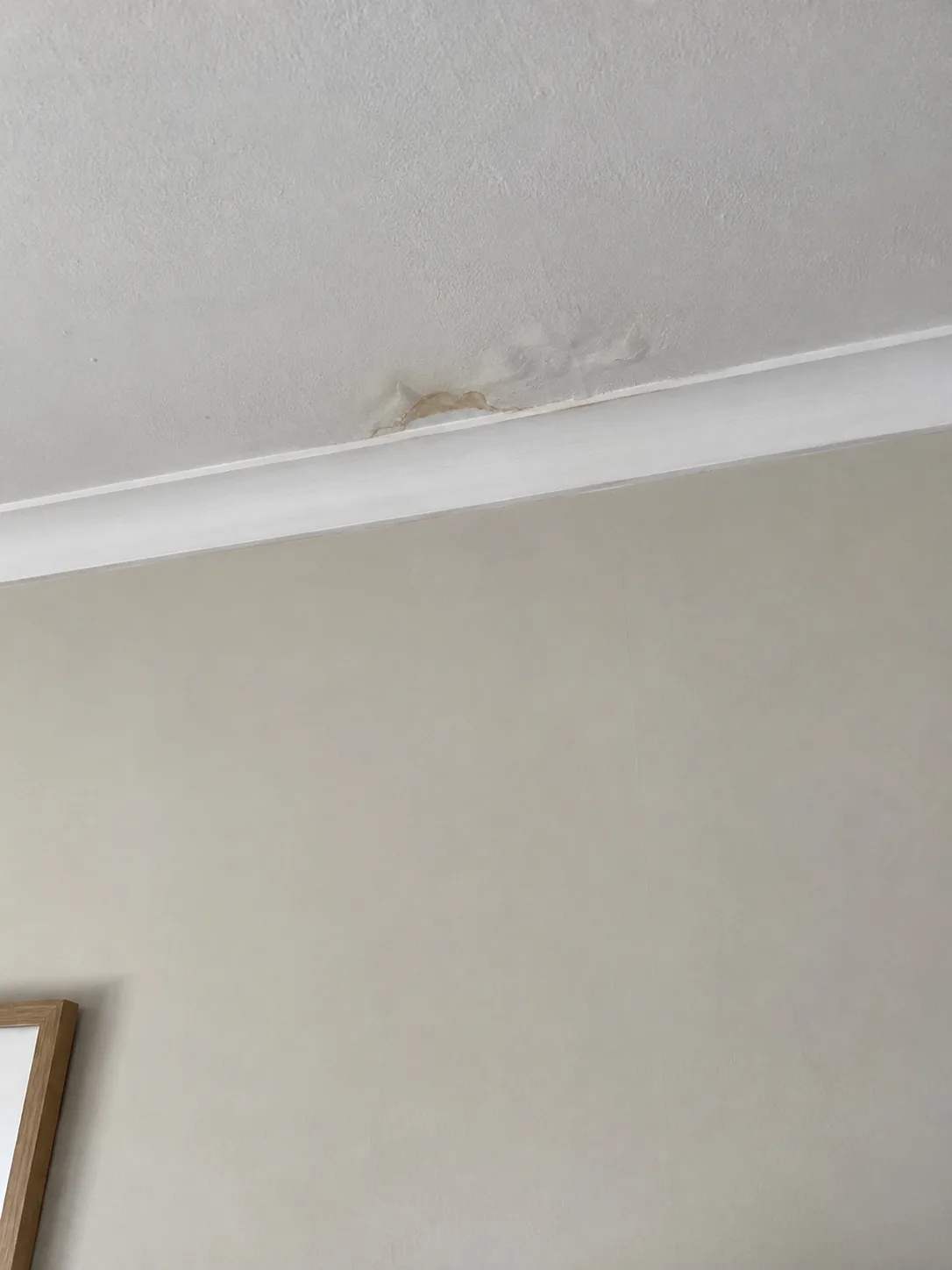
Keep surface treatment separate from the source repair
Treatment of the mould-affected finish may be needed, but it cannot repair shared pipework. Agree the source investigation and repair route alongside any surface work. If water is still arriving, reinstatement can conceal continued damage and make later review more difficult.
Once repairs are arranged, record what was actually done and which surfaces remain to be assessed. Plaster and lining materials may need different attention from paint. Ask how the affected area will be checked before decoration, particularly if it will become enclosed again behind furniture or a fixed panel.
Give the manager evidence they can use
Send dated photographs, the location within the flat and any relationship to water use. A precise account is more helpful than describing the whole building as damp. Keep the inspection limits with the findings so that a manager can see why a further check is requested. This also helps a landlord explain the proposed work to the occupant without attributing the problem to a cause that has not been confirmed.
PROPERTY & MOISTURE CHECKS
QUESTIONS BEFORE A VISIT
Useful questions
Does damp beside a riser mean a shared pipe is leaking?
It makes the riser relevant, but does not prove the source. Your own fittings, concealed construction and condensation may also need examining.
Who should open the shared access panel?
Arrange authorised access through the person responsible for the building. Tell us what can be opened when discussing the inspection scope.
Can one flat’s inspection identify a leak upstairs?
It may reveal evidence pointing towards another area. Confirming the source can require separate access to the relevant flat or service space.
What if the wall has already been painted?
Earlier photographs and repair records become particularly useful. New paint may conceal the original pattern and limits should be explained.
Can the report be sent to the building manager?
Discuss what information is needed and the intended use before the visit. Clear findings and access limits can support the next maintenance decision.
Nearby areas
Talk through the stain beside the riser
Call about your City of London flat, the affected room and available building access. We can help define the next inspection.